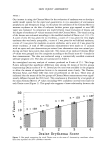
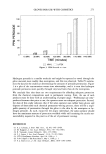
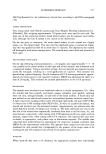
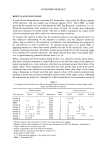
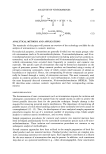
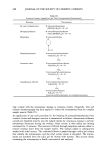
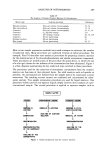
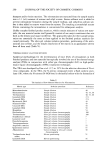
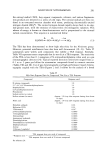
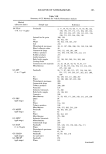
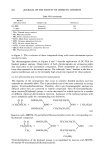
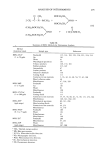
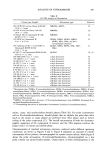
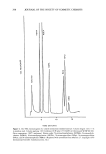
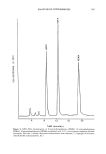
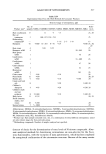
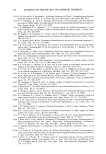
SKIN INJURY ASSESSMENT 263 PHASE 2 Our interest in using the Chroma Meter for the evaluation of erythema was to develop a useful model system for the rapid and quantitative in vivo assessment of antivesicant prophylactic and therapeutic drugs. In this phase the usefulness of the Chroma Meter to measure erythema on the skin of euthymic hairless guinea pigs exposed to neat HD vapor was evaluated. A comparison was made between visual evaluation of lesions and the degree of erythema (a* values) measured with the Chroma Meter. The visual scoring of the lesions was evaluated according to the modified method of Draize et al. (19- 21). A score of zero (0) was given for no erythema, a score of 1 was given for very slight erythema that was barely perceptible, a score of 2 was given for well-defined erythema, a score of 3 was given for moderate-to-severe erythema, and a score of 4 was given for severe erythema. A total of 588 comparison measurements were made on 11 animals with six spots and nine observations per animal (one observation time was missed pro- ducing six fewer data points than expected). The means of six replicate Chroma Meter a* values were grouped into five categories according to the Draize score (0-4) made for that measurement. The data was evaluated using a commercially available statistical software program (22). The data are summarized in Table I. An unweighted one-way analysis of variance produced an F-ratio of 351. This large F-ratio indicated that significant differences exist among the means of the five groups (representing Draize scores of 0-4). Several post hoc tests were available in the program to allow the means of significant factors to be examined more closely. The Duncan, Newman Keul, and Fisher LSD tests were all performed on the data. These tests all indicated that the means of the five groups of Chroma Meter measurements were signif- icantly different beyond the 99% level. This conclusion is illustrated by a bar graph of the mean Chroma Meter's a* values (including 99% confidence interval error bars) for each Draize score (Figure 2). This graph also suggests a linear relationship between the 2O - n= 167 - n= 123 • 15 • r•=97 • 10 - = 5 0 0 1 2 3 4 Draize Erythema Score Figure 2. Bar graph comparing [he visual Draize score [o [he mean a • chromadd[y coordinate values. Error bars represen• •he •% confidence •n•erva[s.

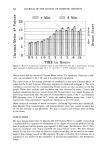
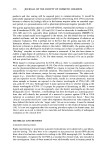
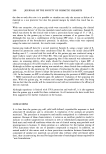
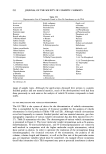
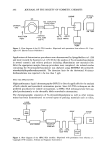
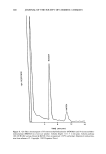
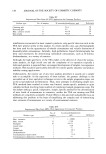
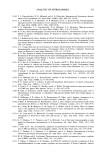
264 JOURNAL OF THE SOCIETY OF COSMETIC CHEMISTS • 15 • lO z• o v/-/• 4 Min • õ Min 0.5 1 1.5 2 3 4 5 6 24 TIME in Hours Figure 3. Mean a* chromaticity coordinate values at each observation time for 4- and 8-minute mustard vapor exposures on hairless guinea pigs. N = 33 error bars = _+ 95% confidence intervals. Draize scores and the measured Chroma Meter values. The Spearman correlation coeffi- cient was calculated to be 1.00, and it is statistically significant. The time course of developing erythema as measured by the mean Chroma Meter a* values for the 4- and 8-minute HD vapor exposures is illustrated in Figure 3. The 95% confidence intervals and the corresponding Draize scores are also included on the bar graph. These data indicate that erythema was first observed at about 2 hours and reached a maximum between 4 and 6 hours. By 24 hours there was a slight decrease. At the 6-hour observation time the mean a* Chroma Meter values of the 4- and 8-minute HD exposures were 15.0 and 16.7, while the median Draize scores were 3 and 4, respectively. This represented a significant difference at the 95% level. Other analytical methods of lesion evaluation, including high-resolution ultrasound, laser Doppler flow measurements, and transepidermal water loss, would be useful but are not yet available in our laboratory. We plan to acquire and evaluate these methods in the future. CONCLUSIONS We have demonstrated that the Minolta CR-200 Chroma Meter is capable of providing a reproducible and quantitative assessment of the degree of erythema produced on the skin of euthymic hairless guinea pigs exposed to HD vapor. Furthermore, the a* chro- maticity coordinate very closely parallels the visual Draize scores. We have demon- strated for the first time that an objective analytical method can be used for the assess- ment of skin damage caused by HD exposure. We plan to develop this technique into a validated in vivo model for the assessment of antivesicant prophylactic and therapeutic drugs.
Purchased for the exclusive use of nofirst nolast (unknown)
From: SCC Media Library & Resource Center (library.scconline.org)