J. Soc. Cosmet. Chem., 42, 285-298 (September/October 1991) Auto-oxidation of linoleic acid in cosmetic formulations M. EUGENIA CARLOTTI, M. ROSA GASCO, MICHELE TROTTA, and SILVIA MOREL, Dipartimento di Scienza e Tecnologia del Farmaco, Universita di Torino, Italy. Received January 4, 1991. Synopsis The self-oxidation of linoleic acid, chosen as a model of lipids present both in the skin and in cosmetic formulations, was followed in three different systems: miceIlar solutions, emulsions, and microemulsions. The same surfactant (Tween 20) was used in all three systems, and isopropyl myristate was used as an oil in emulsions and microemulsions. The reactions were performed in the absence and in the presence of an azo-initiator as well as of D,L-c•-tocopherol. The rates of oxidation of linoleic acid in the emulsions and micellar solutions were about the same, even when the amounts ofTween 20 in the systems were notably different. The rates of oxidation of linoleic acid in the microemulsions were much lower than the ones obtained in the emulsions and in the micellar solutions, probably as a consequence of the interphase structure. INTRODUCTION Oxygen provides enormous benefits to life, but can also exert a wide variety of adverse effects (1) by the production of free radicals. Free radicals can be produced both by enzymatic and non-enzymatic reactions. In the latter circumstance, photochemical pro- duction is of higher importance in organs such as the eye and the skin, which are exposed to light (2-4). Oxygen can react with skin components, leading to compounds that may injure the skin directly or after secondary chemical reactions (1). Free radicals are capable of initiating a chain of reactions. This cascade leads to wide- spread injury, particularly of membrane lipids. The peroxidation of membrane lipids has been recognized as one of the primary events in oxidative cellular damage (5). The auto-oxidation and the antioxidant studies relative to lipids of biological membranes dispersed in aqueous medium were hard to quantify because of the complexity of the system (6-10). Some models have been used to simulate biomembranes for following lipid auto-oxidation among them are micelies, biomembranes, liposomes, and bilayers (11-14). The effects of formulations and their physical structure on the oxidation of fats or oils are a rather neglected field, since only a few systems have been investigated (15,16). As far as cosmetic formulations are concerned, some questions have to be considered. 285

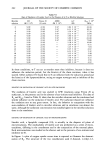
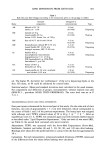
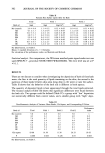
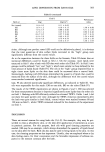
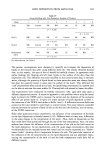
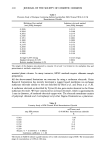
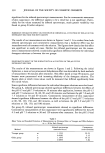
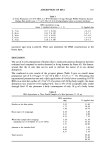
286 JOURNAL OF THE SOCIETY OF COSMETIC CHEMISTS Actually, different formulations may be involved, through different pathways, in the formulation of free radicals in the skin. Another matter of interest is the relationship of the peroxidation kinetics of lipids to the physical structure of the formulation. The aim of the present work is the investigation of the influences of different formulation types (namely, emulsions, microemulsions, and miceliar solutions) upon linoleic self- oxidation. METHODS MATERIALS D,L-ct-tocopherol (ct-T), isopropyl myristate (IPM), polyoxyethylene sorbitan mono- laurate (Tween 20), linoleic acid (LH), 2-ethyl-l,3-hexanediol (HexOH), and 1-hexa- decanol, 2,2'-azo-isobutyronitrile (AIBN) were obtained from Fluka. 1-butanol (ButOH) and 1,2-propanediol (PrOH) were purchased from Merck. Carbomer 1342 was obtained from Biochim. INSTRUMENTS The instruments used in this work were: Biological Oxygen Monitor Model YSI 53 (Yellow Spring Instruments Co, Yellow Spring, OH) Ultra Turrax Homogenizer T 25 (Ika Laboratortechnica, Janke and Hunkel, Staufen Germany) Capillary Viscometer (Scott Gerate, Hofheim, Germany) and Zetasizer II C, laser light-scattering PCS 100 (Malvern, Spring Lane, Worcestershire, U.K.). PREPARATION OF MICELLAR SOLUTIONS The compositions are reported in Table I. Fixed amounts of Tween 20 were added to a fixed volume of water at room temperature, resulting in clear miceliar systems. Miceliar solutions in the presence of linoleic acid were prepared by first dissolving linoleic acid in the surfactant and then adding water (d 25 ø = 1.02). Miceliar solutions in the presence of azo-initiator were prepared as previously described by first dissolving AIBN and ct-T in LH, which was then added to the surfactant. Table I Miceliar Solution Compositions and Rate of Oxidation of Linoleic Acid in the Absence of Inhibitor Rp or in the Presence of Inhibitor Rin h Miceliar Water Tween 20 LH (x-T AIBN Rp X 10 9 Rin h X 109 solution (% w/w) (% w/w) (% w/w) (M X 10 4) (M X 10 3) (M/s) (M/s) 1 78.80 23.20 -- -- -- 8.11 -- 2 74.88 22.62 2.50 -- -- 40.44 -- 3 74.88 22.62 2.50 -- 9.47 103.60 -- 4 74.88 22.62 2.50 1.56 9.47 -- 17.30 5 74.88 22.62 2.50 6.11 9.47 -- 20.22
Purchased for the exclusive use of nofirst nolast (unknown)
From: SCC Media Library & Resource Center (library.scconline.org)