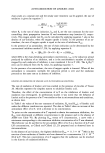
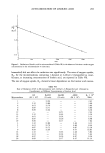
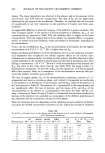
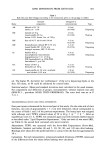
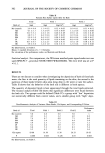
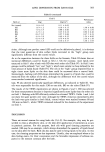
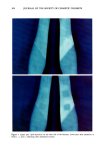
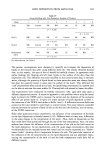
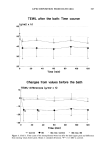
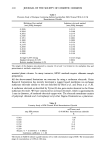
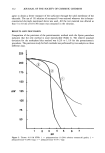
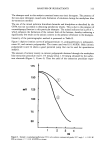
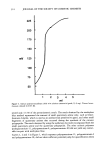
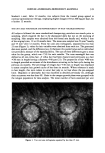
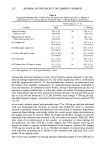
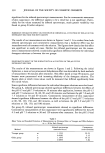
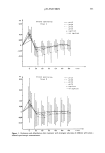
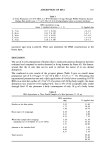
ANALYSIS OF SURFACTANTS 313 The shampoo used in this analysis contained some non-ionic detergent. The presence of the non-ionic detergent caused some formation of emulsion during the methylene blue iso-extraction method. The use of the mixed indicator dimidium bromide and disulphine as described by the CTFA was not successful in obtaining satisfactory results. This is due to the presence of cocamidopropyl betaine in this particular shampoo. The mixed indicator has a pH of 1, which enhances the formation of the cationic form of the betaine, thereby indicating a significantly low result on the anionic content in the presence of betaine in the shampoo. Linearity of the potentiographic method is presented in Table II. Figure 1 depicts titration curves of polyquaternium-11, polyquaternium-4, polyquater- nium-10, and cationic polypeptides. The titrant used was 0.01 M SDS. Only cationic polypeptide (curve 4) shows a good potential jump that can be used for quantitative analysis. The amount of cationic moiety in cationic polypeptide obtained through the methylene blue extraction procedure was 0. 175 meq/g versus 1.30 meq/g obtained by the surfac- tant electrode (Figure 1, Curve 4). Thus the yield of the extraction procedure repre- 175 150 mV 125 lOO 75 50 I I i I 2 3 4 ml Figure 3. Sample: cocamidopropylbetaine (35 % w/w solution commercial grade 92.5 mg) 1 = 0.01 M SDS as titrant 2 = 0.01 M STPB as titrant.

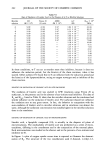
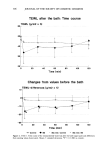
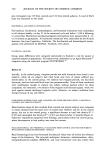
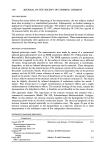
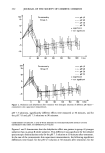
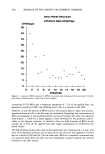
314 JOURNAL OF THE SOCIETY OF COSMETIC CHEMISTS 225 200 175 150 mV 125 lOO 75 5O 1 2 3 4 5 ml Figure 4. Sodium polystyrenesulfonate (30% w/w solution commercial grade 53.9 mg). Titrant: benze- thonium chloride (0.0105 M). sented only 13.5% of the potentiometric result. The result obtained by the methylene blue method represented the amount of small quaternary amine only, such as benze- thonium chloride, which is used as an antibacterial preservative agent, and other small fragments of quaternary amines that occurred during the synthesis of the cationic polypeptide. The result obtained by using the surfactant electrode encompassed both the small quaternary amine and the quaternary polypeptide. The other cationic polymers (polyquaternium-11, polyquaternium-4, polyquaternium-10) did not yield any extract- able ion-pair with methylene blue. Curves 1, 2 and 3 in Figure 1, which represent polyquaternium-11, polyquaternium-4 and polyquaternium-10, did not show sufficient potential jump for quantification when
Purchased for the exclusive use of nofirst nolast (unknown)
From: SCC Media Library & Resource Center (library.scconline.org)