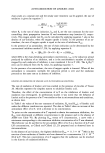
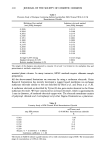
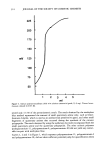
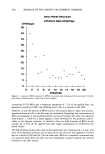
ANALYSIS OF SURFACTANTS 311 EXPERIMENTAL Surfactant and reference electrodes were obtained from Orion Research sodium dode- cylsulfate (SDS E. Merck) and sodium tetraphenyl-boron (STPB Aldrich) were used as anionic surfactant standards. Benzethonium chloride was obtained from Lonza. The standard solutions of SDS, STPB, and benzethonium chloride were 0.01 M in water. The test material was diluted to approximately 25 ml with water. To this solution were added 0.6 ml 0.1 N HCI and 2 ml 1% solution of octoxynol-9 in water (Rohm & Haas). The pH of this solution was approximately 2.3. Octoxynol-9 was added as a wetting 225 200 175 150 mV 125 1 O0 75 5O 1 2 3 4 5 6 7 ml Figure 1. Titration of quaternary cationic polymers with STPB as titrant. Titrant: 0.01 M SDS. 1 = polyquaternium-11 (20% w/w solution commercial grade 71.7 mg) 2 = polyquaternium-4 (290.0 mg) 3 = polyquaternium-10 (47.7 mg) 4 = cationic polypeptide (30% w/w solution commercial grade 100.0 mg).

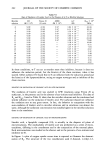
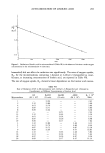
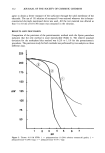
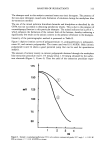
312 JOURNAL OF THE SOCIETY OF COSMETIC CHEMISTS agent to obtain a better transport of the surfactant through the solid membrane of the electrode. The use of 1% solution of octoxynol-9 was omitted wherever the in-house- constructed electrode mentioned above was used. All the test material was diluted so that 5 to 10 ml of 0.01 M titrant was consumed in the titration. RESULTS AND DISCUSSION Comparison of the precision of the potentiometric method with the Epton procedure indicates that the new method is more reproducible (Table I). The relative standard deviation for the methylene blue method was 6.2% vs 1.1% for the potentiometric procedure. The precision study for both methods was performed by two analysts on three different days. 225 200 175 150 mV 125 lOO 75 50 1 2 3 4 5 6 7 ml Figure 2. Titrant: 0.01 M STPB. 1 = polyquaternium-ll (20% solution commercial grade) 2 = polyquaternium-4 (290.0 mg) 3 = polyquaternium-10 (47.7 mg).
Purchased for the exclusive use of nofirst nolast (unknown)
From: SCC Media Library & Resource Center (library.scconline.org)