j. Soc. Cosmet. Chem., 42, 309-316 (September/October 1991) Quantitative analysis of anionic or cationic surfactants using a surfactant electrode HANS H. Y. OEI, I. MAI, and D. C. TORO, Redken Laboratories, Inc., Research and Development Department, 6636 Variel Avenue, Canoga Park, California 91303. Received February 14, 1991. Synopsis Potentiometric titration allows us to perform quantitative analysis of surfactants previously unattainable by ion-pair extraction. The electrode used in the present study was a liquid membrane ion-exchange Ag/AgC1 electrode. INTRODUCTION Anionic and cationic surfactants are widely used in the cosmetics industry as the main ingredients in shampoos and hair conditioners. The most widely used quantitative method is based on iso-extraction of an ion-pair between surfactant and dye, which is the basis of the well-known Epton methylene blue and CTFA mixed indicator method in the cosmetics industry (1,2). A prerequisite for the iso-extraction method is the formation of a lipophilic surfactant- dye-ion-pair, which is then extracted into chloroform or methylenechloride. However, there are many cationic/anionic polymers that do not form lipophilic ion pairs, such as cationic polypeptides, polyquaternium-4 (Van Dyk), polyquaternium-ll (GAD, quaternium-19 (Union Carbide), quaternium-22 (Van Dyk), and polystyrenesulfonate. In addition, many surfactants form an emulsion during extraction with lipophilic sol- vents, thereby causing a problem in determining the end point. Emulsion formation is especially problematic during analyses of formulated products. Good et al. used the principle of coprecipitation of cationic surfactant polymer-Ponceau S dye ion pair with magnesium ion (3). The amount of the remaining soluble Ponceau S dye was measured spectrophotometrically and is inversely proportional to the amount of the cationic surfactant. This method is problematic for formulated product, since the presence of other ingredients in the formula, such as non-ionic detergent, amines, and especially dyes, interferes with the coprecipitation or spectrophotometric measurement. HPLC procedures have been used to analyze ionic surfactants (4-6). Most of these methods are based on ion-pairing of the ionic surfactant and separation using a 309

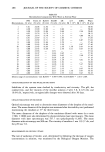
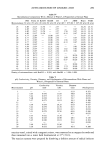
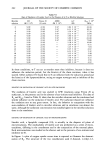
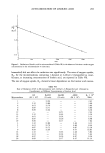
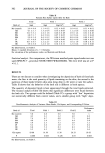
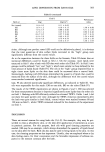
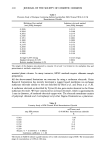
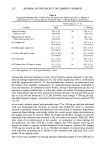
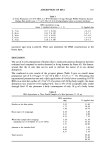
310 JOURNAL OF THE SOCIETY OF COSMETIC CHEMISTS Table I Precision Study of Shampoo Containing Sodium Laurylsulfate (SLS) Titrated With 0.01 M Benzethonium Chloride Methylene blue method (meq SLS/g shampoo) Surfactant electrode method (meq SLS/g shampoo) 0.2026 O.2O94 0.2052 O.2436 0. 1951 0.1909 0.2103 0.2114 0.2050 0.2010 0.2080 0.2090 Average 0.2076 meq/g Standard deviation 0.0129 Relative standard deviation 6.2% 0.2112 0.2108 0.2174 0.2119 0.2093 0.2099 0.2134 0.2132 0.2150 0.2100 0.2140 0.2120 0.2123 O.OO24 1.1% meq/g The weight of the shampoo was adjusted to consume 10 ml and 5 ml titrant for the methylene blue and potentiometric methods, respectively. reversed phase column. In many instances, HPLC methods require elaborate sample preparation. All the above-named limitations are overcome by using a surfactant electrode. Orion Research Corporation has recently developed a rugged liquid membrane ion exchange surfactant electrode similar to the one described by Birch et al. and Evans et al. (7,8). A surfactant electrode a,s described by Vytras (9) also gave results identical to the Orion surfactant electrode. We have constructed an in-house electrode, which is approximately 3 mm in diameter, of insulated electrical copper wire. The electrode membrane consists of polyvinyl chloride and 2-nitrophenyl octyl ether (Sigma Chemicals) as a plasticizer. Table II Linearity Study of SDS Titrated With Benzethonium Chloride ml/Titrant need meq SDS presents (0.0108 Mol. benzethionium chloride) Y X 0.010 O.95 O.O5O 4.6 0.100 9.2 0.150 13.9 0.200 18.5 0.250 23.2 Results: Y = 0.01078 X q- 0.00025 Correlation coefficient = 1.00 The results in Table II indicate a good linearity over a wide concentration range of SDS. The recommended range of concentration is 0.050-0.100 meq.
Purchased for the exclusive use of nofirst nolast (unknown)
From: SCC Media Library & Resource Center (library.scconline.org)