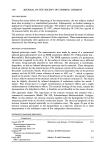
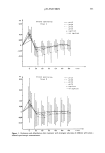
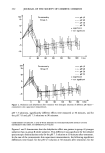
328 JOURNAL OF THE SOCIETY OF COSMETIC CHEMISTS TEST PROCEDURE Twenty-four hours before the beginning of the measurements, the test subjects washed their skin according to a standardized procedure. Subsequently, no further washing or application of topical preparations took place. The subjects were acclimatized to ambient conditions (standard temperature 22-24øC, relative humidity 50-55%) for a period of 30 minutes before the start of the investigation. The moisture content of the stratum corneum was then determined by means of infrared spectroscopy and corneometric assessment of skin capacitance. These measurements were repeated immediately after application of the detergent emulsions and at 30-minute intervals for the following three hours. METHODS OF MEASUREMENT Infrared spectroscopic studies. The measurements were made by means of a commercial infrared spectrophotometer with an FMIR attachment (Model 297, Perkin-Elmer Ltd., Beaconsfield, Buckinghamshire, U.K.). The FMIR apparatus consists of a germanium crystal that is applied to the skin. At the surface of contact the infrared ray is reflected 50 times, being partially absorbed at each reflection. The absorption is wavelength- dependent, so that an infrared absorption spectrum can be measured. Three absorption bands are relevant for the determination of the moisture content of the stratum corneum: the amide 1 and amide 2 bands, which are in a fixed ratio dependent only on the proteins present and the H-O-H scissor vibration of water at 1645 cm-x, which is superim- posed on the amide 1 band. The ratio of absorbances in the amide 1 and amide 2 regions is thus a relative measure of the moisture content of the stratum corneum (5). The results may be slightly distorted by infrared absorption of surfactants within the amide 1 region. This would lead to a slight overestimation of hydrative effects and a slight underestimation of dehydrative effects. The essential findings of this study, namely the measurement of a dehydrative effect, is therefore not attributable to this source of error. Skin capacitance studies. The capacitance of the stratum corneum was assessed with a commercial corneometer (Model CM 420, Schwartzhaupt Medizintechnik, Cologne, FRG). In this method, the stratum corneum together with the hydrophobic foil of the measuring probe form an electrical conduction system. The electrical properties of the stratum corneum depend essentially on its hydration state. The upper 20 •m of the stratum corneum participate in the measurement as a dielectric medium (4,7). Each measurement is the arithmetic mean of five independent determinations. DETERGENT EMULSION EMPLOYED* Composition Cetesol 856 T © (Zschimmer und Schwarz, D-5420 Lahnstein) 35.0 Monoisipropenolammonium laurethsulfate 42% Cocamidopropyl betain 5% Lampeon S © 4.0 Potassium coco-hydrolyzed animal protein Cetiol HE © 2.0 PEG-7 glycerylcocate (Henkel, D-4000 Diisseldorf) (Henkel. D-4000 Diisseldorf)

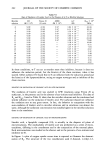
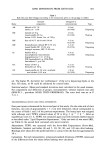
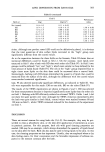
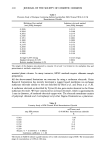
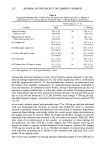
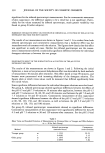
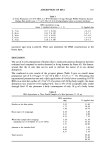
pH AND SKIN 329 Marlamide KL © Cocamidopropyl lauryl ether Laktolin pH 5.6 © Sodium lactate Oxypon 288 © PEG-10 olive oil Fleur PF 1145 ©, perfume oil Glucamate DOE 120 © Methyl gluceth PHB-methylester © Methylparaben Syngram © Ethyl lineolate and tocopherol Amino acids, Vit. B 6, urea phosphate, nicotinic acid Euxyl K 400 © Methyl dibromo glutaronitrile and phenoxy ethanol Prilon BD © Disodium EDTA Mal-Griin © C.I. 47005 and C.I. 61570 Oxynex 2004 © BHT and citric acid and ascorbyl palmitate Water (H/ils Chemie, D-4370 Marl) (B/Shringer, D-6800 Mannheim) (Zschimmer und Schwarz, D-5420 Lahnstein) (Quest International, D-2000 Hamburg) (Nordmann und Rassmann, D-2000 Hamburg) (Merck, D-6100 Darmstadt) (Synpharma, D-5100 Aachen) (Schiilke und Mayr, D-2000 Hamburg) (BASF, D-6700 Ludwigshafen) (Dragoco, D-3450 Holzminden) (Merck, D-6100 Darmstadt) 1.5 1.0 1.0 0.9 0.6 0.2 0.2 0.12 0.1 0.1 0.02 0.005 53.255 * We thank Sebapharma GmbH & Co., D-5407 Boppard 1--Bad Salzig, for the preparation of the detergent emulsion. By addition of NaOH and HCI the pH of the detergent emulsion was adjusted to three additional values, so that four detergent emulsions of the same composition with pH values of 4.0, 5.5, 7.0, and 8.5 were available for the investigation. Before application the solutions were diluted with water in a 1:4 ratio, resulting in pH values of 4.5, 5.9, 7.0, and 7.5 for the detergent solutions used in the test series. The detergent solution was applied to the skin in a standardized way, using a 590-g iron cylinder covered with terry cloth. The cylinder was immersed in a container filled with the detergent solution and rolled over the flexor side of the forearm from elbow to wrist, 18 times within three minutes. This method ensures an even distribution of the deter- gent solution over the test area. Subsequently, the skin was blotted with fluff-free paper. STATISTICAL EVALUATION The U-test or paired difference test of Wilcoxon, Mann, and Whitney was used for statistical significance testing. tx = 0.05 was chosen as significance level. RESULTS COMPARISON OF THE MEASURED VALUES FOR UNTREATED SKIN IN GROUP A (YOUNGER SUBJECTS) AND GROUP B (OLDER SUBJECTS) Table I shows that the moisture content of the untreated stratum corneum was higher for group B (older subjects) than for group A (younger subjects). This difference is
Purchased for the exclusive use of nofirst nolast (unknown)
From: SCC Media Library & Resource Center (library.scconline.org)