J. Soc. Cosmet. Chem., 42, 299-308 (September/October 1991) Measurement of lipid deposition on the skin of the forearm: Comparison of different bath oils B. GABARD and E. BIELI, Department of Biopharmaceutics, Spirig AG, 4622 Egerkingen, Switzerland. Received January 19, 1991. Synopsis With the aid of UV-fluorescence, lipid deposition was visualized on the skin after a bath with a bath oil added. The lipids were extracted and quantified. Significant differences between different types of bath oils appeared. Floating bath oils generally deposited more lipids on the skin, particularly on areas located deep in the water. The transepidermal water loss of tape-stripped skin was reduced after the bath. The duration of the reduction, not its extent, seemed to depend upon the quantity of bath oil remaining on the skin. INTRODUCTION Hydration of the skin is an important factor influencing plasticity and barrier function. A decreased water content in the horny layer leads to a loss of flexibility and elasticity. Since the deeper part of the stratum corneum is well hydrated by the direct diffusion of water from the underlying living epidermis, the state of hydration of the upper layers plays a crucial role in governing the suppleness and softness of the skin. As a clinical condition, dry skin, characterized by scaling or cracking and observed in various der- matoses or in aging, is thought to develop where a pathological horny layer is deficient in water-holding capacity. Sometimes an increased transepidermal water loss may be found, further reducing the hydration (1). Where extensive areas of the skin are dry and itchy, the external use of skin care products such as bath oils is indicated. Immersing the affected areas in water, followed by topical application of an oil film, tends to hydrate the skin and should maintain moisturization at least for a reasonable period. To this purpose, three major types of oils are offered: dispersible bath oils, floating bath oils, and bath oil beads (2). Dispersible bath oils primarily contain mineral oil with higher levels of emulsifying agents to disperse the oil as fine droplets in the bath water. Floating (or "spreading") bath oils contain lower levels of emulsifiers and, by lowering the surface tension of the bath water, permit the oil to form a continuous film on the surface of the water. The third type of bath oils, bath oil beads containing oil adsorbed onto the surface of a free-flowing detergent powder, will not be considered in these investigations. 299

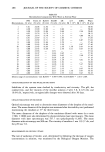
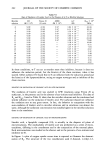
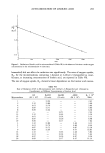
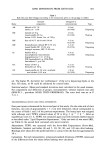
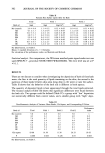
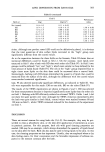
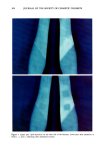
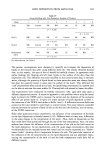
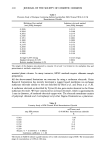
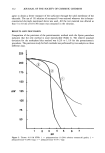
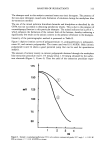
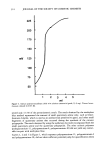
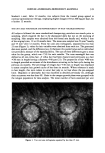
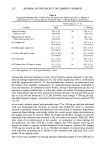
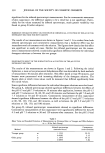
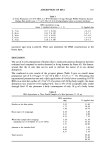
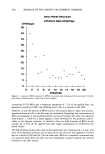
300 JOURNAL OF THE SOCIETY OF COSMETIC CHEMISTS After the bath, deposition of lipids on the skin should be important for two reasons: 1. The lipids remaining on the skin may occlude the horny layer. Occlusion retards the water loss. 2. The lipids may penetrate into the horny layer. The lipid content of the stratum corneum greatly influences its water-retaining and barrier properties (3-5). Both actions work together to increase the water content of the horny layer. An experiment was designed to investigate this particular property of the bath oils: vitamin A-palmitate was added to the oils to render them fluorescent under UV-light (6), enabling visualization of the lipids deposited on the skin after the bath. These lipids could be photographed and were extracted in three different fields chosen to represent skin areas located deep in or near the surface of the bath water. Then transepidermal water loss was measured after tape-stripping of the horny layer before and after bathing, with or without addition of a bath oil of the floating type. MATERIALS AND METHODS All experiments were conducted in a temperature- and humidity-controlled room (22øC, rel. humidity 45 -+ 5%). Six healthy volunteers aged 18-45 years participated in the study. Their forearms were thoroughly washed with a non-ionic syndet (Procutor ©, Spirig AG, Egerkingen, Switzerland) and dried. LIPID DEPOSITION EXPERIMENTS Two rectangular baths (L X I X h: 0.5 X 0.3 X 0.2 m one for each forearm) were filled with 20 L of warm (32øC-35øC) tap water. The bath oils were added to the water according to the instructions of the manufacturers (Table I). Control baths were per- formed without oil. Both forearms were immersed simultaneously for 10 min. After- wards, they were left to dry in the air without any manipulation. Dryness was usually achieved within 10-15 min. Measurements. O. 1% Vitamin A palmitate was added to each bath oil on a w/w-basis before each experiment. After drying, the forearms were examined under UV-light (254 nm) and photographed. On their volar side three areas (3 x 3 cm) were delimited: field 1 behind the wrist, field 2 in the middle of the immersed zone, and field 3 just before the line left on the skin by the surface of the water. These fields corresponded to skin areas near the bottom of the bath or near the surface of the water (Figure 1). The lipids in these fields were extracted twice with a cotton swab and 5 ml petroleum ether. The petroleum ether was evaporated to dryness under a stream of nitrogen in pre-weighted flasks and the weight of the lipids calculated through the weight difference. Calculations. For each field of each forearm the weight (mg) and the surface concentra- tion (mg/cm 2) of the lipids were calculated. Adding the weight in the three fields of each forearm yielded the total weight of the lipid extrated (mg). A performance index (PI) was defined for each bath oil as follows: the total weight of the lipids was divided by the dose added to the bath water. Thus PI represents the quantity of lipids deposited on (3 x 9 = ) 27 cm 2 of forearm skin by one milliliter of pure bath
Purchased for the exclusive use of nofirst nolast (unknown)
From: SCC Media Library & Resource Center (library.scconline.org)