j. Soc. Cosmet. Chem., 42, 335-340 (September/October 1991) In vitro absorption of butylated hydroxyanisole through human skin REGINA SCHUMANN, Max von Pettenko•r-Institut, Bundesgesundheitsamt, Thielallee 88-92, D~1000 Berlin 33, Germany. Received February I, 199 I. Synopsis The absorption of butylated hydroxyanisole (BHA) from an ointment and its permeation through human skin were measured in vitro. Following the application of 0.07% BHA in a commercial water-in-oil ointment and a continuous skin contact of 16 h, 2.68% of the amount applied had penetrated into the receptor fluid (mean rate 0.18 •g BHA/1.77 cm2/16 h). Measurable amounts of BHA were found in the horny layer, and up to 50% of the applied dose had penetrated into the epidermis/dermis. It is concluded that BHA may also be absorbed under regular use conditions in vivo. INTRODUCTION Butylated hydroxyanisole [2(3)-tert.-butyl-4-hydroxyanisole] (BHA) is being used as an antioxidant not only in the human diet but also in cosmetics (1). Its use as a food additive is generally regarded as safe, and the Joint FAO/WHO Expert Committee on Food Additives (2) has set up an acceptable daily intake of up to 0.5 mg/kg body weight. Cosmetic products may contain up to 0.07% BHA, added mainly to prevent oxidation of lipid ingredients. However, due to the lack of information on its percu- taneous absorption, it is difficult to evaluate the amounts of systemic intake of BHA after dermal application. This study was designed to measure the absorption of BHA from an ointment through human skin using an in vitro method. To simulate a day-long skin contact of a cosmetic product and to make sure that steady-state diffusion was established, the absorption was measured over a period of 16 h on excised whole-thickness skin without occlusion. EXPERIMENTAL MATERIALS Human abdominal skin was obtained 24 hours post mortem and immediately trans- ported to the laboratory. The skin was stored in a refrigerator and used within 12 hours. The subcutaneous fat was carefully removed with a scalpel. Each portion of skin, derived 335

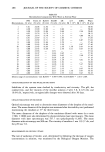
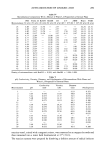
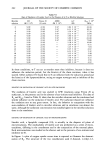
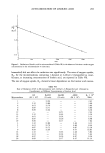
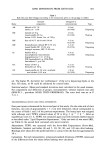
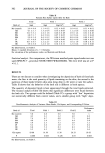
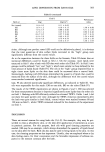
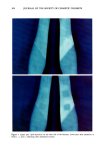
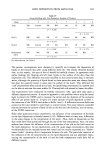
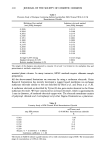
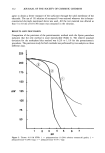
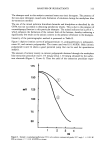
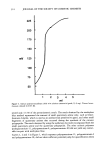
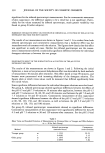
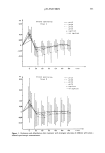
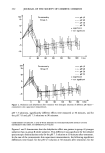
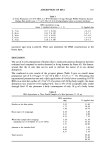
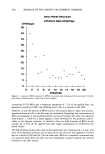
336 JOURNAL OF THE SOCIETY OF COSMETIC CHEMISTS from a single donor, yielded specimens for four penetration chambers run simulta- neously, that is three samples and one blank test. BHA (Fa. Merck, Darmstadt, FRG) and [ • C]BHA (Amersham Buchler, Braunschweig, FRG) were added to a water-in-oil ointment (Beiersdorf AG, Hamburg, FRG) to prepare ointments containing 1% or 0.07% BHA. The final specific activity of the ointment applied to the skin was 5.47 X 10- 4p, Ci/mg. METHODOLOGY The experimental procedure of the permeation study was as described by Schaefer et al. (3). Using a small glass spatula, about 10 mg of the ointment were applied to the skin surface to cover an available diffusion area of 1.77 cm 2. Exact amounts were determined by differential weighing. The skin specimen was then inserted into a penetration cham- ber (4) kept at a constant temperature of 32øC. The acceptor medium was physiological saline (6 ml). The ointment was left on the skin for either four hours (1% BHA) or 16 hours (0.07% BHA), and then carefully wiped off. The horny layer was removed by 10-20 strippings with adhesive tape, depending on the individual skin tissue. Samples of 0.28 cm 2 diameter were punched out of the skin, frozen, and sectioned into layers of 100-}xm thickness with a microtome (Mikrotom- Kryostat II, Lab-Tek Instruments, Miles GmbH, Frankfurt, FRG). These skin sections were dissolved in, and the tapes were treated with, Soluene 350 (Packard Instruments, Frankfurt, FRG), whereas whole-skin samples were treated with 10 N KOH for four hours at 55-60øC. The residues, the tape solutions, the dissolved skin layers, and the receptor fluids were thoroughly mixed with scintillator cocktail and analyzed for [•4C] content (Minaxi Tricarb Liquid Scintillation Counter, Packard Instruments). The amounts of [•4C] detected in the analyses were set in relation to the amounts of [•4C] in the applied dose, and thus used to calculate the absorption and recovery rates. RESULTS Following application of ointment to the skin, no measurable amounts of radioactivity were detected in the receptor phase after four hours, even if the concentration of the applied dose was 1% BHA and the skin had been stripped before application to remove the stratum corneum. However, after 16 h on excised whole-thickness skin, measurable amounts were found in the chamber solution. Samples from five persons (2 male, 3 female) were examined (Table I). The overall mean rate of 0.18 }xg BHA/1.77 cm2/16 h (0.05-0.44 }xg BHA) had penetrated into the receptor fluid, i.e., 2.68% of the applied dose. Three samples from a person were tested to localize and determine the amounts of BHA in and on the skin and to obtain the recovery rate (Table II): 30.5% remained on the skin surface, whereas 6.7% was found in the horny layer and 50.8% in the whole-skin specimen after stripping. The concentration of BHA measured in the receptor solution was low (less than 10% of its solubility of 15.4 mg/1) and could thus sustain its driving force for permeation (5). The amounts found in the skin samples in relation to the skin depth are shown in Figure 1. In Figure 2 the radioactivity of the penetrating substance in each
Purchased for the exclusive use of nofirst nolast (unknown)
From: SCC Media Library & Resource Center (library.scconline.org)