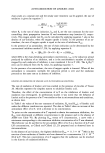
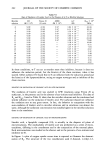
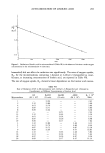
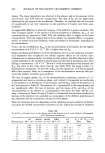
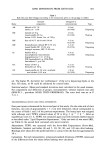
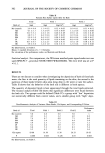
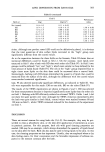
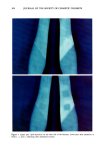
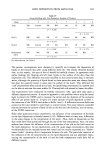
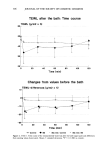
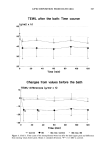
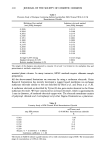
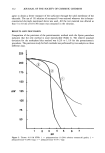
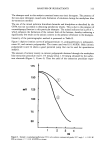
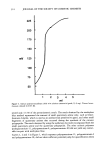
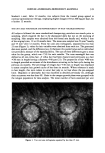
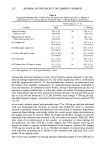
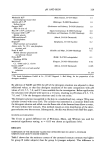
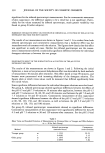
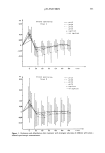
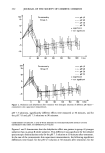
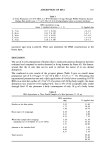
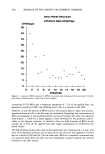
330 JOURNAL OF THE SOCIETY OF COSMETIC CHEMISTS significant for the infrared spectroscopic measurements. For the corneometric assessment of skin capacitance, the difference appears to be a trend but is not significant. Partic- ularly for the values measured by infrared spectroscopy, much greater variability was found in group B (older subjects). IMMEDIATE HYDRATIVE EFFECT ON THE STRATUM CORNEUM AS A FUNCTION OF THE pH OF THE DETERGENT SOLUTION FOR BOTH GROUPS The results of our measurements are shown in Figures 1 and 2. It is evident from both infrared spectroscopic and corneometric measurements that a hydrative effect was the immediate result of treatment with the solution. The figures show clearly that this effect was significant in nearly all cases. Neither the infrared spectroscopic nor the corneo- metric measurements showed a statistically significant difference between the individual detergent solutions or between the two groups. DEHYDRATIVE EFFECT OF THE SURFACTANTS AS A FUNCTION OF THE pH OF THE DETERGENT SOLUTION The results of the measurements are shown in Figures 1 and 2. Following the initial hydration, a more or less pronounced dehydration effect was detectable by both methods of measurement 30 minutes after treatment. This effect lasted at least 90 minutes, and became more pronounced with increasing alkalinity of the detergent solution. The figures show at which times values could be measured that differed significantly from the initial values. Some significant differences between the individual detergent solutions were also found. For group A, infrared spectroscopy showed significant differences between the effects of the pH 4.5 and pH 7.0 solutions at 30 minutes after application between the pH 4.5 and pH 7.5 solutions at 30, 60, 90, and 120 minutes and between the pH 7.0 and pH 7.5 solutions at 30 and 60 minutes. Corneometric measurement of skin capacitance showed significant differences between the effects of the pH 4.5 and pH 7.5 solutions at 60, 90, 129, 150, and 180 minutes, as well as between the pH 5.9 and pH 7.5 solutions at 120, 150, and 180 minutes. For group B, infrared spectroscopic measurements showed no significant differences. Corneometric measurements of skin capacitance were significantly different for the pH 4.5 and pH 7.5 solutions at 30 and 120 minutes after treatment. For the pH 5.9 and Table I Mean Value and Standard Deviation of Measurements on Untreated Skin in Younger and Older Subjects (n = 40 for Each Group) Infrared spectroscopy Corneometry Method (moisture factor) (scale divisions) Younger group m 1.1532 93.23 s 0.0382 5.33 Older group m 1.1979 95.33 s 0.0839 5.84

pH AND SKIN 331 FF 0,20 0,1O] 0,0 5 O• - O, OE -0,10- Infrared spectroscopy Group A pH4,5 pH 5,9 - -- pH ?,0 ß . pH ?,5 ß significant o not s•gnff•cant 6 •0 6'0 9'0 1•0 1•0 lg0 timin FF 0,30 0,201 0,10 0,05' O- - 0,0 5 - -0,10- lnfrored spectroscopy Group B f pH 4,5 ---- pH 5,9 .... pH %0 .. - pH 7,5 ß s•gnlf•cant o not slgqificant 3'0 6'0 9'0 'i0 •0 'i0 t/rain Figure 1. Hydration and dehydration after treatment with detergent solutions of different pH values-- infrared spectroscopic measurements.
Purchased for the exclusive use of nofirst nolast (unknown)
From: SCC Media Library & Resource Center (library.scconline.org)