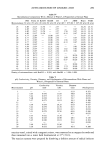
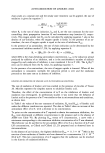
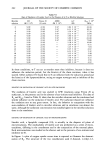
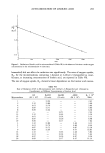
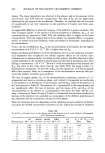
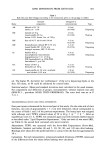
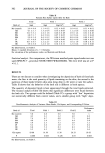
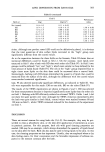
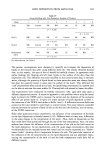
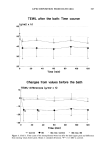
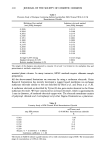
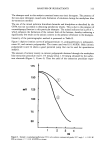
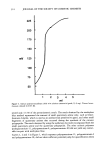
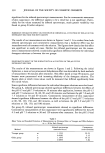
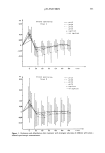
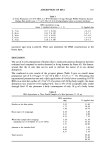
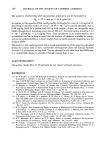
LIPID DEPOSITION FROM BATH OILS 305 Table IV Group Building with Non-Parametric Analysis of Variance Rank I 2 3 4 5 6 7 8 Total EM Control OE BN AK LF OC BD P = O.2O6 Field I EM BN OE LF Control OC P = O.223 AK BD P = 0.114 Field 3 EM Control OE AK BN LF OC BD P = 0.182 P = 0.275 Performance EM BN OE AK LF OC BD index P = 0.171 For abbreviations, see Table I. The present investigations were designed to quantify and compare the deposition of lipids on the forearm skin after using different bath oils. The results obtained showed that, in this respect, the type of the oil should be carefully chosen. In agreement with earlier findings (6), floating oils left more lipids on the surface of the skin than did dispersible oils. This difference was more manifest on skin areas located deep in the bath water, although the quantity of lipids found in these particular areas was always clearly less than the quantity found in areas near the surface of the water. This reflected the "curi ø' phenomenon often noticed after a bath, the lipids being concentrated in a narrow zone on the skin at and near the water surface (6). Floating bath oils seemed to lessen this effect. The experiments were conducted on healthy volunteers. Dry, aged skin may show a different deposition pattern. A tentative approach to this problem was to strip the horny layer to elevate the TEWL and to measure the extent and the duration of the occlusive effect of one potent bath oil. In spite of a lower amount of lipids deposited in field 1, the reduction of the TEWL was similar in fields 1 and 3. A difference between fields was noticed in the time needed to come back to control values. This may indicate a possible relation between the amount of bath oil left on the skin and the duration, not the extent, of the TEWL reduction. Some other questions remain unanswered. An influence of the temperature of the bath on the lipid deposition is already known (6,10). Different bath oils may react differently to the same change in the temperature of the water. Thus, bath oil deposition on the skin could have been optimized through the use of the best temperature. Also, the same authors have shown the influence of the concentration of the oils in the bath water on the lipid deposition. In our experiments, only the usual usage concentration (the dose recommended by the manufacturers) was tested and the results expressed as a "Perfor- mance Index" allowing direct comparison between the oils. The particular question of the influence of the oil concentration on the lipid deposition was not addressed. Opti- mizing the concentration of the bath oil and the bath temperature could have led to different results.

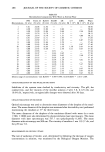
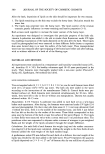
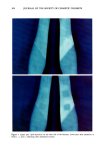
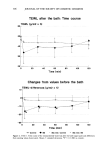
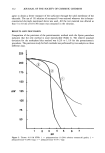
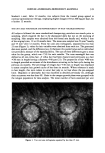
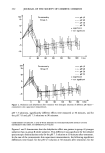
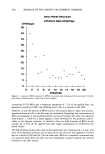
306 JOURNAL OF THE SOCIETY OF COSMETIC CHEMISTS TEWL after the bath: Time course TEWL (g/m2 x h) 60 - 503 4O 3O 20 0 2O 40 60 80 100 120 Time (rain) Changes from values before the bath TEWL-differences (g/m2 x h) 10- 0 ( -lO -20 o 2o 40 so so lOO 12o Time {rain) [3 Control -•-BD ß $td. D©v. Control + $td. D©v. BD Figure 2. Field 1. Time course of the transepidermal water loss after the bath (upper part) and differences from starting values (lower part). Means -+ standard deviations. *P 0.1 (BD vs control).
Purchased for the exclusive use of nofirst nolast (unknown)
From: SCC Media Library & Resource Center (library.scconline.org)