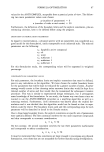
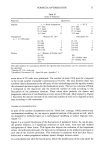
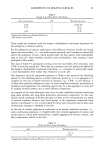
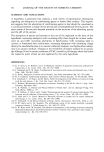
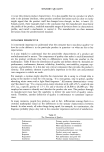
ADSORPTION TO KERATIN SURFACES 89 Table II Adsorption of Cationic Plus Lipid by Hair Ratio in formulation (Lipid/cationic) Ratio adsorbed (Lipid/cationic) 0.68 a 0.41 1.00 a 0.76 2.27 a 1.22 1.50 b 1.22 4.00 b 3.93 a Stearalkonium chloride and cetyl alcohol. b CTAC and cetyl alcohol. the ratio of lipid to cationic surfactant in the formulation, the mechanism of adsorption acquires more hydrophobic character, which is consistent with the charge to hydropho- bic continuum hypothesis. ADSORPTION OF AMODIMETHICONES TO HAIR FROM AN ANIONIC SHAMPOO To determine if it is possible to provide for a hydrophobically driven process by chang- ing the structure of the cationic conditioner, and to provide some learning about current 2-in-1 conditioning shampoos, we decided to examine the adsorption of three different amodimethicone polymers of varying hydrophobicity. These cationic polymers were emulsified in the same 19% ammonium lauryl sulfate shampoo near neutral pH. The polymers were similar structurally (see structure 4 below and Table III), although they differed primarily in their hydrophobicity (see the charge ratios [amine equivalents] in Table III). The amine equivalents are essentially the unit weight titratable by one equivalent of acid, and therefore they increase numerically with decreasing amine con- tent or charge density. CH3 •,Si - O - (Si- O)x - (Si- O)y -Si- CH 3 / / CH 3 CH 3 (CxI--I2)n CH 3 NH- CH:- CH•- NH: Arnodimethicones (4) In addition, we were informed by the supplier that the molecular weights also increased with decreasing amine content however, the molecular weights were not provided to us. Nevertheless, both increasing molecular weight and decreasing amine content should make the polymers more hydrophobic. The data of Table III show increasing adsorption with decreasing amine content (in- creasing numerical value of amine equivalents), clearly in support of a hydrophobically driven mechanism of adsorption. Although one might argue that charge is still involved in the adsorption process, the hydrophobic character is clearly more important than charge to the relative adsorption differences found for these polymers in this simulated

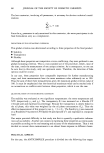
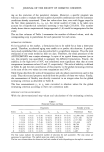
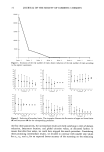
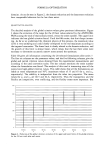
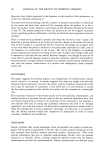
90 JOURNAL OF THE SOCIETY OF COSMETIC CHEMISTS Table III Adsorption of Amodimethicones to Hair Amount of silicone adsorbed to hair Amine equivalents One wash Five washes Silicone 1 2,000 0.04 0.06 a Silicone 2 4,200 0.06 0.16 a Silicone 3 30,000 0.09 a 0.45 a Indicates significant difference relative to other values in the same column at the alpha = 0.05 level. 2-in-1 shampoo system. In a sense, one might say that at very high molecular weights, the cationic functionality of amodimethicones is diminished and that their conditioning approximates that of dimethicone, derived primarily from hydrophobicity. ADSORPTION OF PURE HYDROCARBONS Structural variations of the adsorbing cationic species where increasing hydrophobic character is added to the cation have been described in this paper (see Tables I and III). In addition, the combination of fatty alcohols with long-chain quaternary ammonium compounds may be considered an additional structural variation wherein greater hydro- phobic character is added to the adsorbing species. In a sense, the extreme structural variation for providing the maximum hydrocarbon character is to completely remove the charged cationic grouping from a long-chain cationic species, leaving a pure hydrocarbon. This route was the next step we considered. The exact system chosen involved the adsorption of petrolatum in two different surfac- tant systems, 12.5% ammonium lauryl sulfate (ALS) + 2.5% sodium laureth-2 sulfate (SLES) vs 15% sodium deceth-2 sulfate (SDES). To follow the adsorption of the petrolatum onto hair, we spiked the formulas with radiolabeled octacosane, since the petrolatum selected contains about 2.8% octacosane. Therefore, the calculated adsorption of petrolatum is based on the change in radioac- tivity of the hair. Of the two surfactant systems selected, the 15% SDES is the more hydrophilic and the more polar. If the adsorption process in this system is primarily a hydrophobically driven process, then one would expect greater adsorption to the hair from the more polar medium. That is exactly what happens (see Table IV). This result is consistent with our proposal that we have forced this system to a hydro- Table IV Adsorption of Hydrocarbons by Wool Fabric From a Conditioning Shampoo System Containing 1.5% Petrolatum Surfactant Hydrocarbon adsorbed by wool (mg/gm) 12.5% ALS + 2.5% SLES 0.12 15% SDES 0.27 The values above are significantly different at the p -- 0.05 level.
Purchased for the exclusive use of nofirst nolast (unknown)
From: SCC Media Library & Resource Center (library.scconline.org)