INFLUENCE OF LIPOSOMAL ENCAPSULATION 131 • • • •, o •.• O0 0 0 0 0 0 0

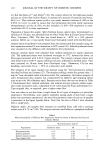
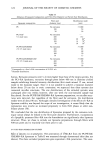
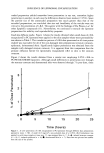
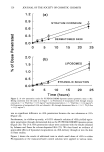
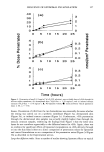
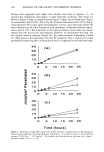
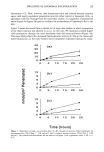
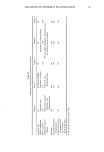
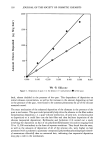
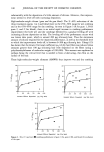
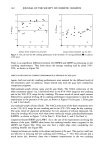
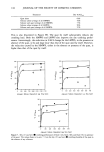
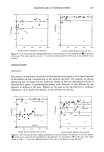
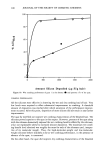
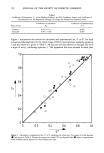
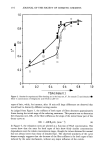
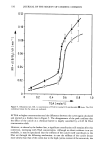
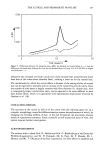
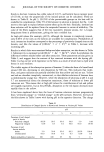
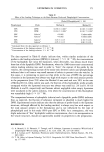
132 jOURNAL OF THE SOCIETY OF COSMETIC CHEMISTS tions: liposomes do not, as a rule, enhance skin penetration relative to conventional topical formulations (6,7,10,12). Having established that these liposome systems do not enhance t-RA penetration across the stratum corneum, we can reformulate the second liposome delivery question as follows: Does liposomal encapsulation significantly retard the delivery of t-RA across the skin relative to the amount transported across the stratum corneum? An affirmative response to this question would support the contention that liposomes can increase drug concentrations in the skin while decreasing systemic absorption. Two recent studies employing t-RA have led to such a conclusion (6,7). Our studies do not support this position. In three of the five conditions studied (Figures 1, 3, 4), the penetration rate of liposomal t-RA across dermatomed skin was either equal to or slightly greater than the penetration rate across stratum corneum. In the fourth study (Figure 2a), although the situation was reversed, the differences seen were small and were not significant after 7 h post-dose. Moreover, liposomal delivery of t-RA across dermatomed skin was greater than or equal to that from the solvent-deposited t-RA in this study (Figure 2b). The final study (Figure 5 large, non-occluded dose conditions) does present the possibility of an accumulation of t-RA in the lower skin layers from the PC liposome formulation. In this study, the penetration rate of liposomal t-RA across the stratum corneum was 4.0 nmol/cm2/24 hr, whereas that across dermatomed skin was only 2.3 nmol/cm2/24 hr, giving a penetration ratio of 1.75 (Table III). The transcutol/ water control solution yielded no such difference (penetration ratio of 0.88). Using a simple diffusion model, one can show that the 1.7 nmol/cm2/24 hr difference between these two rates values, 4.0 and 2.3 nmol/cm2/24 hr, represents many times the average steady-state concentration of freely diffusing t-RA in the lower skin layers. This could clearly represent a pharmacologically important accumulation of t-RA. Why would this effect develop under large, non-occluded dose conditions, but not under other circum- stances? One difference that stands out is the high lipid concentrations achieved under these conditions. Whereas the starting lipid concentrations in all studies was about 6 mg/ml, evaporation of the water from the large, non-occluded doses could easily have led to lipid concentrations 10-20 times that value after several hours. We offer the possibility that with sufficiently high PC concentrations at the skin surface, enough PC may diffuse across the stratum corneum to complex a significant amount of t-RA in the lower skin layers. This possibility seems worthy of further study. This particular set of conditions, however, is not realistic from the point of view of cosmetic formulations. Realistic application levels of moisturizers and other topical creams and lotions tend to be in the 1-2 mg/cm 2 range, similar to the small-dose conditions in our in vitro studies. Lipid concentrations are constrained to a few percent or less by both aesthetics and cost. We chose to study the effects of large doses of liposomes as well as small ones in order to compare our findings with those of others (10-13). It seems possible from our work that liposomes do retard the diffusion of t-RA across the lower skin layers under exaggerated dose conditions. But, based on our findings, it is unlikely that this effect would persist under realistic dose conditions. CONCLUSION Incorporation of trans-retinoic acid into either simple PC liposomes or a complex,
Purchased for the exclusive use of nofirst nolast (unknown)
From: SCC Media Library & Resource Center (library.scconline.org)