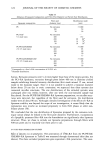
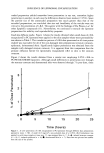
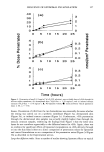
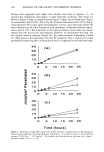
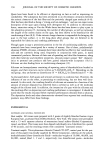
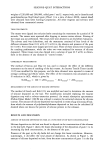
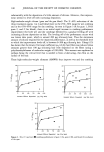
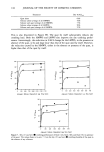
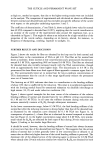
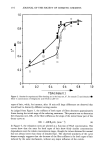
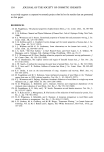
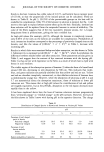
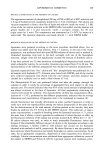
INFLUENCE OF LIPOSOMAL ENCAPSULATION 127 4O 3O 2O 10 0 4 3 2 1 4 3 2 1 (a) T 3 2 1 0 0 5 1 0 1 5 2o 25 (b) T. ß 0.3 O2 0 I 0.0 0 5 1 0 15 20 25 (c) 0.0 0 5 I 0 I 5 2O 25 0.3 0.2 0 I Time (hours) Figure 3. Penetration of small (4.8 mg/cm 2 of a 0.05 % solution), non-occluded doses of t-RA through (a) silicone rubber membrane (b) dermatomed skin (3H20 flux = 1.29 mg/cm2) and (c) isolated stratum corneum (3H20 flux = 0.79 mg/cm2). &, PC-liposome vehicle O, transcutol/water vehicle (geometric mean - SE, n = 5-8). branes. Penetration of t-RA from the two formulations was essentially the same whether the testing was carried out on a synthetic membrane (Figure 3a), dermatomed skin (Figure 3b), or isolated stratum corneum (Figure 3c). Furthermore, t-RA penetration through the dermatomed skin samples was actually slightly higher than through the stratum corneum samples, reinforcing the findings from Figure 1 that the lower skin layers do not contribute appreciably to the diffusion barrier for t-RA. Again, there was no evidence for significant effects of liposomal encapsulation on t-RA delivery through or into the skin based either on a direct comparison of penetration values for liposomal and control formulations or on a comparison of the penetration ratios (Figure 3c/Figure 3b) as described in the Experimental section. Large-dose diffusion studies. Since a number of studies showing liposome effects on topical

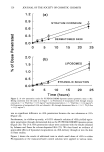
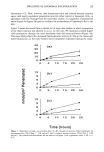
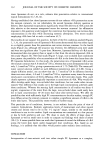
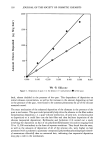
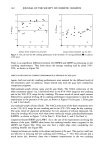
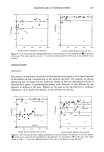
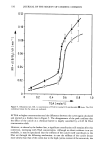
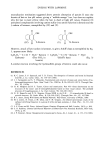
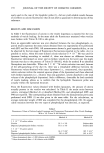
128 JOURNAL OF THE SOCIETY OF COSMETIC CHEMISTS delivery have employed much larger dose volumes than those in Figures 1-3, we repeated the comparisons from Figure 3 under high-dose conditions. The results are shown in Figure 4 (large, occluded dose) and Figure 5 (large, non-occluded dose). Figure 4a demonstrates that 0.05% t-RA in the PC-liposome formulation and 0.05% t-RA in transcutol/water 68:32 have equal thermodynamic activity, since they both yielded the same diffusion rate for t-RA through an inert membrane. Additional diffusion experi- ments with 0.10% t-RA suspension in the transcutol/water vehicle (data not shown) showed that this activity was near maximal. However, on dermatomed skin (Fig. 4b) and isolated stratum corneum (Figure 4c), the transcutol/water formulation yielded 50-100% greater t-RA penetration than did PC liposomes. This is evidence for a mild permeability-enhancing effect oftranscutol on skin, as suggested by the work from other 40 30 20 10 0 40 30 20 10 0 40 30 20 10 0 (a) O 5 I O I 5 20 25 (b) T 0 5 I 0 I 5 20 25 (c) T 0 5 I 0 I 5 20 25 Time (hours) Figure 4. Penetration of high (200 mg/cm 2 of a 0.05% solution), occluded doses of t-RA through (a) silicone rubber membrane (b) dermatomed skin (3H20 flux = 3.94 mg/cm2) and (c) isolated stratum corneum (3H20 flux = 1.07 mg/cm2). The symbols and formulations are the same as in Figure 3 (geometric mean -+ SE, n = 7-8).
Purchased for the exclusive use of nofirst nolast (unknown)
From: SCC Media Library & Resource Center (library.scconline.org)