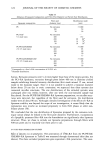
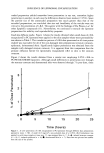
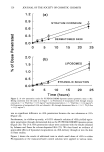
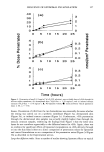
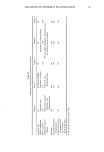
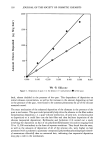
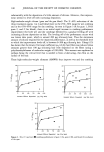
INFLUENCE OF LIPOSOMAL ENCAPSULATION 123 saline, pH 7.4, containing 0.02% (w:v) sodium azide to retard microbial growth. The receptor solutions were stirred and maintained at 37øC in thermostated aluminum blocks, yielding a skin surface temperature of 30-32øC. To improve sensitivity, we ranked the tissue samples in order of increasing water permeability, and applied each formulation to at least seven samples using a random complete block design (29). Most of the diffusion studies employed small, non-occluded topical doses (3.8 •1, 4.8 mg/ cm 2, herein called "small dose"), similar to those achieved by application of a skin cream or moisturizer. Other studies employed much higher doses (160 •1, 200 mg/cm 2, herein called "large dose") to provide a comparison with the work of other investigators (10-13). To identify purely thermodynamic effects in these studies, the formulations were also applied to a silicone rubber membrane (Silastic © membrane, Dow Corning). The membrane thickness was 410 -+ 19 •m (mean -+ SD of eight determinations). Receptor solutions were collected for radiochemical assay after elapsed times of 2, 4, 7, and 24 hours, and the cells refilled with fresh buffer. Samples were analyzed for 3H activity by liquid scintillation counting (Packard Model 1900 TR), using a maximum counting time of 5 min per sample. Statistical analysis. Results were reported as either cumulative amount or cumulative percent-of-dose of t-RA penetrated at each time point. Statistical comparisons were made using PROC GLM in SAS Vers. 6.06 (SAS Institute Inc., Cary, NC). To compare data from different treatments applied to the same type of tissue, we performed a two-way analysis of variance on logarithmically transformed data, blocking on water permeability (29). To compare penetration through the different skin preparations, we performed a one-way analysis of variance on the log-transformed data. The potential for liposome-induced accumulation of t-RA in the lower layers of the skin was assessed in two ways. The first was to directly compare the penetration rates of liposomal t-RA through skin samples of varying thickness. This method was used when all skin samples from a donor had comparable water permeabilities (Figures 1, 2). The second method, used for samples having different water permeabilities (Figures 3-5), was to form the ratio between the amount of t-RA penetrated through stratum corneum to that through dermatomed skin. A significantly higher value (Student's t-test) of this ratio for lipo- some-encapsulated active versus non-encapsulated active was taken as evidence for li- posome-induced accumulation of t-RA in the skin. RESULTS LIPOSOME SIZE DISTRIBUTION The size distribution modes for four different systems--PC, PC/t-RA, PC/PE/OA/ CHEMS, and PC/PE/OA/CHEMS/t-RA--are reported in Table II. For the empty PC liposomes, the mode of the number distribution was about half the pore size used for extrusion. These results are somewhat smaller than those obtained by Mayer et al. (24), but they are consistent with their conclusion that different size distributions can be obtained by using different pore sizes. The distribution modes for the empty PC/PE/ OA/CHEMS liposomes were lower (about one fourth of the pore diameter instead of one half). However, there was still a strong positive correlation between distribution mode and pore size. Incorporation of t-RA into these systems totally changed the size distri-

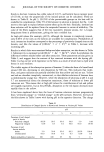
124 JOURNAL OF THE SOCIETY OF COSMETIC CHEMISTS Table II Influence of Liposome Composition and Filter Pore Diameter on Particle Size Distribution Liposome composition Filter pore Distribution mode diameter (nm) (nm) PC No extrusion 1000 100 50 50 26 PC/t-RA a No extrusion 5:1 mole ratio 400 152 200 20 80 b 100 14 70 b 50 10 36 b PC/PE/OA/CHEMS No extrusion 1000 2:2:1:5 mole ratio 400 85 200 48 100 29 50 13 PC/PE/OA/CHEMS/t-RA a No extrusion 1000 2:2:1:5:2 mole ratio 400 85 200 70 100 92 Corresponds to a final t-RA concentration of 0.05% w/v. Bimodal distribution. bution. Extrusion pressures were 3-4 times higher than those of the empty systems. For the PC/t-RA liposomes, extrusion through pores below 400 nm in diameter yielded samples exhibiting bimodal intensity distributions (first mode around 15 nm, second mode in the liposome range). Since it is not possible to achieve a liposome diameter below about 20 nm due to steric constraints, we suspected that these systems also contained miceliar structures. The size distributions of the extruded systems were unchanged after two weeks however, after one week the non-extruded sample had fiocculated. For the PC/PE/OA/CHEMS/t-RA liposome preparations, no miceliar struc- tures were detected, but regardless of the filter used for extrusion, the distribution modes were all about 80 nm. Although a detailed investigation of the effects of t-RA on liposome stability was beyond the scope of our investigation, it seems likely that the explanation may involve an increased propensity to form H-II phases or other non- bilayer phases (30). We concluded that the size distribution of liposomes prepared by the extrusion tech- nique cannot always be linked to the filter pore diameter. Furthermore, incorporation of a lipophilic permeant like t-RA into the formulation can significantly alter liposome structure. Thus, we chose to extrude our liposome preparations through filters with 400-nm pores and to routinely size them prior to use. IN VITRO SKIN PERMEATION STUDIES Efj•ct of liposome size on penetration. The penetration of [3H]t-RA from the PC/PE/OA/ CHEMS/t-RA liposomes in Table II was measured through dermatomed skin (data not shown). The three extruded preparations gave equivalent t-RA penetration. The unex-
Purchased for the exclusive use of nofirst nolast (unknown)
From: SCC Media Library & Resource Center (library.scconline.org)