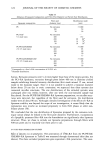
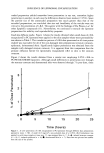
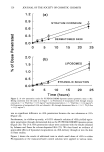
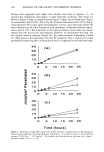
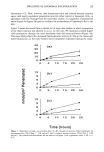
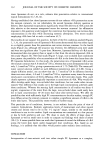
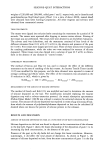
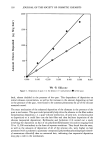
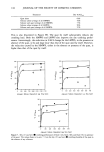
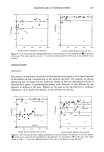
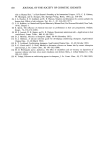
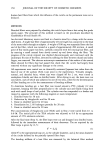
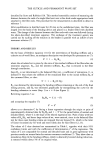
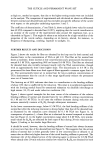
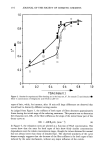
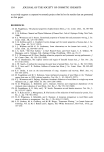
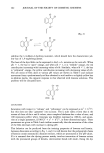
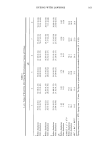
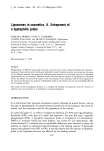
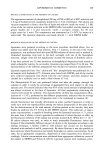
SILICONE-QUAT INTERACTIONS 145 80- 60: 40- 20- ß lOO 80- 60- 40- 20- o o 500 lOOO 15 2000 500 1 00 15 0 2000 Amount Silicon Deposited (gg Si/g hair) Amount Silicon Deposited (gg Si/g hair) Figure 8. Dry (A) and wet (B) combing performance of all the fluids (0) and gums/blend (t•) in presence of the quat. The values shown at x-axis = 0 are the combing benefits of the quat in the absence of any silicones. CONCLUSIONS DEPOSITION The amount of deposition of silicone on bleached hair was found to be a linear function of the initial silicone concentration in the solution dip bath. The amount of silicone depositing did not depend on the molecular weight or the type (dimethicone fluids vs dimethiconol gums) of polydimethylsiloxane used however, it was affected by the presence or absence of the quat. Presence of the quat in the dip bath led to increased deposition, up to double the amount, of the siloxane on the hair. 100 80- 60- 40- 20- Silicones with quat ß ß ß Silicones alone Quat alone lOO 0 H•vlWS with & without quat o •O-lO o ß ß 40- 20- 0 Quat alone o % o ß ß ß o o ee LMWS with & without quat i oi• i do Ioo 500 1000 1500 2000 0 500 1 0 15 Amount Silicon Deposited (gg Si/g hair) Amount Silicon Deposited (Hg Si/g hair) Figure 9. Wet (A) and dry (B) combing performance of all the fluids in the presence of (O) and absence (O) of the quat, and of all the gums/blend in the presence (O) and absence (ß) of the quat. The values shown at x-axis = 0 are the combing benefits of the quat in the absence of any silicones.

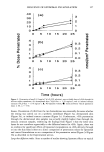
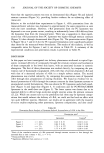
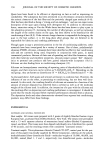
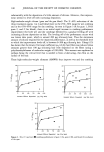
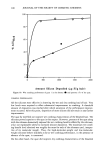
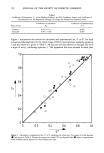
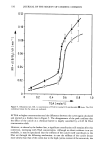
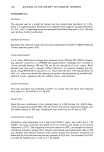
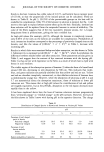
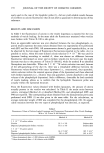
146 JOURNAL OF THE SOCIETY OF COSMETIC CHEMISTS 100 40 20 0 i i i 0 500 1000 1500 2000 Amount Silicon Deposited (gg Si/g hair) Figure 10. Wet combing performance of gum 1 in the absence (O) and presence ( • ) of the quat. COMBING PERFORMANCE All the silicones were effective in lowering the wet and dry combing load of hair. Very low levels were required to effect substantial improvement in combing. A threshold amount of deposition was reached after which saturation of the performance improve- ment occurred. After this point, deposition of more silicone did not result in any further improvement. The quat by itself did not improve wet combing characteristics of the bleached hair. The silicones proved superior to the quat in this respect. However, presence of the quat along with the siloxane dramatically improved the wet combing benefits offered by the silicones, a fact not explainable solely by increased silicone deposition. The maximum wet comb- ing benefit level obtained was roughly the same for each of the siloxanes used, irrespec- tive of its molecular weight. Thus, the high-molecular-weight and low-molecular- weight silicones behave similarly as far as wet combing performance, in the presence or absence of the quat, is concerned. On the other hand, the quat did improve dry combing characteristics of the bleached
Purchased for the exclusive use of nofirst nolast (unknown)
From: SCC Media Library & Resource Center (library.scconline.org)