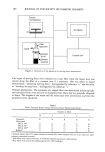
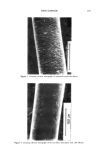
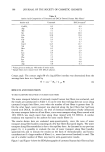
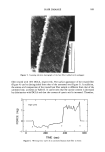
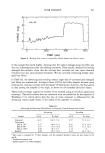
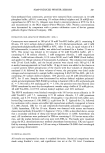
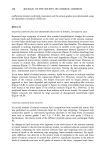
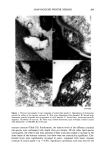
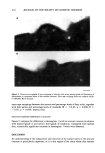
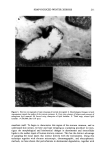
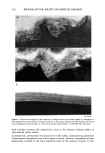
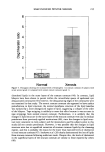
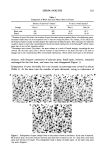
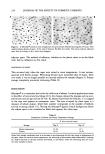
SOAP-INDUCED WINTER XEROSIS 215 6 5 _ o Normal Xerosis Figure 5. Histogram showing the increased levels of desmoglein 1 in stratum corneum of subjects with severe xerosis (grade 4) compared with normal stratum corneum (grade 1). disordered lipids in the outer layers of the stratum corneum (44). In contrast, lipid bilayers have been shown to persist within the intercellular spaces of epidermal cyst desquamated corneocytes (45) however, the desquamating edges of the corneocytes were not examined in that study. The xerotic stratum corneum also appeared to have surface perturbations in lipid structure the normal membrane structure of the lipid lamellae was replaced by a more disorganized region of lipid, suggesting a collapse of the order of the bilayers. Tape stripping is unlikely to cause this effect because it was not seen in tape strippings from normal stratum corneum. Furthermore, it is unlikely that the changes in lipid structure in the outer layers of the stratum corneum were due to residual petrolatum from previously applied moisturizers (46), since the changes in lipid struc- ture were consistent in every subject and the moisturizers used by subjects prior to this study did not contain petrolatum. However, it was possible that the changes in lipid structure were due to superficial extraction of stratum corneum lipids by the cleansing regime, and this is probably the reason for the lower than expected levels of cholesterol in total stratum corneum (47). Imokawa et al. (28) clearly demonstrated the loss of lipids from stratum corneum following surfactant insult. Despite this, the levels of cholesterol in the superficial layers of the stratum corneum are similar to those reported by others (48).

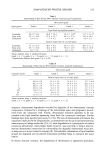
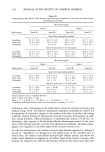
216 JOURNAL OF THE SOCIETY OF COSMETIC CHEMISTS In parallel with the morphological changes in the lipid bilayers, changes in stratum corneum lipid composition are also associated with winter xerosis. Our data demon- strated a decrease in the content of ceramide in xerotic skin comparison of inner and outer stratum corneum revealed that in the milder xerotic skin the decrease in ceramide levels was a surface phenomenon that extended to the deeper layers of the stratum corneum in the more severe xerotic grades. Interestingly, the ratio of the ceramide sub-species did not alter. Similar decreases in ceramides have been found in atopic dermatitis (48-50). Although others have shown increases in fatty acid levels in the stratum corneum of xerotic subjects (29), in our study the fatty acids only tended to increase. In both of these studies the increase in fatty acid levels in the stratum corneum may be due to deposition of soap-derived fatty acids. The reasons for the aberration in stratum corneum lipid structure in soap-induced winter xerosis are unknown, but they are probably related to diminishing ceramide and in- creasing fatty acid levels, which may lead to an alteration in the phase behavior of the stratum corneum lipids and result in crystallization of the lipid matrix. Friberg and Kayali (51) have demonstrated that saturated fatty acids offer little resistance to water transport their increased levels in the upper stratum corneum may influence lipid structure and barrier function. Although the levels of fatty acids do not show statistical differences in their concentrations between the inner and outer layers of the stratum corneum due to the large inter-individual variation, their mass levels were nearly doubled in subjects with xerosis. The fatty acids may be derived from the soap for bathing, due to the hydrolysis of ceramides by a ceramidase (52), or may be of sebae- ceous origin. Excess fatty acids have been found in the lipid fractions derived from low-humidity-induced dry skin samples of pigs (53), indicating intrinsic origins rather than extraneous sources. It is therefore possible that the alteration of the ratio of the three major lipid components, fatty acids, steroIs, and ceramides, causes phase separa- tion of lipids at the surface of the stratum corneum. The excess fatty acid levels may further exacerbate the structural defects of the intercellular lipid fatty acids alter the phase properties of phospholipid bilayers (54). Such phase separations have also been seen with lovastatin-treated animals (55). Whether the surface abberations in lipid structure and composition together with degradation in xerotic desmosomes are linked is presently unknown. However, it is possible that changes in lipid structure or composition could interfere with the enzymes responsible for desmosomal degradation. To date, one candidate as a desmosome- degrading desquamatory enzyme is stratum corneum chymotryptic enzyme (SCCE) (16). It is possible that this, or similar desquamatory hydrolases (19), could be inhibited by the altered lipid environment or denatured by direct soap action, or that, alternatively, these enzymes could be affected by the external environment, causing either denatur- ation of the protein or prevention of access to the desmosome. It is interesting in this respect that other chymotryptic enzymes are inhibited by fatty acids (56) and that we, and others (29), find increased fatty acid levels in soap-induced winter xerosis. Another possible linkage between the desmosome and lipid elements in skin xerosis could be at the level of the lameliar bodies in the granular layer. These lysosome-like structures are the source of the stratum corneum intercellular lipids, and possibly also of the desquamatory enzymes (3,42). Environmental effects could feed back to the granular layer, affecting delivery of their contents. However, it is difficult to see how
Purchased for the exclusive use of nofirst nolast (unknown)
From: SCC Media Library & Resource Center (library.scconline.org)