j. Soc. Cosmet. Chem., 45, 239-246 (September/October 1994) The relationship between solution pH and clinical irritancy for carboxylic acid-based personal washing products RICHARD I. MURAHATA and MICHAEL P. ARONSON, Unilever Research U.S., 45 River Road, Edgewater, NJ 07020. Received July 5, 1994. Synopsis The influence of formulation pH on the irritation potential of slurries formed from two commercial products composed entirely or partially of aliphatic carboxylic acid-based surfactants (fatty acids and their salts) was determined in vivo by use of a flex wash. Increasing the pH of a synthetic detergent/fatty acid slurry from its neutral value to a pH of 10 reduced its mildness. The neutral pH of the predominantly non-soap-based cleanser, therefore, makes a significant contribution to its mildness. If it were formulated at pH 10, it would be significantly harsher to the skin than the current neutral formulation. The pH also had a significant effect on the irritation potential of soap-based cleansers. Decreasing the pH of soap slurties from their "normal" pH of approximately 10 to pH 7 reduced their irritation potential. The difference in alkalinity, as measured by pH, is directly related to the lower irritation potential of both of these formu- lations. These results demonstrate that pH has an important role in determining the differences in irritation potential of these complex skin cleansing compositions through effects on ionizable constituents. INTRODUCTION The relationship between pH and the potential of personal washing surfactant systems to cause deleterious effects has been the subject of much speculation and remains controversial and steeped in anecdotal evidence and expert testimonials. There appears to be one point of general agreement: uncompromised skin is quite robust, and merely changing the measurable pH within a range of 5-9 does not by itself result in clinically apparent damage (1) or in a change in permeability to water (2). However, raising the skin to a pH of greater than 10.5 is directly damaging due to a corrosive effect. In an elegant set of experiments, it was also shown that not only the pH, but the buffering capacity of the applied challenge, was an important factor in producing clinical changes in response to buffers of various pH (3). While most authors report that the natural buffering capacity of the skin returns the pH to its natural slightly acidic state within a few hours of washing with an alkaline product (4-6), Korting et al. (7) have uniquely reported a long-lasting change in measurable pH. There was a corresponding change in bacterial flora reported however, the clinical relevance of these findings is unknown. While altering the skin surface pH [or, more accurately, measurable pH as pointed out by Rieger (8)] may not directly result in clinically apparent irritancy, pH may have a 239

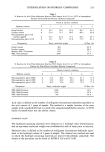
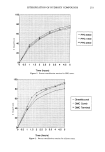
240 JOURNAL OF THE SOCIETY OF COSMETIC CHEMISTS strong effect on the irritation potential of fully formulated cleansers, especially those based on carboxylic acids. The literature on the relationship of surfactant pH and its ability to damage skin is filled with invalid comparisons of different formulations (9-13) and studies utilizing relatively insensitive methodologies (1,11,12). In some of these studies the skin surface pH and surfactant pH are incorrectly used interchangeably. Another serious drawback to many studies is the attempt to extrapolate results across varied surfactant systems. The comparison between surfactant systems must be done quite carefully, as the relationship between pH and inherent solution chemistry may be quite different. These well-understood chemical properties are related to the surfactant's ability to interact with the skin and produce the observed biological effects. There are few well-defined studies that have actually sought to determine the effects of altering the pH of surfactant solutions or formulations on their irritancy potential. One report studied small changes using carboxylic acid-based systems, which are very pri- dependent, and reported a beneficial effect of even a slight reduction of pH (14). A similar effect was observed in a synthetic detergent-based system (15). Not surprisingly, those investigators studying systems such as SLS, whose chemical properties are rela- tively pH-independent, report little or no effect (16). An interesting effect of pH on epidermal membrane swelling in vitro was reported by Robbins and Fernee (17). When pH was varied, the amount of swelling was not proportional to the amount of surfactant bound by the keratin. This was attributed to the relative importance of ionic vs nonionic interaction on the ability of keratin to bind water. Results extending these observations to macroscopic biological effects (irritancy) were not reported. This report describes a series of studies using a well-described exaggerated washing technique to determine the relationship between formulation pH and irritancy potential for two well-described commercially available cleansing bars. The flex wash is an exaggerated-use clinical test that has been widely used to predict the in-use mildness of cleansers to the skin (18,19). Five separate flex washes were con- ducted. It is clearly demonstrated that there is a well-defined and predictable relation- ship between solution pH and the irritancy of alkyl carboxylic acid-based cleansers. Higher pH solutions result in significantly more irritation than their lower pH coun- terparts, which are quite mild indeed at pH 7. These results are totally consistent with the well-known, but complex, solution chemistry of these compounds, as well as with the many systems used to model surfactant skin interaction. EXPERIMENTAL Two commercially available personal washing bars were chosen for testing based on their well-described differences in "normal" pH and irritation potential (20,21). Bar A, a mild cleanser based on the synthetic detergent sodium cocoyl isethionate, also contains a significant amount of fatty acids in the formulation. Bar B is almost entirely composed of sodium cocoate and sodium tallowate. The principal ingredients are listed in Table I. Slurries were prepared by suspending 50 g of bar shavings in 50 ml of deionized water with gentle heating (50% slurry). In one study, a 20% (20 g in 80 ml of water) slurry was used. Slurry pH was measured using standard potentiometric methods. Slurries of bar A are typically around pH 7.0, and those of bar B between pH 10.0 and 10.5.
Purchased for the exclusive use of nofirst nolast (unknown)
From: SCC Media Library & Resource Center (library.scconline.org)