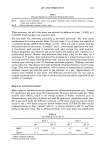
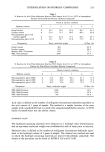
pH AND IRRITANCY 241 Table I Principal Ingredients of Personal Washing Bars Tested Bar A Bar B Sodium cocoyl isethionate, stearic acid, sodium tallowate, water, sodium isethionate, coconut fatty acid, sodium stearate Sodium tallowate, sodium cocoate, water When necessary, the pH of the slurry was adjusted by addition of either 1 N HCI or 1 N NaOH. Fresh samples were prepared daily. The flex wash was performed essentially as described previously (18), with minor modifications for testing non-bar forms. For each wash, 0.4 g of slurry was applied to a moistened sponge (JAECE Identi-Plugs, size D), which was used to gently wash the antecubital fossa for one minute. In studies ! and 3, a two-minute application was used. A two-minute wash protocol is commonly used when testing very mild products. Product assignment was balanced, and paired washes and grading were conducted in a double-blind fashion. Washes were scheduled three times a day for five days, for a maximum of !5 washes. Sites were scored for erythema by a trained evaluator prior to each wash and four hours following the last wash. An arm was discontinued from further washing upon reaching a score of 2 (moderate erythema) or greater. Washing continued on the other arm. The subjects were male and female volunteers between 2 ! and 55 years of age. They were in general good health, with no history of dermatological conditions. Informed consent was obtained prior to the initiation of a test. Approximately 20 subjects were enrolled in each study. The Wilcoxon matched pairs test was used to compare erythema scores at the time of the first arm discontinuation regardless of the number of treatments. RESULTS AND DISCUSSION Mean endpoint erythema scores are presented for informational purposes only. Testing for significance was done using the nonparametric Wilcoxon matched pairs test. Mean survival times (MST), which is the average number of washes conducted prior to discontinuation, were also calculated and used for qualitative comparison across tests. Bar A was tested under two different conditions: a 20% slurry using two-minute washes (study !) and a 50% slurry using one-minute washes (study 2) (Table II). Both studies compared slurties at their "natural" pH of 7 to slurties adjusted to pH 10, and both produced the same result. Bar A, shown previously to be quite mild, was significantly Table II Flex Wash Scores for Bar A Study 1 Study 2 pH 7 pH 10 pH 7 pH 10 MEE* 0.72 2.25 0.7 1.8 p 0.0004 0.001 MST** 11.2 6.3 13.0 8.8 * Mean endpoint erythema. ** Mean survival time (washes).

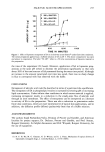
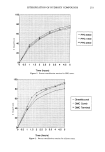
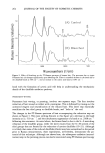
242 JOURNAL OF THE SOCIETY OF COSMETIC CHEMISTS less mild when adjusted to pH 10. The more aggressive two-minute washing procedure resulted in shorter MSTs than the corresponding one-minute washes, which is also logically consistent. Three paired comparisons were conducted using bar B: pH 7 vs pH 10 (study 3), pH 8 vs pH 10 (study 4), and pH 9 vs pH 10 (study 5) (Table III). Study 3 utilized the two-minute protocol, studies 4 and 5 the one-minute protocol. In every study the slurry with the lower pH produced significantly less irritation than the slurry tested at its "natural" pH of 10. It is notable that the slurry adjusted to pH 7 did not result in any discontinuation scores, even with the more aggressive two-minute wash protocol. Anal- ysis of the MSTs demonstrates several salient points (Figure 1). First, the tests are internally consistent and reproducible. In all cases two-minute MSTs are less than the corresponding one-minute MSTs. Identical MSTs were obtained when a test was re- peated. There is a monotonic inverse relationship between slurry pH and MST for both bars. The above results indicate that the irritation potential of aqueous slurries of both bars is highly dependent on pH. When alkali, e.g., NaOH, is added to a slurry of bar A to raise its pH to 10, the composition becomes much more irritating to the skin. In contrast, addition of acid, e.g., HCI, to the bar B slurry to reduce its pH to 7 results in a much milder slurry. There are several factors that can contribute to the pronounced effect of pH on the irritation potentials of the surfactant systems we have studied. The first and perhaps smallest contribution is the intrinsic effect of pH and buffer capacity directly on the skin. As mentioned above, it has been reported that altering the pH of the skin surface, i.e., the stratum corneum, within the range of 5-9 does not induce visible irritation when applied to healthy skin (1). However, Bucher et al. (3) found in an earlier study with intracutaneous injection of buffer solutions that "un- physiological pH values begin to become irritant with pH 4 and with pH 10." This is not entirely unexpected since it is well known that sufficiently alkaline (pH 12) or acidic (pH 2) solutions are ultimately corrosive to the skin. Bucher et al. also noted that the irritant effect depended very strongly on the buffer capacity of the test solution. In one case a difference of a factor of 4 in buffer capacity reduced a strongly irritant solution at pH 11 to a practically inert material. It is important to note in this regard that the maximum buffer concentration used by Murahata et al. (1) was 0.12 M, and that the measurable skin surface pH never reached the pH of the applied buffer solutions. However, for a 15 wt% slurry of an alkaline soap bar of 99% purity, the concentration of buffer is approximately 0.5 M, i.e., a factor Table III Flex Wash Scores for Bar B Study 3 Study 4 Study 5 pH 7 pH 10 pH 8 pH 10 pH 9 pH 10 MEE* 0.5 2.4 0.6 2.1 1.4 1.9 p 0.0002 0.0002 0.0269 MST** 15.0 6.3 13.1 8.2 9.0 8.2 * Mean endpoint erythema. ** Mean survival time (washes).
Purchased for the exclusive use of nofirst nolast (unknown)
From: SCC Media Library & Resource Center (library.scconline.org)