SALICYLIC ACID ENCAPSULATION 231 50,000g using a Beckman ultracentrifuge. The supernatant was then separated and placed in an ultrafiltration cell (Centricon © 30, Amicon, Beverly, MA). A control (salicylic acid buffer solution) run simultaneously showed that no adsorption took place. The flitrate after dilution with the proper buffer was then analyzed by UV detection at 297 nm (Lambda 3B UV/VIS Spectrophotometer, Perkin-Elmer, Oak Brook, IL). PERMEATION EVALUATION The Silastic © membrane was mounted on a Teflon flow-through diffusion cell (14). The cell was maintained at 32øC by a water circulating system. The cell surface was 0.636 cm 2. The apparatus consisted of the cells, a fraction collector, a peristaltic pump, a cell heater, and a heating circulator. The receptor phase, composed of preserved saline (0.9% NaC1, 0. 125% chlorobutanol), was pumped through the cell at a flow rate of 6 ml/hour, ensuring sink conditions during the length of the experiment. This phase was collected at one-hour time intervals in scintillation vials. In the case of an infinite dose experi- ment, the donor phase was covered with Parafilm © to avoid evaporation, and the exper- iment was conducted over a limited period of time (3-4 hours). For a finite dose experiment, the donor compartment was open to the atmosphere and the experiment was run for 24 hours. SCINTILLATION COUNTING The liquid scintillation cocktail (Scintiverse TM BOA Scintanalyzed TM , Fisher Scientific, Fair Lawn, NJ) was added, and the radioactivity in the vials was counted for a 10-minute period to obtain a precise estimate of the radiolabeled •4C salicylic acid permeated (Beckman LS 5000 TD, Beckman Instruments, Fullerton, CA). Previously a quench curve had been established using acetone as a quenching agent, and the integrated software had converted the counted CPM into DPM using the H number. Three different flow rates were investigated (1.5, 6, and 10 ml/hour) at pH 2 and pH 4.5. There was no difference in results. RESULTS AND DISCUSSION ENTRAPMENT AND VESICLE CHARACTERISTICS The relative standard deviation for entrapment experiments was below 4%. Table I shows that the entrapment of SA at pH 4.5 was not affected by either sonication time or temperature within the range studied. The effect of pH was studied with a 0.5 % phospholipid concentration in a 0.2 M buffer solution at pH values of 2, 2.7, and 5. The SA concentration was 0.25 gram/liter, which is below its intrinsic solubility (2.17 gram/liter) (15). The pKa of salicylic acid is reported at 2.97 (16). An increase ofpH from pH 2 to pH 5 induced a decrease in the percentage of SA entrapped in the vesicles from 54.4% to 3.2% (Figure 1). Over the same pH range, the extent of ionization increased from about 10% to 99%, illustrating the preference of the vesicles for unionized SA. This was quantitated by modeling entrapment. It was assumed that uptake of ionized and unionized species by vesicles

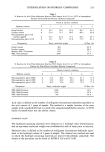
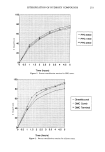
232 JOURNAL OF THE SOCIETY OF COSMETIC CHEMISTS Table I Effect of Sonication Time and Temperature on the Entrapment of SA in Phospholipon © Liposomes* Sonication period Temperature 25øC Temperature 50øC and sonication % of free $A % of free $A temperature (standard deviation) (standard deviation) 10 min 61.0 (1.6) 62.0 (0.2) 30 min 59.1 (0.6) 61.6 (0.4) 60 min 58.6 (0.6) 59.2 (0.3) * Sonicator with a microtip at 35 % of maximum power, 5 % Phospholipon © in 0.2 M phosphate buffer pH 4.5, 0.5 mg/ml of SA. I- z I,LI lOO 80 60 40 20 1-1 NO CHOLESTEROL LESTE i i i i 2 3 4 5 6 pH Figure 1. Effect of pH and cholesterol content of liposomes (0.5% phospholipid: aqueous phase w/w) on the entrapment of SA monitored by ultrafiltration and UV detection at 297 nm. occurred independently and that the process could be represented as a simple partition- ing between the vesicle and the aqueous phase. Justification for this approach is provided below. The distribution coefficients are defined by Equations 1 and 2. [SAø]L Ks^ ø - [SA0]w (Eq. 1) [S-]L Ks- - [S-]w (Eq. 2) K is the distribution coefficient, SA ø refers to unionized salicylic acid, S- to salicylate, L to lipid (phospholipid), and W to water. The brackets indicate concentrations. The amount entrapped (E) is the sum of the amounts of the two species associated with the vesicles. This can be written as E = SAøz V z + S- z V z (Eq. 3) where V z is the volume of the lipid (vesicle) phase. Substitution of Equations 1 and 2 into Equation 3 and rearrangement leads to
Purchased for the exclusive use of nofirst nolast (unknown)
From: SCC Media Library & Resource Center (library.scconline.org)