J. Soc. Cosmet. Chem., 46, 67-76 (March/April 1995) A forearm controlled application technique for estimating the relative mildness of personal cleansing products KEITH D. ERTEL, BRUCE H. KESWICK, and PAULA B. BRYANT, Sharon Woods Technical Center, The Procter & Gamble Company, 11520 Reed Hartman Highway, Cincinnati, OH 45241. Received November 6, 1994. Presented at the loth International Symposium on Bioengineering and the Skin, Cincinnati, Ohio, June 13-15, 1994. Synopsis The forearm controlled application technique (FCAT) is a method for estimating the relative irritation potential of personal cleansers. The FCAT uses an exposure protocol that is based on consumer washing habits, and offers greater efficiency than many other methods used to evaluate personal cleanser mildness. In addition, the FCAT minimizes error due to biological diversity by simultaneously exposing subjects to up to eight test products. Thus, the FCAT offers greater testing power than traditional paired-test designs. We have successfully used the FCAT to differentiate a wide variety of personal cleansing products on the basis of expert visual assessments and instrumental measurements. The method presented has been validated with standard control products over a period of twenty one months at several different test sites under a wide variety of test conditions. INTRODUCTION Mildness is one factor that contributes to consumer acceptance of a personal cleansing product. The relative mildness (or more correctly, irritation potential) of personal cleansing products is ideally judged under conditions of actual consumer use however, these may not present the best conditions for discriminating product mildness differ- ences, since normal use conditions typically do not induce differentiable product skin effects. For this reason, the industry has tended to rely on short-duration, exaggerated protocols that reach endpoints beyond those observed under normal use conditions, to predict the relative irritation potential of personal cleansing products. The challenge of this approach is to choose test conditions that provide a reasonable level of product discrimination without completely sacrificing consumer relevance. The following presents a forearm controlled application technique (FCAT) for estimat- ing the relative irritation potential of personal cleansing products. The method de- scribed is derived from a forearm wash procedure (1,2) that is based on consumer washing practices, and that has been shown to yield relative mildness rankings that 67

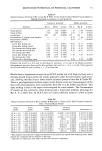
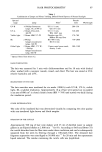
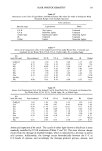
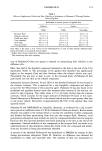
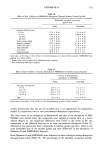
68 JOURNAL OF THE SOCIETY OF COSMETIC CHEMISTS correlate with consumer experience (3). Results generated over a period of twenty one months show that the FCAT method is a useful tool for screening the relative irritation potential of personal cleansers, and that it yields results that are both robust and consistent with other moderately exaggerated forearm wash methods. Further, by test- ing multiple products on each subject, the FCAT minimizes confounding effects due to biological diversity and provides greater precision and sensitivity than typical two- sample test designs. EXPERIMENTAL TEST MATERIALS Formulas for the commercial test bars used in the reported FCAT studies are shown in Table I. Two of these bars were chosen to demonstrate the utility and robustness of the FCAT protocol, and are common to all of the reported studies. Other commercial bars were included in several of the studies to broaden the formula composition range examined and to assess the FCAT's ability to mimic consumer experience with regard to special technologies. Specifically, a commercial bar containing a guar derivative was included in several studies to determine whether the FCAT would show the skin protectant properties attributed to these materials (4,5). Products were applied with a moistened Masslinn © Towel (Chicopee Mills, New Brunswick, NJ), a soft, nonwoven cloth chosen to simulate a washcloth. The water used in these studies was of moderate hardness, ranging between 7 and ! 1 grains per gallon. STUDY POPULATION Healthy male and female volunteers, aged 18-65, were recruited as prospective subjects. Approximately forty subjects participated in FCAT studies employing a replicated Latin Square design larger numbers of subjects were recruited for studies employing an Table I Formula Components of Commercial Bars Referenced in the Text Product Ingredients Bar A Bar B Bar C Bar D Bar E Sodium cocoyl isethionate, stearic acid, sodium tallowate, water, sodium isethionate, coconut acid, sodium stearate, sodium dodecylbenzenesulfonate, sodium cocoate or sodium palm kernelate, fragrance, sodium chloride, titanium dioxide, trisodium EDTA, trisodium etidronate, BHT Sodium tallowate, sodium cocoyl isethionate, water, sodium cocoate, stearic acid, sodium isethionate, coconut fatty acid, fragrance, titanium dioxide, sodium chloride, triclosan, EDTA, disodium phosphate, trisodium etidronate, BHT Sodium cocoyl isethionate, stearic acid, maltodextrin, water, fragrance, titanium dioxide, sodium chloride Soap, water, fragrance Sodium tallowate and/or sodium palmate, sodium cocoate or sodium palm kernelate, water, tallow and/or palm acid, coconut or palm kernel acid, cetearetho80, glycerin, fragrance, sodium chloride, guar hydroxypropyltrimonium chloride, titanium dioxide, pentasodium pentetate, tetrasodium etidronate, dye
Purchased for the exclusive use of nofirst nolast (unknown)
From: SCC Media Library & Resource Center (library.scconline.org)