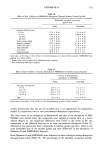
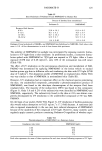
DYNAMIC ELECTROKINETIC AND PERMEABILITY ANALYSIS t0 t For example, in the case of saturated single-chain quaternary ammonium surfactants, which are frequently employed in conditioning compositions, the deposited amounts increase with the length of the fatty chain from C•2 to C2o (2,4,5). Formulations based on double- or triple-chain quaternary ammonium surfactants, which are water-insoluble and form lammellar phases, are sensitive to the processing conditions (temperature, agitation) that might affect the size and distribution of the dispersed conditioning agent (5). The performance of the systems based on the emulsified silicone or hydrocarbon oils is influenced by factors such as the extent of oil modification with cationic substituents, the size of the dispersed phase, and the nature of the emulsifying system (6). Other formulation components, such as the thickening agents, emollients, or auxiliary con- ditioning ingredients employed to improve the tactile or rheological characteristics of a formulation, can also affect the deposition of actives and, consequently, the final con- ditioning effect (7,8). An additional, important factor that prompted these investigations is the need for objective testing methods of hair conditioners. Presently the efficacy of these formula- tions is usually analyzed either by subjective salon or consumer use evaluations or by employing laboratory techniques such as combing measurements (9). While consumer tests are time-consuming and expensive, combing evaluations are subject to a relatively large experimental error that makes them insensitive to smaller variations in the for- mulation performance. In this paper we present the dynamic electrokinetic and perme- ability analysis data obtained for selected model compounds frequently used in formu- lating conditioners, as well as for complete, commercial, or prototype products. As previously expressed (t, t0), the set of the electrokinetic and permeability data obtained during an experiment is used to characterize the interactions between the formulation actives and hair. The main purpose of this work was to provide the evidence that DEPA, which measures the fiber characteristics in a dynamic mode as a function of rinsing time with the test solution (5 X t0-5 M KC1), is capable of discriminating between for- mulations based on different active ingredients. EXPERIMENTAL INSTRUMENTATION The instrumentation and the experimental procedures were the same as employed in our previous work (1). MATERIALS Samples of hair. All fiber samples were commercially blended virgin brown hair pur- chased from DeMeo Brothers, New York. The hair was precleaned with a nonionic surfactant, Triton X-tOO, and thoroughly rinsed under deionized water. Hair samples were then soaked in several water baths and extensively rinsed with deionized water to ensure complete removal of residual surfactant. Hair swatches were dried at 37øC. Surfactants and polymers. PEG-15 tallow polyamine (Polyquart H) was in the form of 50% aqueous solution and was obtained from Henkel. Linseed oil amidopropyldi- methylamine (LAPDA, commercial name Foaminolin-80, lot #4136) was provided by

102 JOURNAL OF THE SOCIETY OF COSMETIC CHEMISTS Alzo Inc. Behenyltrimethylammonium chloride (BTC, commercial name Varisoft BT- 85) was 80% active and was provided by Sherex. Linoleoamidopropyldimethylethyl ammonium ethylsulfate (and) lauryldimethylamino isostearate (LAEDES, commercial name Parapel HC), a blend of a quaternary ammonium salt and the fatty amine-fatty acid complex, was supplied by Bernel Chemical Company as a clear liquid containing 92% actives. Silicone emulsions. The silicone emulsions were manufactured by Dow Corning: 1. Cationic emulsion (DC Q2-7224), an aminofunctional silicone polymer emulsified in a nonionic surfactant system. Amine content of the silicone oil is 0.5 meq/g, and average diameter of particles is 250 nm. 2. Cationic emulsion (DC 929), an aminofunctional silicone polymer emulsified in a cationic-nonionic surfactant system. Amine content of the silicone oil is 0.1 meq/g, and average diameter of the dispersed phase is 180 nm. 3. Neutral emulsion (DC 347), an unmodified silicone polymer emulsified in a nonionic surfactant system. Conditioner and shampoo formulations. Conditioners and shampoos were both commercial formulations or prototypes prepared from commercially available raw materials. Qual- itatively, the compositions are given below: ß Conditioner A: water, glycol stearate, acetamide MEA, stearalkonium chloride, cetyl alcohol, polysorbate 20, quaternium-22, panthenol, hydrolized animal keratin, hy- drolized animal protein, stearyl alcohol, hydroxymethylcellulose, fragrance, meth- ylparaben, phenoxyethanol, propylparaben, FD&C Blue No. 1, FD&C Yellow No. 5. ß Conditioner B: water, glycol stearate, acetamide MEA, stearalkonium chloride, hy- drolized animal protein, cetyl alcohol, hydrolized animal keratin, panthenol, behen- trimonium methosulfate, fragrance, hydroxyethylcellulose, stearyl alcohol, polysor- bate 20, methylparaben, phenoxyethanol, propylparaben, FD&C Blue No. 1, FD&C Yellow No. 5. ß Conditioner C: water, cetearyl alcohol, behentrimonium chloride, cetyl esters, cam- phor benzalkonium sulphate, fragrance, DMDM hydantoin, methylparaben, nonox- ynol-10, tallowtrimonium chloride, amodimethicone. ß Conditioner D: water, cetyl alcohol, dicetyldimmonium chloride, cyclomethicone, citric acid, botanical extracts, stearyl alcohol, ceteareth-20, propylene glycol, stear- amidopropyl dimethylamine, fragrance, KC1, dimethicone, glutaral, methylchlo- roisothiazolinone, methylisothiazolinone. ß Conditioner E: water, cetyl alcohol, stearyl alcohol, dicetyldimmonium chloride, cyclomethicone, trimethylsilylamodimethicone, octoxynol-40, isolaureth-6, glycol, ceteareth-20, propylene glycol, stearamidopropyldimethylamine, fragrance, citric acid, panthenol, chlorhexidine digluconate, glutaral, methylchloroisothiazolinone, methylisothiazolinone. ß Conditioner F: coceth-6, cetyl alcohol, glyceryl tribehenate, methylparaben, pro- pylparaben, linoleamidopropyl dimethylamine dilinoleate, stearoxy dimethicone, synthetic wax, DMDMH, 2-phenoxyethanol, lactic acid, linoleamidopropyl dimeth- ylamine, fragrance, deionized water. ß Conditioner G: coceth-6, cetyl alcohol, glyceryl tribehenate, methyl paraben, propyl paraben, synthetic wax, stearoxy dimethicone, DMDMH, 2-phenoxyethanol, lactic acid, linoleamidopropyl dimethylamine dilinoleate, linoleamidopropyl dimeth-
Purchased for the exclusive use of nofirst nolast (unknown)
From: SCC Media Library & Resource Center (library.scconline.org)