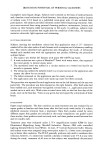
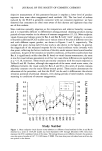
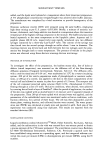
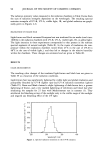
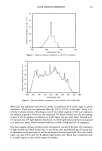
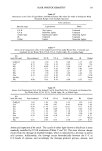
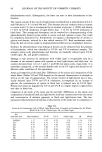
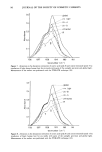
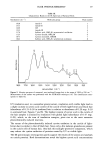
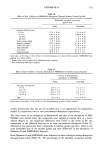
SURFACTANT VESICLES 81 marked in the case of open-compartment conditions than in the case of a closed donor compartment. It was assumed that the WPR was related to the concentration of sur- factant at the surface of the skin. The evaporation of the water phase of the formulation at the surface of the skin was a time-related linear process. The hourly loss of water was estimated at 17.30 I•l/cm 2, and no difference was found in the rate of water loss between NSV and pH 5 buffer under these experimental conditions. After 12 hours of pretreat- ment, it was estimated that 65% of the water of a 200-1•I sample had been lost to evaporation under open-compartment conditions. Over this time period, the concen- tration of SLS increased about threefold, assuming negligible skin permeation of water present in the donor phase. LIPOSOMES VS NONIONIC SURFACTANT VESICLES The comparison of permeation rates at pH 2 under both occluded and open conditions showed a significant difference between SLS and liposome or NSV pretreatments (Fig- ures 2 and 3). Vesicle preparations did not alter the skin to the same extent as SLS. Nevertheless, liposome pretreatment resulted in a significant increase of WPR as com- pared to the buffer or NSV pretreatment (Table I). This damaging effect may be due to the hydrolysis of phospholipids occurring at low pH (13) and generating free fatty acids that penetrate the skin. NSV pretreatment induced a significant reduction of permeation (based on a 95% confidence interval) under occluded conditions. At pH 5 under open compartment conditions (Figure 4), the liposome or NSV treat- ment resulted in a small increase of WPR as compared to the negative control. There was no significant difference between phospholipid and nonionic surfactant preparation (Table I). Application of the NSV in occluded conditions (Figure 5) resulted in a WPR significantly lower (95% confidence interval) than the buffer as observed at pH 2. The lOO 80 6o 4o 2o o rTREATMENTS [] SLS [] LIPOSOME [] NEUTRAL NSV [] POSITIVE NSV [] NSV WITCH O.A. Figure 2. Water permeation rate (WPR) across hairless mouse skin after different treatments at pH 2 under open conditions. (Sodium lauryl sulfate solution was prepared in deionized water and was not pH- controlled.) The error bars represent the standard deviation.

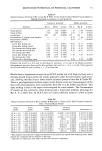
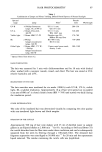
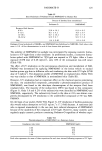
82 JOURNAL OF THE SOCIETY OF COSMETIC CHEMISTS 80 70 60 50 40 30 20 10 0 TREATMENTS [] SLS [] LIPOSOME [] NEUTRAL NSV [] POSITIVE NSV [] NSV WITH O.A. i• pH2 BUFF Figure 3. Water permeation rate across hairless mouse skin after different treatments at pH 2 under closed conditions. (Sodium lauryl sulfate solution was prepared in deionized water and was not pH-controlled.) The error bars represent the standard deviation. Table I Water Permeation Rates (WPR) Across Hairless Mouse Skin After Treatment With Liposome and NSV (neutral, positive, and containing oleic acid) Preparations at pH 2 and pH 5 Under Open and Occluded Conditions of Treatment (SD = standard deviation) Closed Open Condition Closed SD* (Ixl/h) Open SD* (Ixl/h) Vesicle WPR (Ixl/h) (n = 4) WPR (Ixl/h) (n = 4) Neutral NSV at pH 2 2.21 0.93 3.54 0.63 Positive NSV at pH 2 2.09 0.19 3.22 0.99 Negative NSV at pH 2 2.67 0.66 4.92 1.61 Liposome at pH 2 25.29 1.78 35.37 3.36 Neutral NSV at pH 5 1.07 0.15 4.19 0.54 Liposome at pH 5 5.17 0.98 3.59 0.27 * SD, standard deviation. damaging effect caused by liposome pretreatment at pH 2 did not occur at pH 5. This is consistent with a much lower degradation rate of phospholipids at pH 5 (13). EFFECT OF VESICLE CHARGE The effect of the addition of charged molecules into the surfactant vesicle was investi- gated at pH 2. The vesicle preparations containing dimethyl dialkyl ammonium chlo- ride gave WPR values similar to those for neutral preparation under the same conditions of application. The pretreatment with preparations containing oleic acid resulted in a slightly higher WPR and higher standard deviations than with the neutral preparation (Table I). The difference under open conditions, significant with a 95% confidence interval, may be due to the permeation-enhancing properties of oleic acid.
Purchased for the exclusive use of nofirst nolast (unknown)
From: SCC Media Library & Resource Center (library.scconline.org)