IRRITATION POTENTIAL OF PERSONAL CLEANSERS 69 incomplete Latin Square design. Subjects were screened on the basis of medical history and a baseline visual evaluation of both forearms. Any subject presenting with a dryness or redness score •3.0 based on a published seven-point scale (1) was excluded from participation. All subjects provided informed consent before beginning treatment. Sub- jects were restricted from using personal cleansing products, moisturizers, lotions, and creams on their forearms while participating in the study. In addition, subjects were instructed to avoid situations that might alter the condition of their skin, for example, excessive ultraviolet light exposure and swimming. FCAT WASH PROCEDURE Subjects meeting the enrollment criteria had four application areas (1.25" diameter) marked off on the volar surface of each forearm with a template and a laboratory marking pen. This clearly identified each application area throughout the study. A technician washed each marked area with the appropriate test product following the procedure outlined below: 1. The subject wet his/her left forearm with warm (90-100øF) tap water. 2. A wash technician wet a piece of Masslinn © Towel with warm water, then squeezed the towel gently to remove excess water. 3. The moistened towel was rubbed in a circular motion on a wetted test bar for six seconds to generate lather. 4. The technician rubbed the lathered towel in a circular motion on the application area nearest the elbow for ten seconds. 5. The lather remained on the application area for ninety seconds. 6. The application area was rinsed with warm tap water for fifteen seconds. This procedure was repeated for each application area on the left forearm and the arm was patted dry. The procedure was then repeated on the right forearm. After both arms had been washed once, each treatment was applied a second time, i.e., application areas were washed twice at each visit. Wash visits occurred twice daily on the first four days of the study, once on the final day. Visits on any given day were spaced by a minimum of three hours. EVALUATIONS Expert visual evaluations. The skin condition on each treatment area was evaluated by an expert grader at baseline and three hours after the final study wash (earlier if a subject exhibited excessive irritation from a treatment). Data from studies scored by seven different expert skin graders are included in this study compilation: one grader scored three studies, three graders scored one study each, and three graders scored between four and ten studies each. Treatment areas were evaluated under 2.75 x magnification (model KFM-1A Luxo Illuminated Magnifying Lamp, Marshall Industries, Dayton, OH) with controlled lighting (General Electric Cool White, 22-watt, 8" Circline fluorescent bulb). Dryness and redness scores were assigned using seven-point scales (1), a lower score correspond- ing to better skin condition. The FCAT generally produces only mild to moderate skin irritation however, if a treated site reached a dryness or redness score •5.0 at any time during the study, treatment of all sites on that subject was immediately discontinued

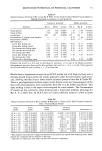
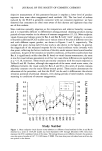
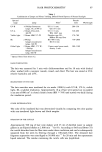
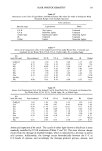
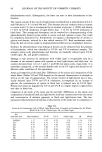
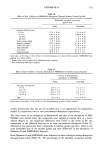
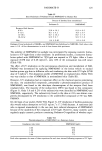
70 JOURNAL OF THE SOCIETY OF COSMETIC CHEMISTS and all sites were scored. The assigned scores were treated as endpoint scores in the statistical analysis (1,6). Instrumental measurements. Instruments were operated following recommended proce- dures (7,8), including subject acclimation. Instrumental measurements were made in duplicate on each treated area. In the series of FCAT studies, skin hydration was assessed using conductance (Skicon - 200 Hydrometer, I.B.S. Co., Ltd., Japan) or capacitance (I.B.S. Hydrometer, I.B.S. Co., Ltd., Japan)measurements. Both instruments were operated with a multi-prong probe (model MT-8C, Measurement Technologies, Inc., Cincinnati, OH) that is reported to expand the measuring range for these instruments (9). Skin surface redness (a*) was assessed using a reflectance colorimeter (model CR- 300, Minolta Camera Co., Ltd., Japan). DATA ANALYSIS All FCAT studies reported in this work employed replicated or incomplete Latin Square designs. An analysis of variance (ANOVA) was used to test the null hypothesis that there was no significant difference in the mean responses (for a given attribute) between any of the treatments. A general model for the observed response is given by: responseijkl m = • + T i + S j + A k + P1 + Ijk + {!ijklm where T= S = A= p = I = the grand mean effect due to treatment i effect due to treatment site j effect due to the side (arm), k, on which the treatment appears effect due to subject 1 a site x side interaction term an error term that includes error due to the various effects and experimental error, m Differences between mean attribute responses are considered statistically significant if p • 0.05. RESULTS AND DISCUSSION Bars A and B were chosen to validate the robustness of the FCAT procedure on the basis of formula differences and their known relative mildness performance under other clin- ical protocols. For example, Bar A has been shown to have a lower irritation potential than Bar B in studies run at independent test facilities under both the Lukacovic protocol (1) and a forearm wash procedure described by Sharko (6). Results from representative studies using these protocols are reported in Table II. The difference between Bar A and Bar B that is shown by expert visual assessments and instrumental measurements is accentuated by subject self-assessment of several parameters that are important to consumers' perceptions of product skin effects.
Purchased for the exclusive use of nofirst nolast (unknown)
From: SCC Media Library & Resource Center (library.scconline.org)