.J. Soc. Cosmet. Chem., 46, 85-99 (March/April 1995) Photochemical alterations in human hair. I. Artificial irradiation and investigations of hair proteins EDO HOTING, MONIKA ZIMMERMANN, and SABINE HILTERHAUS-BONG, Hans Schwarzkopf GmbH, Hamburg (E.H.), and Deutsches Wollforschungsinstitut an der TH Aachen e.V., Aachen (M.Z., S.H.-B. ), Germany. Received October 27, 1994. Synopsis Using a combination of special lamps and optical filters, equipment was constructed permitting irradiation of hair with artificial sunlight whose spectral distribution as well as its intensity corresponds to that of natural sunlight in summer months at central European latitudes. Furthermore, irradiation can be carried out selectively with the UV-B, UV-A, visible light, and IR parts of global sunlight. Black and light-brown human hair was irradiated with defined segments of the sunlight spectrum, and the extent of photodamage to hair proteins was related to the radiation spectrum, to the degree of pigmentation (black or light-brown), and to the morphological region of the hair fiber (cortex or cuticle). The melanin pigment exerts a photoprotective effect, and thus its higher concentration in the cortex of black hair markedly retards its photodamage. On the other hand, as cuticle layers are devoid of pigment, photodeg- radation is similar for both the black and the light-brown hair. INTRODUCTION A well known and most obvious effect of the weathering of human hair is hair light- ening, an effect that is accelerated by moisture (1-5). The extent of this photochemically induced color change is dependent on the nature of the hair pigment and is understood to involve an oxidative attack on the eumelanin (brown-black pigment) or pheomelanin (red pigment) melanosomes (6). Hair exposed to sunlight is claimed to be more brittle, stiffer, and drier than before irradiation, and exhibits a reduced water absorption capacity (4,7). Both the tensile strength and the elongation at break are diminished in irradiated hair (8,9). These changes in mechanical properties of irradiated human hair correlate with the photodamage of the hair proteins (3,5,10). It was shown that the C-S bonds of cystine are cleaved upon UV radiation (5). The decrease in the cystine content, however, does not necessarily imply an increased swelling of the hair, since cross-linking of amino acid residues may occur as well (11). With long-term irradiation there is a progressive 85

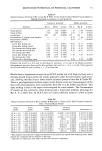
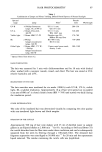
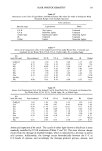
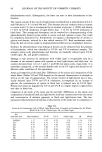
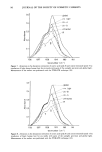
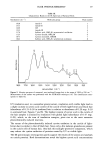
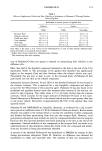
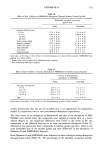
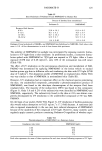
86 JOURNAL OF THE SOCIETY OF COSMETIC CHEMISTS decrease in the total recovery of amine acids after hydrolysis, except for alanine, glycine, and arginine. However, there is no clear pattern of protein degradation (11). For clarification of the action of UV light on hair proteins, model studies on keratin- melanin mixtures were carried out using electron spin resonance spectroscopy (ESR) (12). Melanin and keratin compete for the absorption of photons between 254 and 345 nm. From keratin only the cystine and the aromatic amine acid residues tyrosine, phenylalanine, and tryptephan absorb light within this wavelength range (12). There- fore, they are predestined for photochemical degradation. This finding is supported by photochemical studies on wool, a melanin-free keratin fiber, where cystine, tryptephan, and tyrosine are degraded by sunlight (13). Up to now there have been no systematic investigations on the effect of the different spectral regions, i.e., UV-B, UV-A, visible light, and IR radiation found in natural sunlight, on the chemical and morphological components of human hair. In most cases the irradiation experiments have involved exposure of hair to either UV or visible light. Thus, according to Deftandre et al. (14), UV light in general is responsible for the oxidation of cystine and cleavage of protein chains. The fact that in the previously reported investigations the irradiation conditions (radi- ation source, wavelength filters, or duration of irradiation) have often varied makes it largely impossible to compare quantitatively conclusions made about the photochemical alterations of human hair. As a consequence, there are conflicting conclusions on the photochemically active region of the sunlight, e.g., with reference to the brightening of the color of human hair. Reese and Maak (3) attribute the bleaching action of the sunlight exclusively to the visible range of the sun's spectrum. In contrast, Tatsuda et al. (5) demonstrated a bleaching effect of UV radiation on black hair. The carbon or xenon arc lamps used to simulate sunlight emit radiation with a spectral intensity distribution that is markedly different from that of natural sunlight. The carbon arc lamp emits more intense light in the region of 350-400 nm than sunlight, while the xenon arc lamp produces the so-called green yellow hole between 475 and 600 nm. A more precise knowledge of the conditions under which hair undergoes photo- damage is necessary for the development of potentially photoprotective treatments. To this end radiation equipment was designed by the Institute of Light Technology, TU Berlin, which, by a combination of special lamps and optical filters (Table I), allows for irradiation with artificial sunlight whose spectral distribution as well as intensity largely corresponds to that of natural sunlight in the summer months at central European latitudes. Furthermore, irradiation can be performed selectively with UV-B, UV-A, visible light, and IR. By irradiating human hair with specific ranges of sunlight and then analyzing the hair, the extent of photodamage of the hair proteins can be related to the range of radiation. Furthermore, by irradiating black and blond human hair, the protective function of the melanin pigments can be ascertained. MATERIALS AND METHODS MATERIAL The investigations were carried out on untreated black and light-brown European human hair (supplied by Herzig Co.).
Purchased for the exclusive use of nofirst nolast (unknown)
From: SCC Media Library & Resource Center (library.scconline.org)