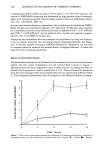
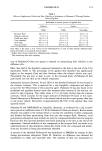
j. Soc. Cosmet. Chem., 46, 77-84 (March/April 1995) Interaction of skin with surfactant vesicle components ERIC P. GU•NIN* and JOEL L. ZATZ, Department of Pharmaceutics, College of Pharmacy, Rutgers University, Piscataway, NJ 08855-0789. Accepted August 12, 1993. Presented at the Annual Scientific Meeting of the Society of Cosmetic Chemists, New York, December 3-4, 1992. Synopsis Interactions of vesicles based on phospholipids and nonionic surfactants with hairless mouse skin were evaluated by measuring permeation of tritiated water through pretreated skin under standardized condi- tions. Skin was exposed to the vesicles, buffers (negative controls), and sodium lauryl sulfate solution (positive control) under both open (unoccluded) and closed (occluded) conditions. There was no difference in the water permeation rate (WPR) between a freshly prepared skin membrane and one exposed to a pH 5 buffer. WPR was increased by reducing the pH to 2 treatment with the liposome preparation at this pH value caused a significant further increase in WPR. Effects of the nonionic surfactant vesicles were of much smaller magnitude at pH 2. Both phospholipid and nonionic surfactant vesicles had a minor effect on WPR under open conditions at pH 5. INTRODUCTION Vesicle delivery systems are used for dermatological therapy and cosmetic treatment. Liposomes increased drug localization and limited systemic absorption of several com- pounds (1-4). In some cases, the extent of topical absorption was increased relative to control formulations. In the process of investigating the mechanism of delivery, one can wonder about the alteration of the skin barrier by vesicles components. The damaging effect of surfactants on skin has been investigated using small molecules as a marker of skin permeation. The degree of damage was correlated to the increase of molecular flux. In a previous study (5), skin damage by sodium lauryl sulfate was investigated using this method. The damage, reflected by the increase of water flux, was amplified by increase of surfactant concentration and duration of contact. Skin damage was related to the extent of skin binding of the surfactant to the stratum corneum (6). Water permeation was also used as an index to compare skin barrier function among human skin samples of different age, sex, race, and treatment. This was considered a good indicator of potential changes in the barrier integrity of the human skin (7). Nonionic surfactants have been investigated for their use in dermatological products. The ciliotoxicity studies of polyoxyethylene alkyl ether, recording ciliary beat frequency, * At Cølgate-Palmølive'Technøløgy Center 909 River Road Piscataway, NJ 08855-1343 77

78 JOURNAL OF THE SOCIETY OF COSMETIC CHEMISTS revealed that a decrease in length of the polyoxyethylene head group and an increase in length of the alkyl chain group reduced toxicity (8). Vesicles in the liquid crystalline state were more toxic than those in the gel state (9). In another study (10), the permeability of methyl nicotinate was used as an indication of the damaging effect of nonionic surfactants. Maximum enhancement occurred for alkyl chain lengths greater than C8 and an ethylene oxide chain length between E6 and E 14. It was suggested that the surfactant penetrated the intercellular region of the stratum corneum, increased its fluidity, and solubilized and extracted lipid components. It was also proposed that interaction and binding with keratin filaments resulted in a disruption of order within the corneocyte. The enhancement of permeation by a nonionic surfactant is related to the nature of the molecule and its physical state. Hofland (9) reported that permeation enhancement of estradiol was achieved after pretreatment with nonionic surfactant formulations in their liquid state. On the other hand, pretreatment with nonionic surfactants in their gel state was reported to introduce an additional diffusion barrier, decreasing permeation. To our knowledge, water permeation has not previously been used to investigate the damaging effect of polyoxyethylene alkyl ether vesicles on the skin. MATERIALS AND METHODS CHEMICALS The formulations were compounded using sodium lauryl sulfate (Fisher Scientific, Fair Lawn, NJ), polyoxyethylene (2) cetyl ether (BRIJ © 52, ICI Americas, Wilmington, DE), cholesterol (RITA Corporation, Woodstock, IL), phospholipids with 80% phos- phatidylcholine (Phospholipon © 80, Nattermann Phospholipids GMBH, Cologne, Ger- many), oleic acid (JT Baker Chemical, Phillipsburg, NJ), 1,1, ltrichloro-2-methyl-2- propanol (Cholorobutanol, Eastman Kodak Company, Rochester, NY), and dimethyl dialkyl (C14-C18) ammonium chloride (Adogen TM 442-100P, Sherex Chemical Co., Dublin, OH). The radiolabeled [3H] water (1 mCi/g) was obtained from NEN © Re- search Products, Boston MA. All other chemicals were USP or reagent grade. HAIRLESS MOUSE SKIN Female hairless mice, 6 to 12 weeks old, SkH:HR-1 (Charles River, Wilmington, MA), were sacrificed by asphyxia in a closed chamber by displacing the ambient air by CO 2. Skin from the dorsal and ventral regions was removed, trimmed of subcutaneous fatty and connective tissues, and used immediately. SURFACTANT VESICLE AND LIPOSOME PREPARATION The dried film method, described by Bangham (11), was used to manufacture the liposomes. Briefly, the phospholipids are deposited from chloroform/methanol (10:1) in a thin film on the wall of a round-bottom flask by rotary evaporation under reduced pressure. 200 mmol pH 5 phosphate buffer, or 200 mmol pH 2 HCI/KCI buffer, was
Purchased for the exclusive use of nofirst nolast (unknown)
From: SCC Media Library & Resource Center (library.scconline.org)