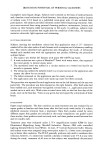
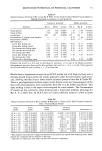
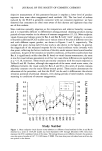
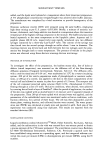
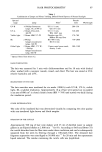
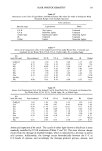
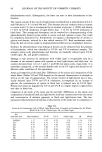
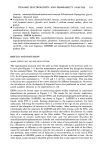
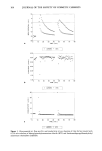
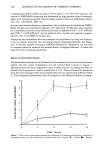
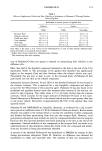
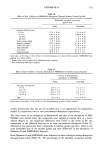
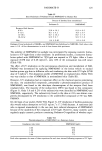
PADIMATE-O 123 Table III Effect of Skin Viability on NMPABAO Absorption Through Hairless Guinea Pig Skin Radiolabel recovered, percent of applied dose Viable Nonviable Receptor fluid fraction 0-6 h 0.73 -+ 0.16 1.32 6-12 h 0.85 +-- 0.15 0.89 12-18 h 1.0 + 0.17 1.2 18-24 h 0.99 -+ 0.29 1.0 Total receptor fluid 3.6 -+ 0.64 4.4 Stratum corneum 1 0.43 -+ 0.06 0.76 Viable skin layer 2 1.2 -+ 0.13 0.78 Total absorbed 5.2 +- 0.62 6.0 24-h wash 51.8 +- 6.2 51.5 Total recovered 56.9 + 6.1 57.2 --- 0.67 --- 0.17 +-- 0.26 -+ 0.16 -+ 0.69 + 0.17 +-- 0.16 --- 0.81 --- 3.2 - 3.6 Each value is the mean +-- S.E. of four or five determinations in each of three animals. applied in a lotion vehicle. 1 Surface layer of skin removed by cellophane-tape stripping. 2 Skin remaining after tape stripping. NMPABAO was Table IV Effect of Skin Viability on Esterase Hydrolysis of NMPABAO in Hairless Guinea Pig Skin Percent of absorbed dose hydrolyzed to NMPABA Viable Nonviable Receptor fluid fraction 0-6 h 22.9 + 3.3 7.2 + 1.7 6-12 h 28.6 + 4.1 7.3 + 1.1 12-18 h 26.2 -+ 5.0 6.6 + 1.5 18-24 h 26.2 +-- 5.4 7.2 + 1.2 Skin 0.0 + 0.0 0.75 + 0.52 Each value is the mean +-- S.E. of four or five determinations in each of three animals. studies demonstrate that the use of nonviable skin is not appropriate for metabolism studies in conjunction with in vitro percutaneous absorption experiments. The time course of the absorption of Padimate-O and that of the absorption of NM- PABAO were similar when the compounds were applied to human skin in a lotion vehicle (Figure 2). No significant differences were found in the levels of the two compounds in the different fractions or in total percutaneous absorption (Table V). Absorption was greater for both compounds in hairless guinea pig skin. Only in the more permeable skin of the hairless guinea pig were differences in the absorption of Padimate-O and NMPABAO observed. Both Padimate-O and NMPABAO were subjected to ester hydrolysis during absorption through human skin (Table VI). The percentages of the absorbed compound metabo-

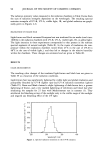
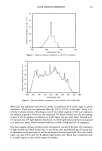
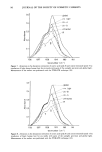
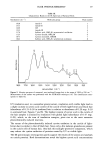
124 JOURNAL OF THE SOCIETY OF COSMETIC CHEMISTS 1.00 0.80 0.60 0.40 0.20 0.00 0 6 12 18 24 TIME (hours) Figure 2. Time course of percutaneous absorption of Padimate-O and NMPABAO in human skin. Padi- mate-O and NMPABAO were applied to skin in 15 }xl vehicle/cm 2. Padimate-O and NMPABAO were applied at chemical doses of 6.7 and 7.0 p,l/cm 2, respectively. • = Padimate-O ß = NMPABAO. Table V Absorption of Padimate-O and NMPABAO Through Human Skin Percent of applied dose absorbed PadimateoO NMPABAO Receptor fluid 0.99 + 0.26 0.73 -+ 0.15 Stratum corneum• 1.5 -+ 0.24 1.3 -+ 0.29 Viable skin 2 0.26 -+ 0.03 0.27 + 0.06 Total absorbed 2.8 -+ 0.35 2.3 -+ 0.43 24-h wash 89.6 -+ 7.3 87.8 -+ 4.0 Total recovered 92.3 - 7.2 90.1 + 4.0 Each value is the mean -+ S.E. of four determinations in each of two human skin specimens. Padimate-O and NMPABAO were applied in a lotion vehicle. • Surface layer of skin removed by cellophane-tape stripping. 2 Skin remaining after tape stripping. lized in the receptor fluid fractions ranged from 32-36 for Padimate-O to 76-92 for NMPABAO. The absorbed material remaining in the skin was essentially unmetabo- lized. As was the case in hairless guinea pig skin, NMPABAO was metabolized more extensively than Padimate-O in human skin. Greater metabolism (percent of absorbed dose) of both compounds was observed in the human skin studies. This may have occurred because saturation of metabolic enzymes in skin was prevented when absorption was reduced in the human skin experiments.
Purchased for the exclusive use of nofirst nolast (unknown)
From: SCC Media Library & Resource Center (library.scconline.org)