102 JOURNAL OF THE SOCIETY OF COSMETIC CHEMISTS Alzo Inc. Behenyltrimethylammonium chloride (BTC, commercial name Varisoft BT- 85) was 80% active and was provided by Sherex. Linoleoamidopropyldimethylethyl ammonium ethylsulfate (and) lauryldimethylamino isostearate (LAEDES, commercial name Parapel HC), a blend of a quaternary ammonium salt and the fatty amine-fatty acid complex, was supplied by Bernel Chemical Company as a clear liquid containing 92% actives. Silicone emulsions. The silicone emulsions were manufactured by Dow Corning: 1. Cationic emulsion (DC Q2-7224), an aminofunctional silicone polymer emulsified in a nonionic surfactant system. Amine content of the silicone oil is 0.5 meq/g, and average diameter of particles is 250 nm. 2. Cationic emulsion (DC 929), an aminofunctional silicone polymer emulsified in a cationic-nonionic surfactant system. Amine content of the silicone oil is 0.1 meq/g, and average diameter of the dispersed phase is 180 nm. 3. Neutral emulsion (DC 347), an unmodified silicone polymer emulsified in a nonionic surfactant system. Conditioner and shampoo formulations. Conditioners and shampoos were both commercial formulations or prototypes prepared from commercially available raw materials. Qual- itatively, the compositions are given below: ß Conditioner A: water, glycol stearate, acetamide MEA, stearalkonium chloride, cetyl alcohol, polysorbate 20, quaternium-22, panthenol, hydrolized animal keratin, hy- drolized animal protein, stearyl alcohol, hydroxymethylcellulose, fragrance, meth- ylparaben, phenoxyethanol, propylparaben, FD&C Blue No. 1, FD&C Yellow No. 5. ß Conditioner B: water, glycol stearate, acetamide MEA, stearalkonium chloride, hy- drolized animal protein, cetyl alcohol, hydrolized animal keratin, panthenol, behen- trimonium methosulfate, fragrance, hydroxyethylcellulose, stearyl alcohol, polysor- bate 20, methylparaben, phenoxyethanol, propylparaben, FD&C Blue No. 1, FD&C Yellow No. 5. ß Conditioner C: water, cetearyl alcohol, behentrimonium chloride, cetyl esters, cam- phor benzalkonium sulphate, fragrance, DMDM hydantoin, methylparaben, nonox- ynol-10, tallowtrimonium chloride, amodimethicone. ß Conditioner D: water, cetyl alcohol, dicetyldimmonium chloride, cyclomethicone, citric acid, botanical extracts, stearyl alcohol, ceteareth-20, propylene glycol, stear- amidopropyl dimethylamine, fragrance, KC1, dimethicone, glutaral, methylchlo- roisothiazolinone, methylisothiazolinone. ß Conditioner E: water, cetyl alcohol, stearyl alcohol, dicetyldimmonium chloride, cyclomethicone, trimethylsilylamodimethicone, octoxynol-40, isolaureth-6, glycol, ceteareth-20, propylene glycol, stearamidopropyldimethylamine, fragrance, citric acid, panthenol, chlorhexidine digluconate, glutaral, methylchloroisothiazolinone, methylisothiazolinone. ß Conditioner F: coceth-6, cetyl alcohol, glyceryl tribehenate, methylparaben, pro- pylparaben, linoleamidopropyl dimethylamine dilinoleate, stearoxy dimethicone, synthetic wax, DMDMH, 2-phenoxyethanol, lactic acid, linoleamidopropyl dimeth- ylamine, fragrance, deionized water. ß Conditioner G: coceth-6, cetyl alcohol, glyceryl tribehenate, methyl paraben, propyl paraben, synthetic wax, stearoxy dimethicone, DMDMH, 2-phenoxyethanol, lactic acid, linoleamidopropyl dimethylamine dilinoleate, linoleamidopropyl dimeth-

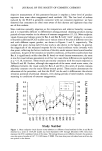
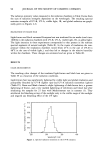
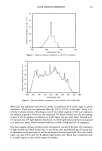
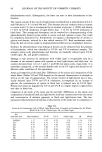
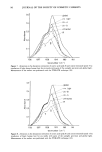
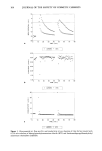
DYNAMIC ELECTROKINETIC AND PERMEABILITY ANALYSIS 103 ylamine, trimethylsilylamodimethicone/octoxynol-40/isolaureth-6/propylene glycol, fragrance, deionized water. ß Conditioner H: water, denatured alcohol, betaine, cetearyl alcohol, petrolatum, citric acid, horsetail extract, glyxolic acid, laureth-2, sodium cetearyl sulfate, silica, fra- grance. ß Conditioner I: water, cetearyl alcohol, behentrimonium chloride, cetyl esters, amodimethicone, dimethicone copolyol, polyquaternium-11, panthenol, tallowtri- monium chloride, fragrance, nonoxynol-10, propylparaben, phenoxyethanol, meth- ylparaben, DMDM hydantoin. ß Shampoo: water, SLES, SLS, cocamidoprobyl betaine, lauramide DEA, ricinoleami- dopropylethyldimonium ethosulfate, panthenol, dimethicone copolyol, amodimethi- cone (and) tallowtrimonium chloride (and) nonoxynol-10, polyquaternium-11, mica and TiO 2, citric acid, fragrance, DMDMH and iodopropynyl butylcarbamate, 1onza- glydant plus. RESULTS AND DISCUSSION MODEL SURFACTANT AND EMULSION SYSTEMS The experimental protocols were the same as those employed in the previous work (1). In each plot (Figures 1-7) the first measurement period shows five datapoints obtained for the untreated fibers. The ranges of the measured streaming potential, conductivity, flow rates, and zeta potentials for untreated hair were the same as those reported earlier (10). In all figures presented in this paper the fifth datapoint on zeta potential and flow rate curves were normalized to - 15 mV and 3.5 cm3/sec, respectively. This was done to facilitate the comparisons of the curves obtained for different formulations. However, the calculations of the thicknesses of deposited layers were performed on actual, unad- justed numbers obtained in the experiments (1,10). DEPA traces for several types of conditioning agents widely employed in conditioner formulations are presented in Figures 1-3. The results for two cationic surfactants, behenyltrimethylammonium chloride (BTC) and linoleoamidopropyldimethylethyl am- monium ethylsulfate (LAEDES), are shown in Figure 1. LAEDES is a water-soluble liquid, while BTC is a solid, forming dispersions in the aqueous medium. For both surfactants, following the treatment there is a reversal of the sign of zeta potential as a result of the adsorption of cationics on the fiber surface. After reaching the maximum, immediately after the treatment for LAEDES and after three rinsing cycles for BTC, zeta potentials decrease and attain an equilibrium value that reflects the presence of a stable layer of a conditioning agent on the fiber surface. This pattern is typical for the interactions of cationic surfactants with hair, and was previously described for stearyldimethylbenzylammonium chloride and cetyltrimethylammonium chloride (10). As suggested in reference (10), a decrease in the value of zeta potential may be caused by a desorption of the surfactants into the test solution, although a possibility of their rearrangement or diffusion in the opposite direction, i.e., into the bulk of the fibers, cannot be excluded. If desorption into the test solution is responsible for a decrease in zeta potential, than a slower rate of reduction in zeta potentials, as in the case of BTC as compared to LAEDES, points to a higher affinity of this surfactant to hair. On the other hand, a partitioning of adsorbed species inside hair is also expected to be faster for
Purchased for the exclusive use of nofirst nolast (unknown)
From: SCC Media Library & Resource Center (library.scconline.org)