74 JOURNAL OF THE SOCIETY OF COSMETIC CHEMISTS testing is widely employed to gauge this property qualitatively by evaluating curl stiffness and curl snap. ß Stiffness of a hair tress as a function of time following a treatment with a hairspray. Such data were not reported in the literature, and are the subject of the present study. This characteristic should be primarily determined by the rate of solvent evaporation from a hairspray composition and by its rheological properties at various stages of the drying process. The rate of evaporation is dependent upon the solvent composition, total amount of formulation deposited during spraying, and ambient conditions such as temperature and relative humidity. ß Initial curl droop (ICD). This property is a decrease in percent curl retention observed within a few minutes after spraying with a water-containing composition (4,5). This phenomenon was not observed for alcohol-based systems, probably because alcohol absorption does not result in hair swelling or a decrease in its mechanical strength, but conversely, produces a small increase in fiber stiffness (6). On the other hand, water diffusion from low VOC compositions can swell and soften the hair signifi- cantly, affecting both stiffness and geometrical dimensions of a hair set. For wet hair, the mechanical modulae (both stretching and bending) is reduced by a factor of approximately 2.7 compared to dry fibers, while water swelling causes 1.2% and 15% increases in fiber length and diameter, respectively (7). It was reported that even small percentages of water can significantly reduce curl retention with a magnitude of an initial curl droop, typically in the range from 10 to 25%, proportional to the content of water in the formulation (4). The extent of ICD can be reduced by increasing polymer concentration in the formulation and/or depositing lower absolute amounts of water on the fibers. In order to determine the extent of ICD, a condi- tioned tress is hung in an environmental chamber (usually at low humidity), sprayed with a formulation, and its percent curl retention followed until hair becomes dry, usually for several minutes. ß Curl retention at 65% and 90% relative humidity. This is a measure of a resin's ability to hold a set after absorption of water from the applied formula or from the surrounding atmosphere (8,9). This characteristic is tested by the use of the high humidity curl retention (HHCR) technique, which measures the percent curl reten- tion as a function of exposure time to a humid atmosphere. Long-term humidity resistance is evaluated by drying the treated tress on the rollers and then exposing it to a high-humidity atmosphere in an environmental chamber while monitoring curl retention over a 4-24 hour period of time. ß Wearability of a resin-treated hairset. This property is related to the ability of polymer links to resist yielding at various deformations. It may be dependent upon thermomechanical properties of a polymer, such as glass transition or tensile strength, or upon the characteristics of the polymer-hair interface (10-12). Optical microscopy has shown that the failure of hair-polymer-hair junctions is usually adhesive rather than cohesive (10). Another factor affecting the kinetics of changes in fiber stiffness is the viscosity of a formulation. Lower viscosity increases the ability of a spray droplet to spread or migrate on the surface of hair towards a fiber-fiber junction. It also enhances the polymer adhesion to keratin by promoting a more intimate contact with the substrate. On the other hand, lower molecular weight polymers can be brittle and, consequently, more prone to cohesive failure during deformation. ß Tactile characteristics of a hairspray formulation or a resin at various stages of drying. Quantitative (instrumental) analysis of this process was not reported in the literature

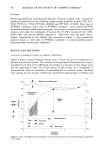
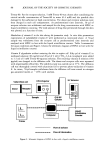
DYNAMIC HAIRSPRAY ANALYSIS 75 (15). Most hairspray solutions become tacky after partial evaporation of the solvent. For water-based systems, the duration of tackiness is considerably longer than for high VOC compositions due to their relatively slow drying rates. Thus, parameters such as tack duration or the magnitude of the adhesive force are important, consumer- perceptible attributes of a hairspray product. Formulation viscosity and spray particle size distribution are among the factors affecting the rate of hairspray drying on hair and thus determine the tactile perception of a product (13, 14). Although several studies of the mechanism of action of hairsprays were published, there is a virtual dearth of quantitative, instrumental information on the parameters charac- terizing these formulations. There is also little knowledge regarding structure-property relationships of polymers, which are the main components of these systems. Therefore, we have explored new methods of instrumental analysis of the process of hairspray setting of hair. In this report, we introduce a new technique, termed dynamic hairspray analysis, which can simultaneously measure the stiffness, geometrical dimensions, and tackiness of hair shaped into an omega loop, before and after treatment with hairspray compositions. The methodology is based on a commercial instrument, a texture ana- lyzer, which can measure the force in both compression and tensile modes while keeping track of the probe displacement in relation to the sample. EXPERIMENTAL INSTRUMENT The dynamic hairspray analysis utilized a texture analyzer, model TA-XT2, from Tex- ture Technologies Corp., with a load sensitivity of 0.1 g. XTRA Dimension software, version 3.7, from Stable Micro Systems, was used to collect and display the data. The whole system, including the texture analyzer, sample holder, and spraying devices, was housed in a plexiglass box equipped with a humidity controller. A drawing of the experimental setup is shown in Figure 1. Two aerosol cans, each containing 100 grams of the same formulation, were positioned 9 inches away from the hair tress at an angle of 60 ø from the horizontal plane by the use of three-prong clamps. Each aerosol can was equipped with a Seaquist ST-71 valve with a 0.013-inch stem orifice, a 0.023-inch SS spring, and a 0.013-inch vapor tap. ST-150 Misty activators with a 0.023-inch orifice were used. HAIR SAMPLES AND PROCEDURES All hair samples were commercially blended virgin brown hair purchased from DeMeo Brothers, New York. The hair was precleaned with 3% ammonium lauryl sulfate and thoroughly rinsed prior to use in experiments. To prepare a hair tress, both sides of approximately 0.3 g of 3.5-inch-long virgin brown Caucasian hair were glued onto square plexiglass plates using Duco cement, leaving 1.5 inches of fibers between the tabs as shown in Figure 2. The hair was wetted, dried with paper towels, shaped into an omega (fl) loop using a wooden rod, and dried at 50% RH for at least 12 hours to form a set maintaining geometrical dimensions at low humidity for a period of time necessary to carry out fixative treatments.
Purchased for the exclusive use of nofirst nolast (unknown)
From: SCC Media Library & Resource Center (library.scconline.org)