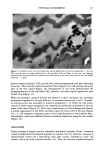
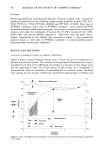
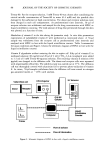
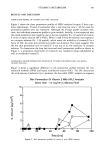
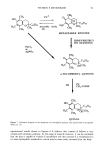
O.Q -6.0 -1 O.O •blUi•h •,I•WWWWWWWI (a) Time o.o - •o 4.0 -lO.O 4.0 -lO.O 4Z.Q I•WWW•W•WW•WW•II . •UWI•I•WI c• Time sl (c) Time Figure 6. Comparison of the time dependence of adhesion forces for 100% (a), 80% (b), and 55% (c) VOC hairspray compositions based on the ethyl ester of PVM/MA copolymer.

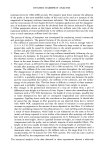
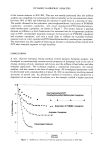
DYNAMIC HAIRSPRAY ANALYSIS 83 of the texture analyzer at 90% RH. This test was usually performed after the stiffness analysis was completed, by increasing the relative humidity in the environmental cham- ber from 50% to 90% and following the variation in peak force as a function of time. The results obtained for four polymers, poly(vinylpyrrolidone), butyl ester of PVM/MA copolymer, acrylates copolymer, and vinyl caprolactam/PVP/dimethylamino- ethyl methacrylate copolymer, are shown in Figure 7. The results indicate a gradual decrease in stiffness to a level characteristic for untreated hair for a hygroscopic polymer such as PVP, intermediate humidity resistance for butyl ester of PVM/MA copolymer and acrylates copolymer, and only a small drop in stiffness for humidity-resistant material such as vinyl caprolactam/PVP/dimethylaminoethyl methacrylate copolymer. The instrument was also capable of detecting an increase in tackiness of hair treated with PVP after extended exposure to high humidity. CONCLUSIONS A new, objective hairspray testing method, termed dynamic hairspray analysis, was developed to simultaneously measure several properties of hairsprays such as the rate of drying, duration of tack, maximum tack forces, and the stiffness of hair before and after hairspray application. The technique employs a commercial instrument, the texture analyzer, and hair tresses in the form of omega loops. All investigated parameters could be determined with a reproducibility of about 20-30% in experiments involving manual activation of aerosol cans. An alternative method of treatment, which allowed for a deposition of an exact amount of polymer on a hair sample, yielded a higher precision lOO .•© •= Vinyl CaprolacCopolymerMethacrylate so •= [] Dimethylaminoethyl ' •= 6o•- •' eeee IAAA eeeeee ß ß ß ee Bu•lEsterofPVMCopolym • • AA A Ac•lates Copolymer 20 '.,.• Poly(vinylpyrrolidone) o i i I I 2 4 6 8 Thousands Time (sec) Figure 7. Stiffness as a function of time for polymer-treated hair at 90% RH.
Purchased for the exclusive use of nofirst nolast (unknown)
From: SCC Media Library & Resource Center (library.scconline.org)