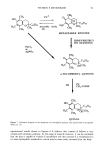
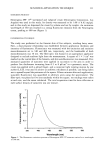
DEPOSITION OF GLYCOLIC ACID AND GLYCEROL 105 formulations that resulted in enhanced deposition into living skin strata and beyond. The amounts of glycolic acid found in the liver were around 1-2% for Non-1 formu- lations at 8 h and are clearly not substantial enough to account for the markedly lowered recoveries. Two possible explanations for the low recoveries are the enzymatic conversion of glycolic acid to carbon dioxide in living skin strata or loss of glycolic acid as a result of decarboxylation following systemic absorption via a sequence of reactions more direct than the citric acid cycle or the Krebs cycle. In this hypothetical sequence of events, glycolic acid is first converted to glyoxylate via a redox step involving FAD. Glyoxylate further undergoes reduction to formaldehyde, with the generation of carbon dioxide. Subsequent reactions involving NAD+/NADH2 complete further breakdown, with evolution of carbon dioxide (7). Although this direct conversion of acetate to carbon dioxide is energetically less favorable than the citric acid cycle (ATP yield only half of the citric acid cycle), it offers a simple explanation for loss of absorbed glycolic acid. The extent of enzymatic conversion of glycolic acid by skin was tested by incubating glycolic acid formulations with homogenates of freshly excised hairless mouse skin for varying periods of time at 37øC. It was found that the loss of radioactive glycolic acid marker was roughly 1 to 1.5 % over a 20-h incubation period. The amount of radioactive carbon dioxide respired by hairless mice following topical application of the Non-1 liposomal formulation was about 2% of the applied dose over 8 h. Thus, neither pathway for loss of glycolic acid can be considered as a major contributor to lowered recoveries. It is therefore clear that the low mass balances with formulations that allow increased depo- sition and transport of glycolic acid into systemic absorption are due to extensive redistribution of the marker within animal tissues despite the absence of any analyses of full-body marker content following excision of skin, liver, and urinary bladder. Table II shows the distribution of glycolic acid. in various strata of hairless mouse skin 16 h after topical in vitro application of select formulations. The recovery of total radioactivity was greater than 92% for all systems. A good linear correlation between amounts in the urinary bladder in vivo and in the receiver compartment in vitro was obtained (r 2 ) 0.995) however, the amounts in the receiver compartment were roughly 10- to 30-fold higher. The two factors taken together suggest that glycolic acid was possibly located in other organs such as liver, or in tissue, or that extensive metabolic conversion of glycolic acid to carbon dioxide had occurred in the in vivo experiments. Further, the, combined amounts of glycolic acid in living skin strata and receiver were Table II Distribution of Glycolic Acid (expressed as percent of formulation applied + standard deviation) in Various Strata of Hairless Mouse Skin 16 Hours After Topical In Vitro Application of Various Formulations (n ---- 3-6) Formulation Compartment Non-1 Non-2 30% PG/AQ Aqueous solution Total donor 2.0 + 0.4 3.4 -+ 4.2 1.2 + 1.0 1.2 + 1.0 Total swabs 47.4 + 13.7 10.0 + 8.7 72.9 + 2.0 79.4 -+ 5.4 Strips 1,2 17.2 + 10.7 66.1 + 9.2 11.5 + 0.3 21.1 -+ 3.3 Total strips 19.0 + 12.1 66.7 + 9.3 11.6 + 0.3 21.2 -+ 3.3 Living skin strata 3.5 + 1.5 1.1 + 0.6 0.8 + 0.3 0.9 + 0.8 Receiver 20.3 + 6.8 13.0 + 4.7 10.0 + 0.9 2.9 m 0.9 Recovery 92.2 + 4.9 94.2 + 0.9 96.1 + 1.1 105.6 + 4.3

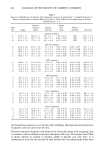
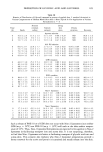
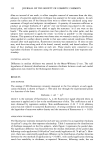
104 JOURNAL OF THE SOCIETY OF COSMETIC CHEMISTS about twofold higher from Non-1 liposomes than those from Non-2 liposomes and the two solutions. Also, the total amount of glycolic acid found in the strips was roughly two times higher for Non-2 liposomes than for Non-1 liposomes. The in vitro data, therefore, supports the conclusion from in vivo studies that Non-2 liposomes allow for a greater retention of glycolic acid in the stratum corneun while retarding absorption, compared to Non-1 liposomes. Although Non-1 liposomes delivered greater amounts of glycolic acid into the living skin strata, the much higher systemic absorption of glycolic acid from Non-1 formu- lations is less desirable from a cometic formulation viewpoint. Thus, overall, the Non-2 formulation appears to be the most efficient of all the formulations tested since it allows for a greater extent of retention of glycolic acid in and on the stratum corneum as well as the living skin strata, while retarding the penetration of glycolic acid into the systemic circulation. The in vivo uptake of glycerol into the various strata of hairless mouse skin from various formulations as a function of time is shown in Table III. The accumulation of glycerol in the stratum corneum was in the order Non-1 = Non-2 30% PG solution = aqueous solution = O/W emulsion = W/O emulsion at all time points examined. The general trend for accumulation of glycerol in the living skin strata was in the order: Non-2 Non-1 O/W emulsion aqueous solution = W/O emulsion = 30% PG solution. Urinary excretion of glycerol at 8 h was in the order: Non-2 = Non-1 W/O emulsion = O/W emulsion = 30% PG solution. Since the highest total amount of glycerol in and on the stratum corneum, as estimated from the total amount of glycerol in the strippings, was obtained from Non-2 liposomes, once again Non-2 formulations appear to be the most appropriate vehicle for glycerol delivery. Table IV shows the distribution of glycerol in various strata of hairless mouse skin 16 h after topical in vitro application of select formulations. The recovery of total radioac- tivity was greater than 95% for all systems. A good linear correlation between amounts in the urinary bladder in vivo and in the receiver compartment in vitro was obtained (r 2 0.99) however, the amounts in the receiver compartment were roughly 60- to 100-fold higher. It is of interest to note that percutaneous absorption of glycerol from Non-2 liposomes is slightly higher (but not significantly) than that from Non-1 lipo- somes. The amounts of glycerol in living skin strata were similar for Non-1 and Non-2 liposomes in the in vitro experiments. Also, the amounts of glycerol in the strips were roughly threefold higher for Non-2 liposomes than for Non-1 liposomal formulations. Thus, Non-2 liposomes appear to provide better retention in the skin as well as to better facilitate deposition of glycerol into and across the skin than do Non-1 liposomes. Our studies suggest that application of nonionic liposomal formulations results in higher accumulation of glycolic acid in the living skin strata and of glycerol in the stratum corneum than that from solutions and conventional emulsions. The differences in the behavior of Non- 1 and Non-2 formulations are consistent with the mechanisms of action proposed earlier for these liposomal systems (8,9). Briefly, following topical application, both Non-1 or Non-2 liposomes undergo gradual dehydration under nonoccluded con- ditions while in contact with the skin at a temperature of 32øC. When the temperature of the dehydrating formulation exceeds the melting point of GDL (30øC), the major lipid component of Non-1 liposomes, melting of the component occurs. This results in the release of both GDL and POE-10, which are known skin penetration enhancers.
Purchased for the exclusive use of nofirst nolast (unknown)
From: SCC Media Library & Resource Center (library.scconline.org)