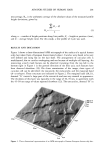
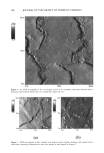
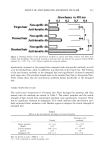
AFM FOR STUDIES OF HUMAN HAIR 205 -900 ø 90.0 ø 20 lO I•rn 0 pm 0 gm 10 pm 20 pm Figure 5. An AFM micrograph of scalp hair, treated with a conditioner containing 1% zinc pyrithione, imaged in distilled water. all bright features correspond to features on the left of a plane drawn perpendicular to the plane of the paper in Figure 8b, bright areas correspond to areas of high relative friction, such as the rough endocuticle, with darker areas corresponding to smoother features, such as the exocuticle. With appropriate optimization, the contrast could be used to probe local frictional variations on an exocuticle surface at even higher resolution. CONCLUSIONS This paper reports the use of atomic force microscopy for obtaining fine structural information on human hair surfaces. The value of the technique has been clearly dem- onstrated, and in the area of cosmetics, AFM shows almost unlimited potential for investigations requiring detailed knowledge of the processes involved in hair cleansing, swelling, damage, and repair. ACKNOWLEDGMENTS The author thanks Miss Jacqui Mead for providing hair samples and helping to prepare this manuscript.

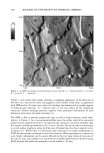
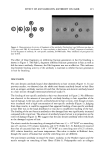
206 JOURNAL OF THE SOCIETY OF COSMETIC CHEMISTS -90.0 ø 90.0 * lO pm ..: 0 •m 10 pm 20 prn Figure 6. An AFM micrograph of the mid-length region of an unwashed scalp hair obtained from a European brown-ha•red female (age 25 average hair length 20 cm). ß , .'90.0. ø -9o.o' • 'IP i ß .. 90.0 • 10pm 90.0' :: ß .: 10 pLm • :. 0 pm --. .• ............. 5 ..... ' 0 I.tm 0 I.tro 10pm 0 prn 10 pm 20 pm (a) (b) Figure 7. AFM micrographs of hair washed with sodium lauryl striphate shampoo and treated with a conditioner containing dimethicones same hair sample as that imaged in Figure 6.
Purchased for the exclusive use of nofirst nolast (unknown)
From: SCC Media Library & Resource Center (library.scconline.org)