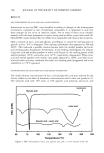
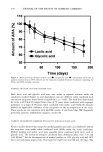
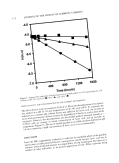
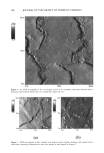
J. Soc. Cosmet. Chem., 48, 209-217 (July/August 1997) Effect of anti-keratin antibody on the nature of hair HIDEYO UCHIWA, Biochemistry Laboratory, Kanebo, Ltd., 3-28 Kotobuki-cho 5-chome, Odawara City 250, Japan. Accepted for publication September 30, 1997. Synopsis We investigated the effects of anti-keratin antibody obtained from the milk of cows immunized with human hair keratin (a) on the stretching of hair fibers via a tensile tester and (b) on fracture generation through excessive brushing. The binding ability of anti-keratin antibody to damaged hair was confirmed by using an enzyme-linked immunosorbent assay. The antibody increased the elastic modulus in the Hooken region and tensile strength at the breaking point of a damaged hair fiber. The antibody inhibited fracture generation of the permed hair, which had been brushed excessively. The F(ab')2 fragment of the antibody that has bivalent binding sites to keratin inhibited fracture generation in hair as well as did the intact antibody. On the other hand, the Fab fragment that has a single binding site did not show the effect of inhibiting fracture generation. These results indicate that the anti-keratin antibody having two binding sites to the keratin of hair increases resistance to stretching and inhibits damage to hair. INTRODUCTION Hair damage is the breakdown or removal of structural components or parts of hair that either weaken it or make it more vulnerable to the chemical or mechanical breakdown that occurs in everyday grooming actions. Sunlight, pool water, and cosmetic products such as perms, bleaches, straighteners, and some hair dyes chemically alter hair and increase its propensity to further chemical and mechanical breakdown, as evidenced by an increased sensitivity to cuticle abrasion/erosion and fiber splitting (1). Excessive combing and brushing result in stretching and further fracture generation in hair. Fracture patterns such as the step fracture and fibrillation are capable of producing split ends through the subsequent actions of combing and brushing (2). Collagen hydrolysate (3), ginseng saponin (4), and carboxymethyl chitin (5) have been reported to increase the tensile strength of hair fiber, and are used to treat hair. Hair cortical and cuticle cells are known to have keratin filaments as a cytoskeleton. In our previous study (6,7), we obtained the anti-keratin antibody through the immunization of cows with human hair keratin. The anti-keratin antibody demonstrated the ability to improve the tensile strength of damaged hair. The present study was undertaken in order to more precisely define the effect of the anti-keratin antibody on the stretching of hair fibers via a tensile tester and on fracture generation through excessive brushing. We show that the anti-keratin antibody in- 209

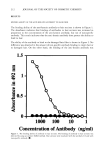
210 JOURNAL OF THE SOCIETY OF COSMETIC CHEMISTS creases the elastic modulus of damaged hair and inhibits fracture generation in hair. We confirm that bivalent binding activity of the antibody is essential to inhibit fracture generation in hair. EXPERIMENTAL HAIR For this experiment, the hair of Chinese women was used. The hair was treated for 30 minutes with a cold waving agent containing 6% ammonium thioglycolate (pH 9.0) at room temperature. Then the permed hair was brushed manually with 10,000 strokes. PREPARATION OF ANTI-KERATIN ANTIBODY The anti-keratin antibody was prepared using the method described by T. Ebina et aL (7). The milk containing the antibody (immunoglobulin G) was obtained by immuniz- ing cows with human hair keratin. The fat was then removed from the milk by cen- trifugation. Casein was precipitated from whey proteins by the addition of diluted hydrochloric acid. The antibody fraction was separated from the other whey proteins by two repetitive precipitations with saturated ammonium sulfate. The antibody was fur- ther purified by column chromatography. As a control, non-specific antibody was pre- pared from milk of non-immunized cows. FRAGMENTATION OF ANTIBODY Digestion was essentially performed according to S. Wie et al. (8). To prepare the Fab fragment of the antibody, 400 mg of antibody was incubated with 4 mg of mercuri- papain (Worthington Biochemical Corp.) in 0.! M acetate buffer (pH 5.5) containing 2 mM EDTA and 10 mM cysteine, at 37øC, for two hours. Digestion was terminated by the addition of 20% molar excess of recrystallized iodoacetamide. To prepare the F(ab')2 fragment of the antibody, 400 mg of antibody was incubated with 12 mg pepsin (Worthington Biochemical Corp.) in 0.! M acetate buffer (pH 4.5) at 37øC for four hours. The reaction was stopped by adjusting the pH to 8.0 by NaOH. The precipitation of Fc fragment and intact antibody by addition of ZnSO 4 was per- formed essentially according to H. Fey (9). Each of the digestion products was dialyzed against saline. A solution of 250 mM ZnSO 4 was added to bring the final concentration to 50 raM, and the mixture was left at room temperature for two hours. After centrifu- gation, 1% tetrasodium EDTA was added to the supernatant to chelate excess Zn ions. The products were dialyzed against saline two times and then against phosphate- buffered saline (PBS). These fragment solutions were prepared as the equivalent molar concentration of intact antibody. Binding activity of these fragments was determined by applying the Ouchterlony technique (10) to human hair keratin. ENZYME-LINKED IMMUNOSORBENT ASSAY TO HAIR SECTIONS The assay was performed by using the indirect enzyme-linked immunosorbent assay (ELISA) method on a 96-well plate, with a nitrocellulose membrane forming the bottom
Purchased for the exclusive use of nofirst nolast (unknown)
From: SCC Media Library & Resource Center (library.scconline.org)