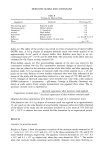
J. Cosmet. Sd., 51, 15-25 (January/February 2000) Elution of S'100Aa from hair fiber: New model for hair damage emphasizing the loss of S'100Aa from cuticle TAKAFUMI INOUE, ICHIRO SASAKI, MASAHITO YAMAGUCHI, and KENJI KIZAWA, Basic Research Laboratory (T.I., LS., K.K.) and Cosmetic Laboratory (M.Y.), Kanebo Ltd., Odawara 5-3-28, Kotobuki-cho, 250-0002, Japan. Accepted for publication December 15, 1999. Presented in part at the 20th Congress International Federation of the Societies of Cosmetic Chemists, Cannes, France, September 14-18, 1998. Synopsis In hair fiber, a cysteine-rich calcium-binding S100A3 protein is segregated in the inner part of the cuticle and postulated to play an important role in the attachment to the adjacent cuticular scale. In this study, elution of S100A3 from hair fiber was examined under various conditions by means of immunoblot analyses. The exposure of hair fiber to permanent waving lotions resulted in recoveries of substantial amounts of S100A3 by elution. Ultraviolet-light radiation and perming also increased the elution of S100A3 even without reductant. The distal part of hair fiber eluted less S100A3, as compared to the proximal section, under reducing conditions. These results suggest that S100A3 is eluted preferentially by daily washing and rinsing, especially from damaged hair. Given the presence of soluble S100A3 in the inner part of cuticle, we propose a new mechanism of hair damage in which the elution of S100A3 plays a major role. INTRODUCTION The structure and chemistry of hair was to be considered in seeking to understand the damaging effects of topically applied preparations (i.e., perming, bleaching, dyeing, and shampooing), environmental influences (i.e., sunlight and oxidants), and mechanical factors (i.e., combing, brushing, and drying). The cuticle has been recognized as a tough and impervious layer providing protection for the hair shaft emerging from the follicle (1). It was shown that the cuticle was damaged before any degradation occurs to the cortex (2). S100A3 protein was identified as a component of cuticle in our previous work (3). Members belonging to a calcium-binding S100 protein family are small, acidic, and soluble, even in 100% saturated ammonium sulfate solutions (4). Among all members, S100A3 possesses the highest cysteine content (10 of 101 amino acids) (5). In particular, we have shown that S100A3 was accumulated primarily in the cuticular cells and, to a lesser extent, in cortical cells, during the maturation of hair in mouse hair follicle (6). Recently, we reported ultrastructural localization of S100A3 in human hair fiber (7). 15

16 JOURNAL OF COSMETIC SCIENCE S100A3 was segregated in the endocuticle of cuticular cells and in the matrix that surrounds macrofibril bundles in cortical cells. In the matured hair shaft, the S100A3 molecule was postulated to be attached by cross-linking with hair keratin or hair matrix proteins via the disulfide bridges. Thus, S100A3 provides structural integrity to the hair fiber and may be the key molecule associated with hair damage. Based on the results of our previous work, we hypothesized that hair damage caused by grooming practices, weathering, or chemical preparations, such as by permanent waving and bleaching, were all associated with the elution and denaturation of S100A3. In this study, we demonstrate that the loss of S100A3 from the cuticle of hair fiber occurs during washing and rinsing, especially from chemically treated or irradiated fiber. Additionally, we propose a model of hair damage based on the elution characteristics of S100A3 from hair, taking into account the chemical properties and distribution of S100A3. MATERIALS AND METHODS MATERIALS A novel multiple-antigen peptide (MAP) was synthesized on MAP resin 4-branch (Ap- plied Biosystems) according to the carboxyl-terminal sequences 84-101, Leu-Tyr-Cys- His-Glu-Tyr-Phe-Lys-Asp-Cys-Pro-Ser-Glu-Pro-Cys-Ser-Gln, of S100A3, and then im- munized to rabbit as previously described (3). Specific antibody for S 100A3 was purified from the resultant rabbit antiserum using the MAP antigen-bound Affigel 10 column (Bio Rad). Recombinant S100A3 was prepared from the maltose-binding protein-fused product in Escherichia coli according to the method previously described by F/3hr et al. (8). NATURAL AND DAMAGED HAIR Natural human scalp hair fiber cut for hair dressings was collected from Japanese men and women who had not employed chemical treatments such as perming or dyeing. The collected samples were classified into two types. One was 2 cm long on average and derived from men with short hair aged 30 to 52. The other was approximately 20 cm in length derived from individuals with long hair, one male aged 36 and seven females aged 6 to 50, and all had longer hair than the short-hair sample providers. The root and tip end parts, 7 cm in length, were cut from the long-hair samples. The short-hair samples, and the root and tip ends of long-hair samples, correspond to the root, middle, and tip parts of natural hair fiber, respectively. UV-irradiated and permed hair were prepared from the root part of natural fiber. For preparation of UV-irradiated hair, the hair was exposed to UV-B light (302 nm, 10 J/cm 2 hr) using a trans-illuminator (TDM type, UVP Inc.) at a distance of 3 cm for 100 hr. Permed hair was prepared by employing permanent waving lotions. Briefly, the waving procedure consisted of immersing 600 mg of hair in 30 ml of a waving agent (6% ammonium thioglycolate at pH 9.0) for 15 min, followed by rinsing with water. Subsequently, the hair was soaked in 30 ml of 7% sodium bromate for 10 min, and then rinsed thoroughly with water.
Purchased for the exclusive use of nofirst nolast (unknown)
From: SCC Media Library & Resource Center (library.scconline.org)