HAIR DAMAGE WITH S 100A3 ELUTION 17 PROTEIN ASSAY Protein contents were measured by a dye-binding assay (9) using bovine serum albumin as a standard. IMMUNOBLOT ANALYSIS Extracts and effluents from hair fiber were subjected to immunoblot analyses for S100A3. Western blots were prepared by electroblotting onto a polyvinylidene difluo- ride (PVDF) membrane (Immobilon P, Millipore) following size separation on a tricine/ sodium dodecyl sulfate/polyacrylamide gel electrophoresis (SDS/PAGE 16.5%T, 6%C) (10). Slot blots were prepared by condensing and blotting onto the PVDF membrane using Bio-Dot SF (Bio-Rad). Both blots were sequentially reacted with antibody for S100A3, biotinyl goat anti-rabbit IgG antibody, and streptavidin-horseradish peroxi- dase conjugate, and then finally visualized with either diaminobenzidine or chemilu- minescent substrate (ECL, Amersham). The amounts of S 100A3 were estimated through the comparison of the signal intensities with those of diluted recombinant S 100A3 using image analysis software (Biomax 1Dx, Kodak). EXTRACTION OF TOTAL PROTEINS Cuticle fragments were physically isolated from hair fiber as described before (11). Hair fiber or cuticle fragments (100 mg) were extracted in 5 ml of 200 mM Tris-HCl buffer (pH 9.0) containing 8 M urea and 200 mM dithiothreitol, with vigorous shaking for 16 hr at 37øC. After passing through a cellulose acetate filter (0.8 lam, Dismic 25CS, Advantech Toyo), the resulting extracts were subjected to protein assay and western blot analyses. ELUTION TEST The elution of S100A3 and protein from hair fiber was examined under three conditions as follows: 1. Permanent treatment condition: Two cold permanent lotions, mentioned above, were applied to the sample of short hair at room temperature. The treatment was repeated for three cycles, and the resulting effluents of each treatment step were collected. After passing through a cellulose acetate filter, the effluents were condensed using an ultra- filtration membrane (YM-3, Amicon) and then subjected to protein assay and western blot analysis. 2. Non-reducing condition: Natural, UV-irradiated, and permed hair (300 mg) were shaken in 3 ml of 200 mM Tris-HCl (pH 9.0) for 16 hr at 37øC. After filtration, the resulting effluents (200 lad were subjected to slot-blot analysis. 3. Reducing condition: The root, middle, and tip parts of hair fiber (600 mg) were shaken in 30 ml of 200 mM Tris-HCl buffer (pH 9.0) containing 200 mM 2-mercaptoethanol for 16 hr at 37øC. After filtration and condensation, the resulting effluents were sub- jected to protein assay and western blot analysis.

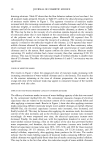
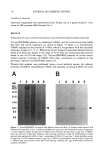
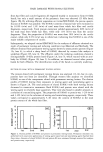
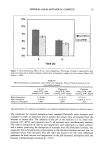
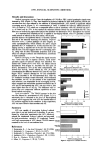
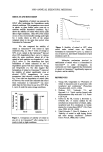
18 JOURNAL OF COSMETIC SCIENCE STATISTICAL ANALYSIS Statistical comparisons were performed by the Tuckey test or a paired Student's t-test using an SAS program (SAS Institute Inc.). RESULTS ESTIMATION OF SlOOA3 CONTENTS IN EXTRACTS AND EFFLUENTS DERIVED FROM HAIR FIBER Tricine/SDS/PAGE patterns of recombinant S lOOA3, and the total extracts from whole hair fiber and cuticle fragments, are shown in Figure 1A (lanes 1-3). Recombinant SlOOA3 migrated to the position of 10 kDa, which is in agreement with the calculated molecular weight of 11,713.3. Whole hair extract showed intermediate filament keratin bands with molecular weight in the range of 45-55 kDa and keratin-associated protein bands in the 10-30 kDa range (12). Tricine/SDS/PAGE patterns of cuticle extract showed superior resolution of SlOOA3 from other constituents as compared to the previously reported urea/SDS/PAGE pattern (3). Western blot analyses were performed using a novel antibody against the carboxyl terminus of SlOOA3. Recombinant SlOOA3 and naturally occurring SlOOA3 extracted A B (kd) 66.2 45.0 31.0 21.5 1 2 3 4 5 1 2 3 4 5 ß . 14.4 - 10.7 - 8.2' 6.2 - Figure 1. Tricine/SDS/PAGE of extracts and effluents from hair fiber. A: Protein bands stained with Coomassie brilliant blue. Lane 1, recombinant S100A3 (0.3 Fg) lane 2, whole hair fiber extract (10 pg) lane 3, cuticle fragment extract (10 Fg) lane 4, effluent with permanent waving lotion (3 Fg) lane 5, effluent from root-end part of hair fiber obtained under reducing conditions (3 Fg)- B: Immunoreactive bands detected with antibody for S100A3. Lane 1, recombinant S100A3 (0. ! Fg) lane 2, whole hair fiber extract (10 Fg) lane 3, cuticle fragment extract (1 Fg) lane 4, effluent with permanent waving lotion (0.2 Fg) lane 5, effluent from root-end part of hair fiber with reducing condition (0.1 Fg)- Arrow heads indicate the positions of S100A3.
Purchased for the exclusive use of nofirst nolast (unknown)
From: SCC Media Library & Resource Center (library.scconline.org)