28 JOURNAL OF COSMETIC SCIENCE calcium, magnesium, and potassium ions. The mode of physicochemical action of the minerals is not yet fully understood (4,5). Stabilization difficulties, caused by a high electrolyte concentration, are considered as drawbacks in formulating minerals in cosmetic preparations (6). Using mineral carriers as vehicles may enable a better stabilization of the formulations, thus slowing and sustaining the mineral release to the skin surface. Mineral carriers may contribute to the production of mineral-rich long-lasting products. Certain types of microbial biomass can retain relatively high quantities of metal ions by passive sorption and/or complexation. This phenomenon is generally known as biosorp- tion (7). Micro algae from hypersaline habitats have adopted some unique metabolic pathways that enable their survival under relatively high osmotic pressures (8). The green alga D•naliella salina from the order Volvocales/Chlorophyceae, isolated from diluted Dead Sea water, can accumulate high contents of glycerol and [3-carotene (9,10). This alga also contains vitamins such as thiamine, pyridoxine, riboflavin, vitamin E, and biotin. Its beneficial effects, including immunological enhancement of topical applica- tions of [3-carotene and other free radical scavengers, have been reported previously (11). Some plant extracts are recognized as folkloric remedies. Some of these have proven pharmacological activity others have pretentious sophisticated claims, but are ineffec- tive (12). A combination of natural ingredients and blended components from the various sources that were mentioned above may lead to the development of a unique, active composition with potentially synergistically beneficial effects. Meanwhile, the increasing public de- mand for scientific proof of cosmetic performance claims, as well as new legislation, has encouraged the cosmetics industry to submit studies demonstrating the activity of their preparations. Acceptable testimonies to support a claimed effect for bioactivity can take the form of a published scientific or clinical study, consumer evaluation, professional observations, and instrumental analysis. Results from in vitro tests, mainly cell-culture models, have been used recently to support the bioactivity of some cosmetics (13). In a previous article we have reported that the addition of 1% of Mineral Skin Os- moter TM to a control gel contributed to a significant skin smoothing effect (1). The role of minerals in improving skin roughness and hydration was demonstrated. The aim of the prsent study was to evaluate the effect on the skin of a cosmetic cream with 5 % of a mineral-algal-botanical complex (Triple D ComplexTM). The assumption that Du- naliella salina algae, as a part of this unique complex, would serve as an adequate vehicle and a bio-available source for minerals delivered to skin was also examined. The en- richment of Dunaliella biomass with Dead Sea minerals, and several parameters that could affect mineral biosorption and desorption, were studied. MATERIALS AND METHODS MINERAL-ALGAL-BOTANICAL COMPLEX (TRIPLE D COMPLEX TM) PREPARATION A unique composition, the Triple D Complex TM was composed of three elements: Dead Sea Mineral Skin Osmoter TM, Dunaliella salina algae extract, and desert plant extracts (14). Dead Sea Mineral Skin Osmoter TM, is called "sea salt" in the US and INCI-listed as "Maris Sal & Aqua" (supplied by Dead Sea Laboratories Ltd.) Dunaliella salina algae

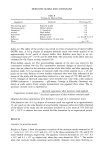
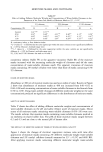
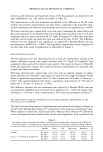
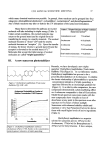
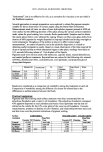
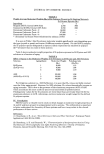
MINERAL-ALGAL-BOTANICAL COMPLEX 29 extract is INCI-defined as "algae" (supplied by Henkel Corporation). "Desert plants" are Fenugreek, INCI-defined as "Trigonella Foenum-Graecum extract," and Jujube, INCI- defined as "Ziziyphus jujuba extract" (both botanical extracts supplied by Alban Muller International). Dead Sea Mineral Skin Osmoter TM is a highly concentrated aqueous solution extracted from the Dead Sea via a natural evaporation process developed by the Dead Sea Laboratories Ltd. This ingredient contains a high level of bivalent cations. The composition of this brine is presented in Table I. GROWTH OF DUNALIELLA SALINA AND HARVEST OF THE BIOMASS Innoculum of Dunaliella salina algae, type 19/31, was purchased from the Culture Collection of Algae and Protozoa (CCAP). The algae were cultivated in semicontinuous batches based on American Type Culture Collection (ATCC) DA medium No. 1174 (18). The biomass was harvested by continuous centrifugation, lyophilized (Labconco lyophilizer) in the presence of 0.01-0.2 % methyl paraben as a preservative, and crushed with a mortar and pestle. The crushed algal powder was utilized for biosorption tests. COSMETIC PREPARATIONS Two oil-in-water emulsions, textured as light cosmetic creams, were prepared and comparatively tested: (a) a moisturizing antiwrinkle base cream, serving as a control, and (b) the same moisturizing antiwrinkle base cream, enriched with 5% Triple D Com- plex TM. LASER PROFILOMETRIC TEST Each preparation was applied twice a day over a period of four weeks to 20 female volunteers, aged 22 to 63, average age above 36 years, on both right and left forearm. Half of the participants were categorized as having sensitive skin and the rest as having normal skin. At the beginning and end of the application period, silicone impressions were taken from the same area of skin on the right and left forearms. Twelve hours before the impressions were taken the participants were not permitted to apply cream or to use active washing substances. Each subject was acclimatized to room temperature 30 min- utes prior to the measurements. Structural changes of the epidermis were quantitatively classified with a computer-aided laser profilometric system according to ISO 4287/1 ("Surface roughness terminology"). Skin surface changes were evaluated by comparing Rz values, a roughness parameter of a surface profile, as measured by the silicone impression, before and following the skin treatments (15). Table I Typical Chemical Analysis of Mineral Skin Osmoter TM (INCI-listed as "Marls Sal & Aqua") Cation Mili-equivalent/1 Anion Mili-equivalent/1 Na + 107 C1- 9320 K + 37 SO4 -2 7 Ca 2+ 1850 Br- 150 Mg 2+ 7430 HCO3 2
Purchased for the exclusive use of nofirst nolast (unknown)
From: SCC Media Library & Resource Center (library.scconline.org)