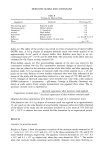
42 JOURNAL OF COSMETIC SCIENCE EFFECTS OF ANTIOXIDANT INGREDIENTS ON HUMAN SKIN: FROM CELL CULTURE TESTING TO HUMAN CLINICAL STUDIES James A. Greene, M.S.' and Richard L. Roberts, Ph.D. 2 •Shaklee Corporation, Hayward, C,4 94545-1702 and 2R.L. Roberts and ,4ssociates, Germantown, TN Introduction: Cosmetic chemists have included Vitamins A, C, and E and other similar ingredients into skin care and cosmetic products for many years now. These ingredients and their derivatives were originally incorporated into those products for their effects in improving the appearance and feel of the skin. It has been well documented that Vitamins A and C help make the skin appear younger looking. It is also well known that Vitamin E improves the feel of the skin making it smoother and softer. Because of the readily perceived efficacy of these ingredients, consumers seek out products featuring these ingredients. Based upon the efficacy and consumer desirability, these ingredients have become very prevalent in skin care, cosmetic and even over-the-counter (OTC) drug products. The levels of these materials incorporated into personal care products are generally low since high concentrations can cause contact irritation and/or allergic contact dermatitis. Additionally, these materials are relatively expensive and some of them are difficult to stabilize in formulations. During the past three decades, research has shown the importance of these ingredients among the various antioxidant components of the skin. Research has also shown that following a significant exposure of the skin to the ultraviolet light, the amounts of these antioxidants present in the skin are significantly depleted. However, the topical application of antioxidants as delivered from cosmetic, skincare, and over-the-counter (OTC} drug products have been shown to help boost the skin's antioxidant capacity. Materials and Methods: All testing conducted on formulations containing antioxidant materials was carried out at outside laboratories under the direction of the authors. The protocols employed to evaluate the various materials were developed by the testing laboratories and used with only minor modifications. The source of the ultraviolet light employed in all experiments requiring such exposure was a xenon arc light source with appropriate filtering to mimic the terrestrial solar ultraviolet spectrum or for the transmission of only long wavelength ultraviolet light. The other instruments employed in this testing were commercially available equipment, unmodified and used according to manufacturer's instructions. Antioxidant Cell Culture Testing: Individual antioxidant materials and mixtures were tested using cell cultures purchased from MatTek. Each material evaluated was tested on three separate cell cultures. For the non-irradiated cultures, water was used as the negative control and Triton X-100 was used as the positive control. For the cultures irradiated with solar simulated ultraviolet light experiments, irradiated cell cultures to which no antioxidants materials were added were the positive control and unirradiated cell cultures were the negative control. The percentage cell viability was determined by uptake of MTT and conversion to the insoluble formazin crystals that were extracted from the cells at the conclusion of the test and evaluated by a spectroscopic technique. Production of Prostaglandin E2 was evaluated using a standard assay kit and procedure from Perspective Diagnostics. Antioxidant Activity Tested on Human Skin: The effectiveness of a mixture of antioxidants in finished formulations was conducted using the known bleaching effect of beta-carotene when exposed to long wavelength solar ultraviolet (UVA} light. This method is appropriately called the beta-

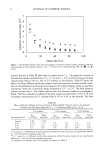
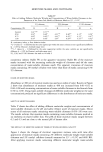
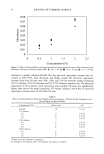
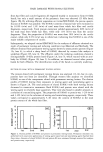
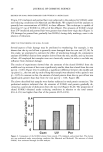
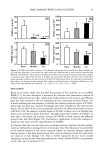
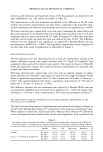
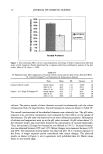
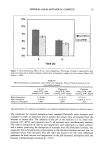
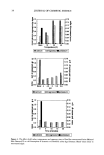
1999 ANNUAL SCIENTIFIC MEETING 43 carotene photobleaching assay. The photobleaching of beta-carotene is known to occur by a free radical mechanism. The test site was painted with a solution of beta-carotene and allowed to dry. Once dry, the test formulations were applied over subsites of the beta- carotene treated skin while maintaining one subsite as an untreated control. Each subsite was then exposed to several different amounts of UVA radiation. The color of each irradiated site was measured and compared to the color of the control site {beta-carotene only treated site} receiving the same amounts of UVA radiation. Human Clinical Studies: The effectiveness of the finished product formulations containing the mixture of antioxidants was determined through a series of clinical studies lasting from four to twelve weeks. In addition to evaluating the skin for signs of irritation, the skin was evaluated for the reduction in the appearance of fine line and wrinkles using image analysis of dental silicone skin replicas, for increased skin moisture using a NovaTMMeter, for changes in skin resilience using a Cutometer TM, and from changes in skin coloration using a Chromameter TM Results and Discussion: The safety of the mixture of antioxidants as well as the individual component materials was demonstrated using cell culture technology. None of these materials exhibit cytotoxicity at the concentrations tested as shown by either the Percentage Cellular Viability assay or the Prostaglandin Ee assay. The efficacy of the antioxidants in protecting human skin cells from the free radicals generated by exposure to solar simulated ultraviolet light was demonstrated using cell culture technology. The Percentage Cellular Viability results clearly showed that the mixture of antioxidants is more effective than the individual component ingredients comprising the mixture. Similar results were found for the antioxidant mixture using the Prostaglandin E2 assay method. Although the cell culture results clearly document the efficacy of the antioxidant mixture, they do not necessarily demonstrate that this same mixture is efficacious when applied to intact human skin from finished product formulations. Using the beta-carotene photobleaching assay, the effectiveness of this mixture of antioxidants was clearly shown for three different formulations. This antioxidant effect has also been shown to improve the effectiveness of sunscreen product formulations. Those results will be presented at the American Academy of Dermatology in March, 2000 in San Francisco, California. The same ingredients that comprise the antioxidant mixture also exhibit some very impressive effects on improving the appearance and texture of the skin. In order to demonstrate those effects, human clinical testing was conducted. The results of those four to twelve week studies clearly demonstrate that the skin treated with the formulations containing this antioxidant mixture significantly improved the resilience of the skin, the look of fine line and wrinkles, the evenness of the skin color and an increase in the moisture content of the treated skin. A dramatic improvement in skin resilience was found for a moisturizing skin care formulation containing the mixture of antioxidants as measured by a Cutometer. The use of this same formulation resulted in a significant reduction in the appearance of fine lines and wrinkles as measured by image analysis of silicone skin replicas. Furthermore, the skin treated with this moisturizing formulation showed the significant increase in moisture content. These results clearly demonstrate that the formulation containing the same ingredients shown to exhibit significant antioxidant effects have profound effects upon the appearance and texture of the treated skin. Conclusions: Given currently available technologies, formulations can be developed and shown to exhibit significant antioxidant efficacy while simultaneously dramatically improving the appearance and texture of the treated skin. By the incorporation of carefully chosen antioxidant ingredients, these desired efficacies can be obtained from the same mixture of ingredients.
Purchased for the exclusive use of nofirst nolast (unknown)
From: SCC Media Library & Resource Center (library.scconline.org)