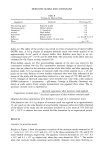
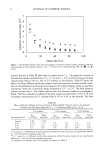
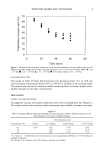
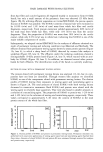
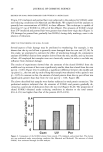
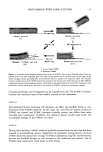
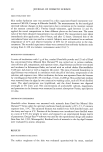
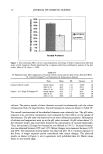
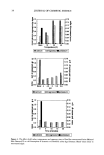
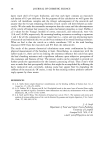
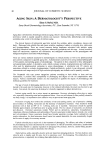
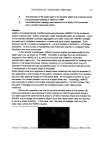
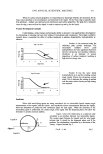
44 JOURNAL OF COSMETIC SCIENCE PROTECTIVE EFFECTS OF ASCORBYL 2-PHOSPHATE AGAINST UV-GENERATED RADICALS IN SKIN Toshi Tsuzuki •, Eiko Masatsuji •, Shinobu Ito', Eiji Ogata' and Yuichi Fusyo • •Showa Denko K.K. Central Research Laboratory, Chiba, Japan, 2Showa Denko K.K. Speciality Chemicals Division, Tokyo, Japan and 3Showa Denko America Inc. New York Introduction Ascorbyl 2-phosphate (AP) is well known as a 'stable' vitamin C. With the sensitive hydroxyl group chemically protected with phosphoryl ester, the compound is resistant to the atmospheric oxygen (Figure 1). Since vitamin C has various valuable physiological effects and extremely low toxicity suitable for cos- metics, AP, with a satisfactory stability, is considered to be a very good alternative choice. Currently AP is increasingly utilized as an active ingredient to remove skin pigmentation or freckles. Clinical studies also have shown its efficacy. to improve skin brightness (1). AP is hydrolyzed to biologically active ascorbate by phospha- tase during permeation into skin (2). Having investigated AP's chemical and physiological properties, we found that not only hy- drolyzed ascorbate but also AP itself had a remarkable capability of scavenging UV-generated radicals. It has been also reported that AP prevents skin troubles caused by UV irradiation, such as peroxidation of cell membrane and DNA damage (3). Those skin damages are quite possibly caused by radical species (4). However, the AP's protective mechanism is not fully revealed. Popular experiments with homogenized skin samples cannot always represent the in vivo events. Only a few works have been done to detect radicals in the whole skin (4), though the whole cell experimental system is necessary to verify the intradermal effects of any anti-oxidative agents. In this presentation, AP's significant capability of hydroxTl radical scavenging is reported with data obtained through several ESR-spin trap experiments including ones using whole skin sam- ples. A relatively new, another ascorbate derivative, ascorbyl 2- glucoside (AG) was also examined in comparison. Experimental Materials. Sodium ascorbyl 2-phosphate (APS) of a commer- cial grade (Showa Denko, trade name Ascorbyl PM) was used. 5,5'-Dimethyl-l-pyrroline-N-oxide (DMPO) and all other reagents were commercially available ones from domestic suppliers. Male hairless mouse, aged 5 weeks, was employed as the skin source. ESR measurements. Active oxygen species were detected and determined by ESR using JES-RE1X (JEOL) equipped with UV irradiation system and a UV-D35 filter (JEOL) to cut off UVC. APS was dissolved in phosphate buffered saline (PBS, pH 7.0) containing 50mM DMPO in a quartz testing tube. Measurements were carried out under a continuous UV irradiation at an energs.' of 20 kJ/m2. Intmdermal radicals were detected with the same ESR system. Carefully prepared fresh hairless mouse skin was pretreated for two hours with APS solution attached to its epidermal surface, then was cut into a small piece (3mm x 3mm) to fit the ESR tis- sue-cell LTC-10 (Labotec). 5pl of 9.2M DMPO was added to the skin surface, and stood for 5 minutes to allow the appropriate per- meation. Washed thoroughly with distilled water a•.d wiped with ascorbyl 2-phosphate (A2P) OH Chemically stable Radical-scavenging • OH Physiologically inactive I OH ascotbit acid (AsA) OH Radical-scavenging Physiologically active Figure 1. Ascorbyl 2-phosphate (AP) is converted into biochemically active ascorbate via phosphatase-catalyzed hydrolysis. AP is quite a stable compound against oxygen, but possesses the radical- scavenging activity. 20mM AsA 20ram APS Figure 2. When UVA/B was irradiated to PBS, ESR detected signals of hydroxy radicals (solid triangles). They were reduced by addition ofAPS. Ascorbate (AsA) also reduced them, but a:s. corbyl radicals newly appeared (open triangle) filter paper, the skin sample xvas set onto the cell and the ESR measurements were carried out under the same condition as described above. TBARS measurements. The amount of thiobarbituric acid-reacting substance (TBARS), a good indica- tor of lipid peroxidation in skin, was measured by the method described by Kobayashi et al (3).

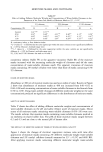
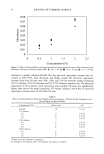
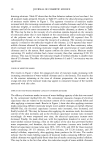
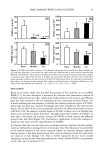
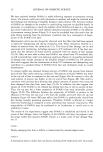
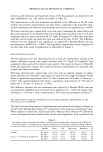
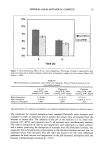
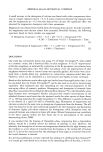
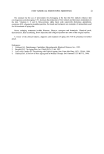
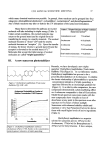
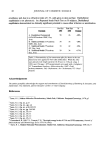
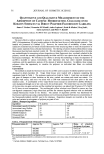
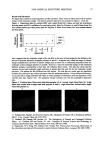
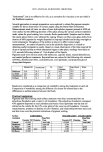
1999 ANNUAL SCIENTIFIC MEETING 45 Results and discussion Radical scavenging activity. Upon the irradiation of UVA/B to PBS, typical quadropict signals were detected by ESR (Figure 2). They were identified as hydroxyl radicals for their shift positions and the ob- servation that they were reduced by the addition of dimethylsulfoxide. APS showed a significant radical scavenging activity (Figure 3)' At a concentration of lmM, it reduced the hydroxyl radical amount by 30%, at 10ram by 75%, which was a comparable efteel to that of ascorbate, while AG showed less activi- ty, at 10ram only by 25%. In this reaction the reduclant (electron donor) was not ascorbate but AP, since there was no hydrolyzing agent added and no free ascorbate was detected by HPLC throughout the reaction. It is important that unhydrolyzed AP is capable of scavengqng radicals, since UV generates a consid- erable amount of radicals on the skin surface, which quite possibly destroys the epidermal barrier. It has been reported that one of the naturally occurring skin bacteria, Propioni- bacterium aches, a potent pathogen of acne ,•xflgaris, se- cretes coproporphyrines which enhance the active o,,o.'gen generation by UV irradiation (5). In this situation the scav- enging activity is required not in the skin but mostly out- side the skin. This fact suggests that AP's scavenging activ- ity, along with all other intracellular properties such as the effects on collagen synthesis and inflammation, contributes to acne treatments. Radical scavenging in sl{'in. Though the signal intensity was lower than that in aqueous solution, easily distin- guishable signals of hydroxyl radicals were identified. Pre- treated with 20ram (0.6% w/w) APS, the radical amount decreased by 50% (Figure 4). Ascorbate was also quite ef- fective, decreased by 55% at the same concentration. AG showed less activity 20mM reduced by 35%. At higher concentrations the difference herween APS and AG was even bigger. HPLC analysis detected no AP but considerable amount of ascotbate in the APS-pretreated skin. After the UV irradiation ascorbate content decreased, which indicated that ascotbate, not AP, on the contrary. to the experiments with solutions, was responsible for the scavenging activity. Miwa compared the intracellular ascorbate-enrichment rate of APS and AG and reported that APS's rate was tss4ce to nine times higher than that of AG (6). This difference well ex- plains those two compounds' different capabilities of intra- dermal radical scavenging. Lipid peroxidation. The TBARS amount in the skin svas also reduced by pretrcatment of APS (Figure 5). It is noteworthy that it remained in the level of non4rradiated control, which suggests that with APS the harmful effect of UV could he neglected in this condition. In this experiment, APS was more effective than ascotbate and AG. PBS I I I I +AsA ,•:- --•,•,• •,,,, •.-•, • ß, - -• N-•----, ,•, •-,•-, • ,q••..• 25 • 75 1 O0 Relative •dro•l radicat amouN (%) Fibre 3. Radical scaveng•g in aqueous solution. I I I I •s +•s '• •G ""• :¾'•': '•":? ::: '• •:•'•:•• ' '• • I I I I 0 25 • 75 l O0 Relat•e hydroxy radial amount Fibre 4. Radical scaveng•g in Summary APS was capable of scavenging hydrox3'l radicals even when it was not hydrolyzed to ascotbate. It •as con- Nor• firmed by whole-skin experiments that APS effectively reduced the intradermal hydrox.wl radicals and prevented uv •a the lipid peroxidation caused by UV irradiation. Treated •th high concentration of APS, dermat TBARS amount •o• •^ remained in the level of non-irradiated skin. /LIVirrad. 20ram APS References /uv irrad. l. Kameyama, K., J. Am. Acad. Dermato!., 34, 29 (1996) 2o,,• 2. Kobayashi. S., Fragrance J., 25 (3), 34 (1997) AJVirrad. 3. Kobayashi, S., Photochem. Photobio!., 64, 224 (1996) 4. Jurkiewicz, B.A., Photochem. Photobiol.. 59, 1 (1994) 5. Ryu, A., Fbaburic, 19 (1), I (1995) 6. Miwa, N., Fragrance J., 25 (3), 7 (1997) I I I I I I I I 0 5 lo 15 20 TBARS (nmol/mg protein) Fisure 5. Suppression ofTBARS tbrmation
Purchased for the exclusive use of nofirst nolast (unknown)
From: SCC Media Library & Resource Center (library.scconline.org)