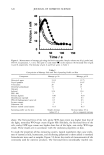
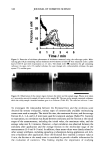
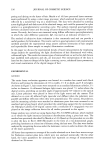
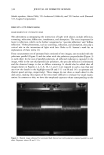
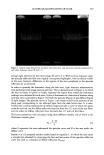
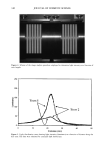
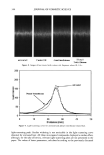
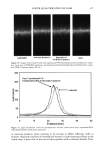
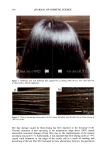
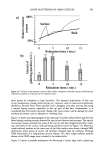
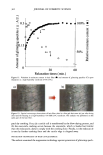
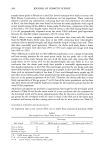
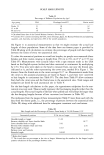
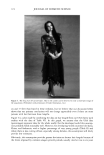
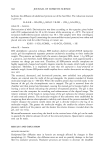
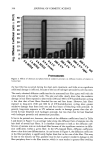
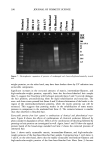
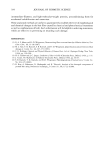
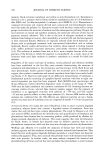
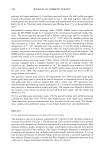
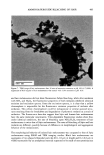
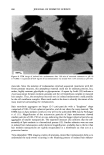
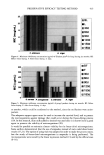
362 JOURNAL OF COSMETIC SCIENCE o.3 o 0 • o • o o o 100% 50% 30 60 Relaxation times (min.) Figure l 1. Variation in moisture content in hair fiber (O) and amount of glittering speckles (O) upon relaxation in a high-humidity condition (75%/23øC). a) b) Figure 12. Optical microscope observations of hair fiber dried in silica-gel desiccator (a) just after being dried and (b) relaxing in a high-humidity (75% RH/23øC) condition. The analysis was performed on the same part of the hair fiber. patch by combing. First, (a) a cuticle cell is transformed by the blow-drying process, and (b) the exocuticle cracking occurs because the exocuticle, which is harder but brittlet than the endocuticle, doesn't comply with the combing force. Finally, (c) the endocuticle is torn by further combing force and the cuticle edge is chipped away. PROTECTION TECHNOLOGY OF HAIR CUTICLE DAMAGE The authors examined the suppression technology against generation of glittering speck-

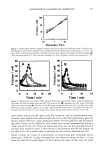
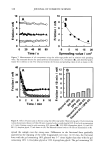
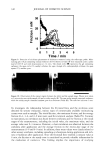
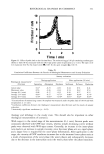
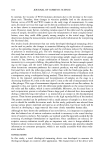
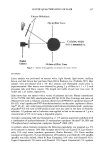
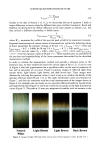
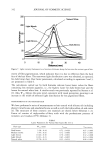
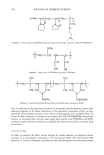
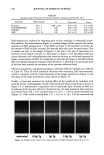
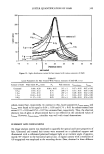
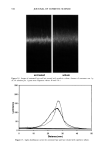
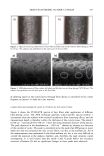
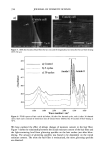
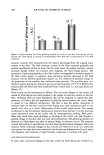
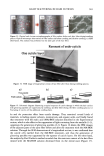
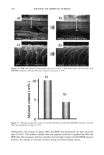
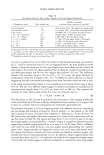
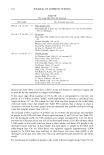
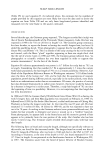
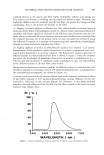
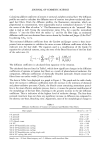
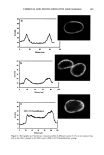
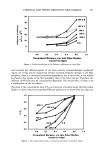
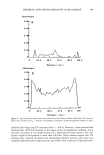
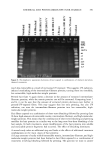
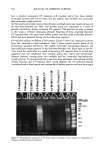
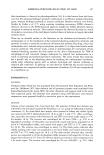
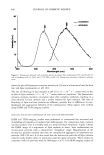
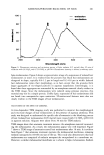
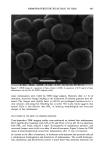
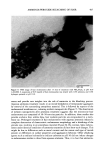
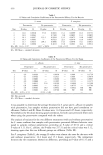
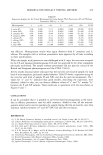
LIGHT SCATTERING IN I IAIR CUTICLES 363 a) c) # Figure 13. Optical and electron microphotographs of fiber surface before and after blow-drying/combing process Optical microscope observations of fiber surlCaces (a) before combing and (b) after combing. (c) SEM observation. The analysis was performed on the same part of the hair fiber. Remnant of endo-cuticle One cuticle layer Figure 14. TEM image of longitudinal section of hair fiber after blow-drying/combing process. a) b) c) Exo-cuticle Figure 15. Schematic diagram illustrating a typical sequence of cuticle damage in which the hair cuticles with glittering speckles are tipped away by combing. (a) After blow-drying. (b) After combing process. (c) Fracturing of cuticle cell by additional combing force. les and the protection effect from cuticle damage. They examined several kinds of materials, including organic solvents, moisturizers, and organic acids, and finally found that treatment with the malic acid (MA)/BOE solution described in the Experimental section, which is also effective for suppression of light scattering from the medulla (1-3), suppresses the generation of glittering speckles (2,3). Figure 16 shows the SEM images of the adjacent parts of the same fiber before and after the treatment with the MA/BOE solution. Through the SEM observations of a longitudinal section, it was confirmed that the cuticle cells swelled from the MA/BOE treatment, and thus the generation of glittering speckles was suppressed by the squeeze of cuticle layers. On the other hand, the analysis by Karl Fischer's method revealed that the moisture content of the hair fiber treated with the MA/BOE solution decreased from its the initial state (Figure 17).
Purchased for the exclusive use of nofirst nolast (unknown)
From: SCC Media Library & Resource Center (library.scconline.org)