366 JOURNAL OF COSMETIC SCIENCE on hair appearance. I. Light scattering from the porous structure of the medulla of human hair, J. Cosmet. Sci., 53, 89-100 (2002). (5) C. R. Robbins, Chemical and Physital Behavior of Human Hair, 3rd ed. (Springer-Verlag, New York, 1994). (6) P. Milczarek, M. Zielinski, and M. L. Garcia, The mechanism and stability of thermal transitions in hair keratin, Colloid Polym. Sci., 270, 1106-1115 (1992). (7) R. McMullen and J. Jachowicz, Thermal degradation of hair. I. Effect of curling irons,J. Cosmet. $ci., 49, 223-244 (1998). (8) M. G. Garcia, The cracking of human hair cuticles by cyclical thermal stresses, J. Cosmet. Sci., 49, 141-153 (1998). (9) A. Elliott and E.J. Ambrose, Structure of synthetic polypeptides, Nature, 165, 921-922 (1950).

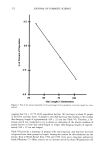
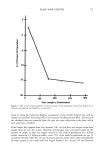
j. Cosmet. Sci., 54, 367-378 (July/August 2003) Scalp hair length. II. Estimating the percentages of adults in the USA and larger populations by hair length CLARENCE ROBBINS and MARJORIE GENE ROBBINS, Clarence Robbins Technical ConsMting, 12425 Lake Ridge Circle, Clermont, FL, 34711. Accepted for p•blication December 12, 2002. Synopsis Scalp hair length assessments by anatomical site, previously made in Florida theme parks on adults (1), are related to anatomical measurements to obtain estimates of free-hanging hair lengths in centimeters. A plot of the natural logarithm of the percent population versus these hair lengths provides a straight line and an equation that permits the estimation of the numbers of persons in the USA and larger populations with hair lengths up to 183 cm (just beyond ankle-length). Data were also collected via a literature search for even longer hair lengths (ankle-length or longer) to provide an equation to estimate the numbers of persons with exceptionally long hair. A comparative plot of these two equations suggests that "normal" anagen periods may be considerably longer than current estimates in the literature. INTRODUCTION In this paper, an attempt is made to estimate the percentages of persons in the USA and larger populations with different lengths of long hair, up to abnormally long scalp hair. This is an onerous task involving many assumptions, but we believe the data covering up to at least 183 cm (six feet) for the United States of America (USA) are relatively good approximations and that the percentage estimates for longer hair for the developed world based on the cited assumptions are also satisfactory. In a previous paper, hair length studies at four different theme parks in central Florida were described and used to estimate the percentages of persons in the USA with different lengths of scalp hair corresponding to different parts of the anatomy, e.g., the shoulders, the shoulder blades, the waist, and the buttocks (1). In the current work, the anatomical positions are related to anatomical measurements in order to estimate hair lengths from equations relating these anatomical measurements to the percentages for the populations of the USA, the developed world, and a population equal to that of the entire world. RESULTS AND DISCUSSION POPULATION The population on which these data are based is, strictly speaking, the population that 367
Purchased for the exclusive use of nofirst nolast (unknown)
From: SCC Media Library & Resource Center (library.scconline.org)