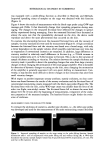
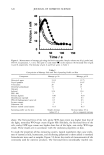
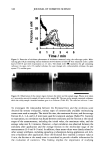
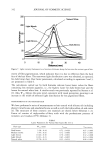
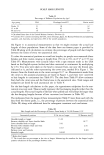
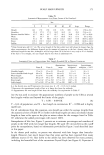
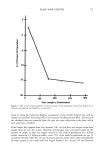
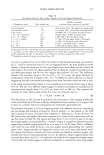
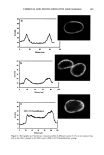
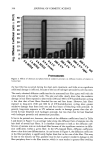
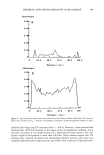
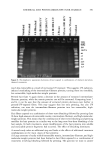
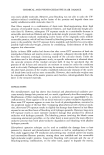
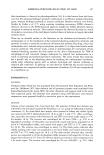
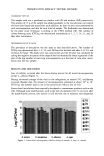
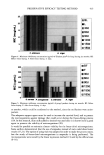
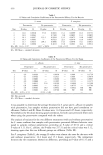
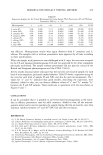
326 JOURNAL OF COSMETIC SCIENCE 4O z l:: 30 o 20 ii mllm a mllml '10 o o 50 lOO 15o Time / s Figure 4. Measurements of massage gels using the block-type probe. Sample volume was 20 lal probe load, 0.05 N reciprocation, 7.2 cm/s. The open (C)) and closed (0) circles represent the frictional force of gels A and B, respectively. The formulae of gels A and B are given in Table I. Table I Composition of Massage Gels and Their Spreading Profile on Skin Component Massage gel A Massage gel B Deionized water 11.32 15.75 Liquid paraffin 25.5 21.07 Trioctanoin 20 20 Dimethyl polysiloxane 15 15 Glycerol 5 5 Sorbitol 12.6 12.6 PEG 400 5 5 Sodium alginate 0.03 0.03 Dimethicone copolyol 0.5 0.5 PEG-60 hydrogenated castor oil 0.5 0.5 Sucrose stearate 2.4 2.4 Poloxamer 184 2 2 Sodium methyl cocoyl taurate 0.15 0.15 Spreading profile on the skin Simple decrease Decrease (about 65 s) (about 45 s) after a temporary increase above. The frictional force of the rich, sticky W/O-type cream was higher than that of the light, nonsticky W/O-type cream (Figure 6B). Similarly, the frictional force of the rich, sticky O/W-type cream was higher than that of the light, non-sticky W/O-type cream. These results are in accordance with the stickiness properties on skin. To study the properties of this measuring system, typical ingredients that cause sticki- ness of cosmetics (oils, humectants, and thickening polymers) or those added in standard formulations were used as samples. Figure 7A shows the results of measurements of oils commonly used for cosmetic products. The frictional forces immediately reached con-

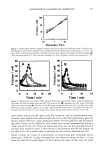
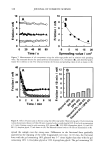
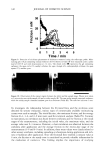
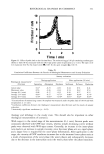
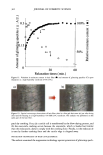
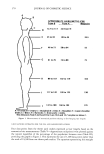
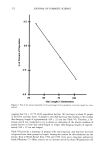
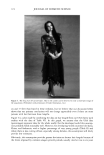
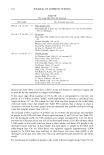
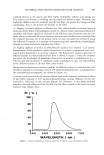
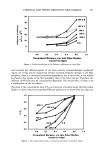
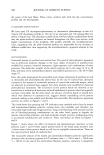
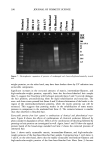
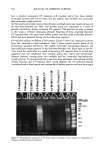
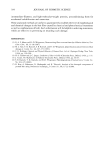
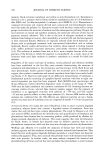
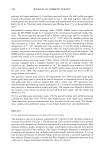
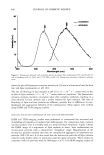
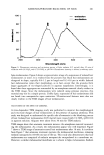
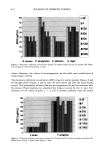
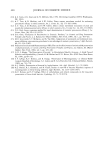
RHEOLOGICAL CHANGES IN COSMETICS 327 lOO •o i i ß i iiii ß i i i i iii 0.1 1 10 Viscosity I Pa-s Figure 5. Relationship between sample viscosity and friction using the block-type probe. Viscosity stan- dard liquids (5•40 pl) were measured under a probe load of 0.05 N and with reciprocation at 2.4 cm/s. The open circle (¸) represents the amount of sample (5 pl) that was applied on the stage the closed triangle ('), 10 pl the open square ([•), 20 pl the open triangle (/•), 40 pl. Apparent viscosity was measured at 32øC. 60 60 Z 50 4O o 30 .o_ 20 10 z 50 •40 • 30 ._o 20 10 B 0 5 10 15 20 0 5 10 15 Time / min Time / min Figure 6. Measurements of typical. O/W-type and W/O-type moisturizing creams using the block-type type probe (A) and the roller-type probe (B). The closed circle (0) represents the rich, sticky O/W-type cream the closed triangle ('), the rich, sticky W/O-type cream the open circle (¸), the light, non-sticky O/W-type cream the open square ([•), the light, non-sticky W/O-type cream. The probe load and recip- rocation were 0.05 N and 2.4 cm/s, respectively. Sample volume was 20 pl in (A) and 10 pl in (B). stant values viscous oils that give a rich skin sensation, such as pentaerythrityl tetra- octanoate, gave high friction, whereas light oils, such as dimethyl polysiloxane, gave low friction. Figure 7B shows a clear correlation between the frictional force and the spread- ing value, which can be defined as skin surface area covered spontaneously during a certain period of time (15). This is an interesting result, because the spreading values of oils have been reported to have a close relation to the sensation that the oils produce on the skin, and to be a useful index in selecting oils for cosmetic formulations (16). Figure 8 shows the results of measurements of moisturizing gels containing various humectants (Table II). A large frictional force was observed during the first 1-2 min when the roller of the probe slipped on the reciprocating stage. At that time, the probe
Purchased for the exclusive use of nofirst nolast (unknown)
From: SCC Media Library & Resource Center (library.scconline.org)