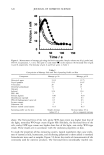
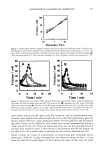
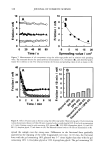
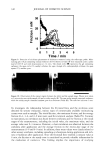
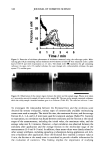
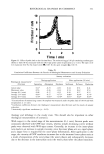
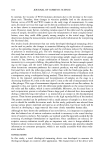
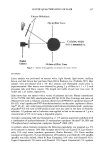
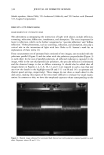
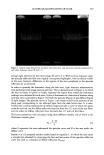
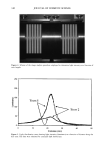
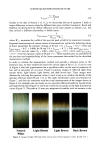
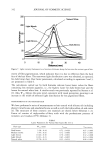
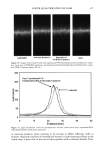
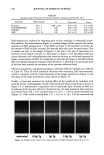
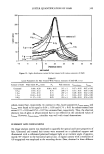
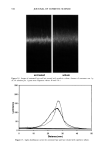
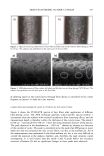
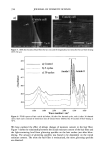
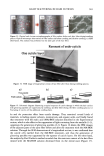
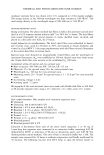
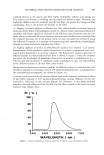
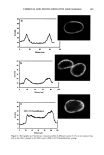
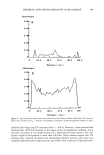
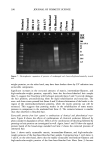
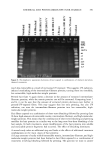
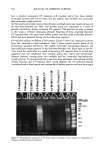
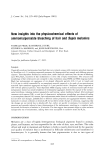
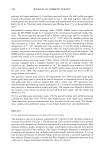
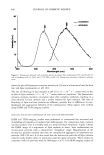
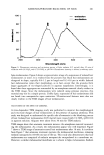
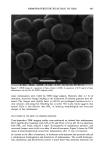
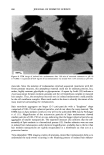
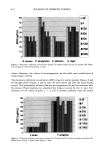
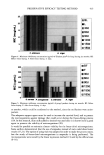
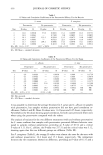
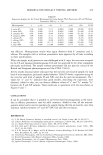
388 JOURNAL OF COSMETIC SCIENCE the center of the hair fibers. These curves correlate well with the dye concentration profiles and the micrographs. UV MICROSPECTROPHOTOMETRY We have used UV microspectrophotometry to characterize photodamage in hair (6). Typical UV absorbance profiles at 340 nm of an untreated and UV-exposed fiber are shown in Figure 6a,b. The absorbance profile of the 300-hour photo-oxidized fiber shows that the photo-oxidized products are formed throughout the fiber cross section, with higher concentrations at the periphery. The profiles resemble the microfluorometric scans, suggesting that the photo-oxidized proteins are responsible for the increases in diffusion coefficients, thus supporting the microfluorometric approach adopted in this study. ELECTROPHORESIS Extractable proteins of unaltered and oxidized hair. The goal of electrophoretic separation was to determine oxidative damage to the main classes of proteins of unaltered hair modified by cosmetic chemical treatments, light exposure, and combinations of these processes. The molecular weights of the matrix proteins are in the range of 10 to 30 kDa, and those of the intermediate filament (microfibril) proteins are in the 40-55 kDa range (7). First, this study investigated the extractable main classes of proteins of unaltered as well as chemically and photochemically altered hair. In the case of oxidized hair, decreases/ increases in the amount of extractable proteins of a particular molecular weight, which are observed in untreated hair, suggest that these proteins were modified by chemical/ photochemical treatments. The occurrence of new protein bands not observed in un- treated hair is indicative of treatment-induced breakdown of proteins that had originally not been extractable. On the other hand, the absence of protein bands in treated hair, which were observed in untreated hair, suggests further crosslinking of the protein network, making it less soluble and therefore less extractable. Electrophoretic separation patterns are shown in Figures 7 and 8. This work shows that perming and UV irradiation may crosslink and/or fuse the matrix and intermediate-filament proteins, turning them into insoluble and, therefore, less extractable high-molecular-weight proteins. Long-term bleaching with peroxide and the use of bleaching/perming combinations, on the other hand, appear to degrade the matrix, intermediate-filament, and high-molecular-weight proteins, predisposing them to accelerated solubilization and extraction. These conclusions are based on Figures 7 and 8. Figure 7 clearly shows the effect of chemical and photochemical treatment on hair proteins. Lanes 1 and 10 show typical protein bands of the broad range standard. Lane 2 shows most of these protein bands as well, but at negligible concentrations. These are the typical protein bands of unaltered hair. The extractable amount of the matrix and intermediate-filament proteins significantly decreases with increasing exposure to UV radiation (lane 3 = 100 h lane 4 = 200 h lane 5 -- 300 h). In the case of the intermediate-filament proteins, extraction is completely

CHEMICAL AND PHOTO-OXIDATIVE HAIR DAMAGE 389 Absorbance 0,64 O. 4B 0.32 24.0 48.0 72.0 g6.0 t20.0 Distance ( gm ) Absorbance O.EiO 0.64 O. 48 0.32 0.t6 -b .0 , I , I I I I I .0 24.0 48.0 72.0 96.0 I t20 Distance ( gm ) Figure 6. Typical cross-sectional scans across stabilizer-free hair fibers (a) before and (b) after UV exposure. (Scans were carried our ar Xo, = 340 nm, the absorbance maximum of photodegradation products in hair.) inhibited after long-term UV radiation (lane 5 = 300 h). However, a faint protein band develops after 300-h UV exposure in the region of low electrophoretic mobility, which indicates extraction of very small amounts of a high-molecalar-weight protein. The mo- lecular weight of this protein is more than 100 kDa. These features suggest that UV radiation may crosslink the matrix and ir•termediate-filament proteins, turn them into insoluble high-molecular-weight proteins, and inhibit their extraction. High-molecular-
Purchased for the exclusive use of nofirst nolast (unknown)
From: SCC Media Library & Resource Center (library.scconline.org)