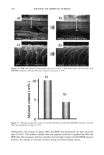
394 JOURNAL OF COSMETIC SCIENCE intermediate-filament, and high-molecular-weight proteins, preconditioning them for accelerated solubilization and extraction. These analytical methods are useful to quantitatively establish the level of morphological and chemical changes in the hair fiber caused by chemical and photochemical treatments as well as combinations of both. Such information will be helpful in selecting sunscreens, which are effective in preventing or retarding such damage. REFERENCES (1) R. A. F. Moore and H.-D. Weigmann, Characterizing fiber structure from dye diffusion behavior, Text. Chem. Color., 19, 13-18 (1987). (2) M. L. Tare, Y. K. Kamath, S. B. Ruetsch, and H.-D. Weigmann, Quantification and prevention of hair damage, J. Cosmet. Sci., 44, 347-371 (1993). (3) C. R. Robbins, Chemical and Physical Behavior of Human Hair, 3rd ed. (Springer-Verlag, New York, 1994), pp. 199-200. (4) H. S. Carslaw and J. C. Jaeger, Conduction of Heat in Solids (Clarendon Press, Oxford, 1947), p. 175. (5) J. Crank, The Mathematics of Diffusion (Clarendon Press, Oxford, 1956), pp. 66-67. (6) S. B. Ruetsch, Y. K. Kamath, and H.-D. Weigmann, Photodegradation of human hair,.]. Cosmet. Sci., 51, 103-125 (2000). (7) R. Kon, A. Nakamura, N. Hirabayashi, and K. Takeuchi, Analysis of the damaged components of permed hair using biochemical technique,.]. Cosmet. Sci., 49, 13-22 (1998).

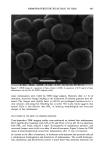
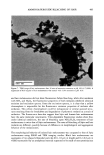
j. Cosmet. Sci., 54, 395-409 (July/August 2003) New insights into the physicochemical effects of ammonia/peroxide bleaching of hair and Sepia nlelanins PADMAJA PREM, KATHERINE J. DUBE, STEPHEN A. MADISON, and JOHN BARTOLONE, Hair Colorants Division, Unilever Research and Development, 45 River Road, Edgewater, NJ 07020. Accepted for publication September 27, 2002. Synopsis Chemically unaltered melanosomes from black hair were isolated using a mild enzymatic procedure reported by Novellino et al. (1) involving sequential treatment of a homogenized hair sample with different protease enzymes. Time-dependent fluorescence studies show, under identical conditions, that the rate of bleaching upon NH3/H202 treatment of hair melanosomes is twice that of Sq ia melanosomes. The structure and morphology of hair melanosomes are compared to Sepia eumelanin using ESEM and TEM imaging studies. Black hair melanosomes are aggregates of rice-shaped ellipsoidal particles (0.8-1.0 pm in length and 0.2-0.6 pm in width) surrounded by an amorphous material suspected to be made of non-proteinacious materials. Sepia eumelanin aggregates are larger (2-5 pm) particles with a "doughnut" shape comprised of 100-150-nm spherical particles. Time-dependent TEM imaging studies of ammonia-treated (pH 10) hair melanosomes showed an initial breakdown of melanosomal aggregates followed by rupture of the melano- somal membrane, releasing melanin nanoparticles and leaving a ghost membrane behind. After prolonged treatment with aqueous NH3, a total loss of characteristic melanosome morphology was observed leading to an amorphous material. By contrast, Sepia melanosomes under identical conditions of ammonia treatment did not show such changes, probably due to different surface properties and aggregation behavior. Sodium hydroxide or sodium carbonate at identical pH did not show similar changes to ammonia, suggesting that the changes are not merely due to alkaline pH, but, rather, are specific to ammonia. Co-treatment with ammonia and peroxide induced a faster disintegration of the melanosomes, resulting in a complete disso- lution and discoloration of melanin in 30 minutes. The data suggest that ammonia helps to release melanin nanoparticles out of melanosomes, making them more susceptible to oxidative attack by 8202. INTRODUCTION Melanins are a class of highly heterogeneous biological pigments found in animals, plants, and humans, and are responsible for the color of skin, eyes, and hair. The color of hair and wool in mammals and feathers in birds is mostly determined by the quantity and quality of melanin that is synthesized in follicular melanocytes and transferred to keratinocytes. It is generally known that hair pigmentation is due to two types of Address all correspondence to Padmaja Prem. 395
Purchased for the exclusive use of nofirst nolast (unknown)
From: SCC Media Library & Resource Center (library.scconline.org)