442 JOURNAL OF COSMETIC SCIENCE related to its high content of minerals and its ability to retain heat for many hours, thus stimulating blood circulation and clearing the skin of dead epidermal cells (2). It has been shown that Dead Sea salt and mud are useful in treating skin disorders and skin diseases such as psoriasis (3), seborrheic dermatitis, xerosis, attopic dermatitis, stage I skin burns, and sensitive skin (4). In addition, black mud has been extensively used as a base for the preparation of soaps, creams, and unguents for skin care. The manufac turers of those products claim that the mud has major effects on revitalizing and toning the skin. Dead Sea mud deep cleanses it removes impurities by deep washing of the skin. It penetrates pores to absorb accumulated dirt, makeup residue, and excess fatty secre tions like hardened sebum. The demand for Dead Sea (DS) cosmetics is increasing. Dead Sea cosmetics include shampoos, creams, lotions, masks ... etc. They have Dead Sea salt and/or mud in their formulas. Consumer acceptance of Dead Sea cosmetics depends on the stability of the products and their ability to spread on the skin, which is directly related to flow behavior. Semisolid systems are used widely in the formulation of topical pharmaceutical and cosmetic preparations. Rheological properties of semisolids are highly important physical parameters in technical manufacturing (filling, storage) and in aesthetic terms. The evaluation of semisolid cosmetic structure and consistency is, therefore, essential in order to determine, adjust, and perhaps predict the performance of newly designed products (5). The rheological properties of a semisolid system significantly determine its quality, usefulness, and purpose. Therefore, rheology has always played and will play a role in the preparation, development, and manufacture of any formulation. For that matter, rheological determinations are indispensable in the analysis of its properties. The importance of rheological properties in semisolid pharmaceutical and cosmetic forms is such that rheological and thixotropic studies have become crucial tools from both pharmacotechnical and galenic points of view. In a similar way, rheology can elucidate the possible modifications of the system, expressed as a function of time and tempera ture, from the variation in the hysteresis loops of the apparent viscosity (area under the curve) (6). Thus, pharmacotechnical tests that include the determination of organoleptic properties, pH, sign, and macroscopic and microscopic examination allow us to evaluate the evolution of the properties of the formulations mentioned, according to the time, temperature, and gravity. As a rule, the rheological study and, more precisely, the evaluation of thixotropic properties, allow us to obtain a correct picture of the physical properties and structural stability of semisolid systems (7 ,8). This study aimed to use rheological measurements in the evaluation of a commercial facial mask sample made mainly of Dead Sea mud. MATERIALS AND METHODS MATERIALS The facial mask samples were supplied by Ammon for Dead Sea Salts and Soap Products (Amman, Jordan). The components of the mask used were Dead Sea mud (solids) 67 .0 wt%, glycerin 7.0 wt%, and stabilizer (with a trade name of polysaccharide) 1.0-1.5%. The remainder was deionized water. The chemical identity of Dead Sea mud is natural sediment. It is a mixture of solid mineral clays with an interstitial solution of inorganic

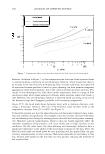
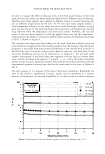
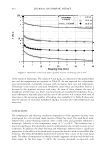
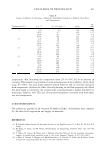
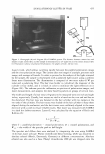
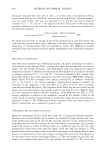
FACIAL MASK OF DEAD SEA MUD 443 salts and sulfide compounds originated from microbiological activity ( 4). The particle size distribution of the mud solids is 86-98% 5 µm 2-9%: 5-20 µm and 0-7% 20 µm. The stabilizer "polysaccharide" is a modified starch containing glucose as the sole monomer with a molecular mass of 5 to 6 million daltons. It is obtained by fermentation of Sclerotium rolfsii on a glucose-enriched medium. The fermentation medium is filtered. After being washed with alcohol, the product is again dissolved, filtered, and dried. The type of linkages found in the molecule gives it a high stability polysaccharide aqueous solutions show therefore a good resistance to aging and most enzymatic degradations. Polysaccharide displayed a good ability to stabilize the mud suspension due to its capacity to increase in a significant and stable way the viscosity of the medium. Poly saccharide can be used in suspensions at a recommended dosage level of 1.0-1.5 wt%. RHEOLOGICAL MEASUREMENTS The rheological properties of facial mud were measured with a concentric-cylinder Haake-VT 500 viscometer, which has an inner cylinder rotating in a stationary outer cylinder. Three different measuring systems were used: MV2, MV3, and SVl. MV2 and MV3 used the same cup, with a radius of 21.0 mm, and different bobs, with radii of 18.4 and 15 .2 mm, respectively. On the other hand, the cup radius of the SVl system is 11.5 5 mm, while its bob radius is 10.1 mm. Samples were allowed to relax (more than 10 min) prior to measurement of their viscosity. It should be pointed out that the viscometer operated in the range where the laminar flow is dominant. The viscometer was ther mostatically controlled with a water circulator (Haake D8) at the desired temperature with a precision of ± 0.1 °C. METHODOLOGY The experiments performed to characterize the shear-, time- and temperature depen dency of the flow behavior of Dead Sea mud consisted of a series of two measurements: Apparent viscosity versus shear rate. A fresh sample was loaded into the annular gap of the concentric -cylinder viscometer. Samples were left to reach the desired temperature. The apparent viscosities of facial mud were measured in the temperature range between 5 .0° and 60.0°C by continuous increasing (forward measurements) and continuous decreasing (backward measurements) of the shear rate. The values of the shear rate and apparent viscosity were recorded every 30 sec. The shear rate was varied from 2.200 to 159.80 s- 1 . The flow curves of the facial mud was modeled using the Herschel-Bulkley (H-B) model: (1) where T is the shear stress, TO is the yield stress, m is the consistency coefficient, and n is the flow behavior index. Typically, the Herschel-Bulkley model is used for many materials, as the Newtonian, shear thinning, shear thickening and Bingham plastic may be considered as special cases. Apparent viscosity measurements as a function of time at constant shear rate. In transient measurements, a fresh sample was sheared at constant shear rates, namely at 2.20, 10.21, 28.38, 47.43, 79.02 and/or 131.90 s-1, and the apparent viscosity was measured as a
Purchased for the exclusive use of nofirst nolast (unknown)
From: SCC Media Library & Resource Center (library.scconline.org)