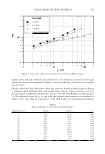
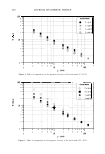
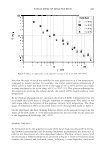
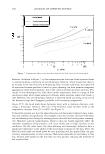
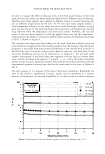
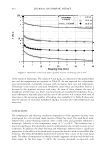
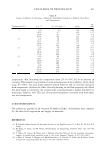
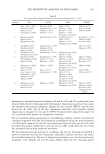
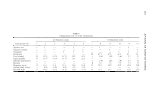
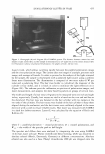
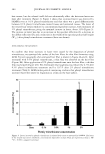
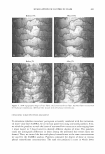
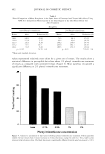
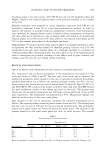
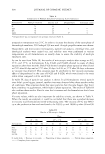
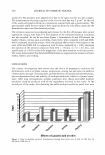
484 JOURNAL OF COSMETIC SCIENCE In order to reduce the tremendous variation when tresses are positioned on the cylinder due to hair fiber variability, it is essential that the alignment is always the same whenever the measurement is carried out, particularly when comparing silicones that have similar shine effects. Because this variation can cause a bigger difference in the shine measurement than results from the application of different silicones to oriental hair tresses, we modified the procedure to avoid the variation by repositioning the hair tress between SAMBA measurements. Our experiments showed that we could achieve con sistent results using SAMBA by applying the silicone to the positioned hair tress and measuring the same area of hair before and after treatment. We chose to treat the hair tresses with phenyl trimethicone, which is ethanol-soluble and non-volatile. Phenyl trimethicone is commonly used in leave-in cosmetic formulations as a shining agent and has the ability to coat the hair surface (1,10). All concentrations of phenyl trimethicone increased the luster of hair tresses. We found that the luster increase of oriental hair tresses upon treatment with silicone depended on specular reflectance (S) and the peak width at half-specular reflectance (W 112 ). The change in diffuse reflectance (D) was relatively low, due to the dark-brown color. AFM is a powerful method used to perform tribological measurements. The application of AFM to the study of hair has made it possible to image film formation on hair fibers on a nanometer scale and to study the nano-effects of hair care products. With AFM data, we were able to identify that the increase in luster measured by SAMBA was caused by a reduction in roughness. Because the effect of luster is greatly affected by the surface condition of the hair fiber, silicone film formation on hair fibers makes the hair smooth, increasing the intensity of specular reflection and decreasing the diffuse reflection in tensity. We measured the same area of untreated and treated hair fibers with AFM to obtain objective results and to eliminate individual hair fiber variation. We measured the same area of untreated and treated hair fibers with AFM and found that film formation and reduction of roughness could be consistently measured following treat ment (Figure 4, Table I). We conducted a panel test with 15 untrained panelists to obtain their subjective assessments of hair luster in phenyl trimethicone-treated tresses. Panelists easily recog nized the luster difference between untreated and treated tresses, but had trouble dis tinguishing the shine between tresses treated with 0.1 % and 0.5% phenyl trimethicone. However, they were able to distinguish the shine between tresses treated with below 0.5% and those treated with over 1 % phenyl trimethicone. The results from the pan elists were in good agreement with the luster increase obtained from instrumental measurements. Thus, using our modified protocol, SAMBA measurements were effective in comparing the luster values of silicone-based compounds. CONCLUSIONS We found that SAMBA provides reliable results for luster evaluation and a rapid, easy quantitative means of determining the shine effect on hair tresses. AFM studies provided convincing evidence that phenyl trimethicone increases the luster of hair fibers by film formation on the hair surface. These results show that SAMBA has utility as an instru mental technique for hair luster evaluation and is in good agreement with consumers' subjective evaluation of luster.

EVALUATION OF LUSTER IN HAIR 485 ACKNOWLEDGMENTS The authors thank Ms. Hyun Mi Yang for her kind advice on the sensory and ranking tests. REFERENCES (1) M. S. Starch, Silicones for hair luster: Approaches for screening and measuring their effects, Cosmet. Toiletr., 114, 55-60 (1999). (2) H. Hocker, Efficacy testing for hair care products, Skin Pharmacol. Appl. Skin Physiol., 12, 158-165 (1999). (3) R. F. Stamm, M. L. Garcia, and J. J. Fuchs, The optical properties of human hair. II. The luster of hair fiber,]. Soc. Cosmet. Chem., 28, 601-609 (1977). (4) T. Maeda, M. Okada, and T. Hara, Hair luster measured by color image analysis, Cosmet. Toiletr., 107, 53-59 (1992). (5) C. Reich and C. R. Robbins, Light scattering and luster measurements of human hair: A sensitive probe of the hair surface,]. Soc. Cosmet. Chem., 44, 221-234 (1993). (6) F. J. Wortmann, E. Schulze zur Wiesche, and B. Bourceau, Analyzing the laser-light reflection from human hair fibers. II. Deriving a measure of hair luster,]. Cosmet. Sci., 55, 81-93 (2004). (7) T. Maeda, T. Hara, M. Okada, and H. Watanabe, Measurement of hair luster by color image analysis, 16th UFSCC Congress (New York, 1990), Vol. I, p. 127. (8) C.R.Robbins, "Consumer Assessments of Hair Assembly Properties," in Chemical and Physical Behavior of Human Hair, 4th ed. (Springer-Verlag, Frankfurt, Germany, 2002), pp. 453-460. (9) P. Clemenceau, S. Breugnot, and B. Pouet, In vivo quantitative evaluation of gloss, Cosmet. Toiletr., 119, 71-78 (2004). (10) J. A. Swift and J. R. Smith, Atomic force microscopy of human hair, Scanning, 22, 310-318 (2000). (11) W. Wu, J. Alkema, G.D. Shay, and D.R. Basset, Quantitative methods for evaluating optical and frictional properties of cationic polymers,]. Cosmet. Sci., 52, 51-65 (2001). (12) S. B. Ruetsch, Y. K. Karnath, L. Kintrup, and H.J. Schwark, Effects of conditioners on surface hardness of hair fibers: An investigation using atomic force microscopy,]. Cosrnet. Sci., 54, 579-588 (2003). (13) M. Meilgaard, G. V. Civille, and B. T. Carr, "Consumer Measuring Response," in Sensory Evaluation Technique, 3rd ed. (CRC Press, Boca Raton, FL, 1999), p. 52.
Purchased for the exclusive use of nofirst nolast (unknown)
From: SCC Media Library & Resource Center (library.scconline.org)