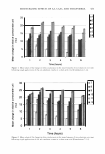
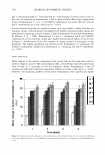
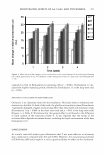
GLYCOLIC ACID IN W/0/W EMULSION 493 performed and, depending on the data from the panel test results, formulation GDS containing GA, D, and S, which was prepared by polymeric lypophilic surfactant (Abil EM-90) was found to be the most suitable multiple emulsion formulation with respect to stability, effectiveness, and reduced side effects. Results showed that the incorporation of strontium nitrate and dexpanthenol to topical chemical peeling formulations of glycolic acid in multiple emulsion form enhanced product efficacy and reduced the side effects that sometimes caused interruption of application. ACKNOWLEDGMENT This work was supported by the Research Fund of Istanbul University, project no. UDP-198/03092003. REFERENCES (1) H. Murad, A. T. Shamban, P. S. Premo, The use of glycolic acid as a peeling agent, Derrnatol. Clin., 13, 285-307 (1995). (2) E. Van Scott and R. J. Yu, Alpha hydroxy acids: Science and therapeutic use,]. Cosrnet. Derrnatol., 7 (suppl.), 12-20 (1994). (3) J. W. Slavin, Considerations in alpha hydroxy acid peels, Clin. Plast. Surg., 25, 45-52 (1998). (4) Z. Erbagci and C. Akcali, Biweekly serial glycolic acid peels vs. long-term daily use of topical low-strength glycolic acid in the treatment of atrophic acne scars, Int. J. Derrnatol., 39, 789-794 (2000). (5) M. J. Stiller, J. Bartolone, R. Stern, S. Smith, N. Kollias, R. Gillies, and L. Drake, Topical 8% glycolic acid and 8 % 1-lactic acid creams for treatment of photodamaged skin, Arch. Dermatol, 132, 631-636 (1996). (6) C. Litton and G. Trinidad, Complications of chemical face peeling as evaluated by a questionnaire, Plast. Reconstr. Surg., 67 738-744 (1981). (7) P. Perugini, I. Genta, F. Pavanetto, B. Conti, S. Scalia, and A. Baruffini, Study on glycolic acid delivery by liposomes and microspheres, Int. J. Pharrn., 196, 51-61 (2000). (8) S. S. Resnik and B. I. Resnik, Complications of chemical peeling, Clin. Plast. Surg., 28, 231-234 (2001). (9) H. Zhai, W. Hannon, G. S. Hahn, A Pelosi, R. A. Harper, and H. I. Maibach, Strontium nitrate suppresses chemically-induced sensory irritation in humans, Contact Dermatitis, 42, 98-100 (2000). (10) G. S. Hahn, Strontium is a potent and selective inhibitor of sensory irritation, Dermatol. Surg., 25, 689-694 (1999). (11) H. Zhai, W. Hannon, G. S. Hahn, R. A. Harper, A. Pelosi, and H. I. Maibach, Strontium nitrate decreased histamine-induced itch magnitude and duration in man, Dermatology, 200, 244-246 (2000). (12) W. Gehring and M. Gloor, Effect of topically applied dexpanthenol on epidermal barrier function and stratum corneum hydration, Arzneim. Forch.!Drug Res., 50, 659-663 (2000). (13) D. A. Omotosho, T. L. Whateley, and A. T. Florence, Methotrexate transport from the internal phase of multiple w/o/w emulsions,]. Microencaps., 6, 183-192 (1989). (14) A. Silva-Cunha, J. L. Grossiord, F. Puisieux, and M. Seiller, Insulin in w/o/w multiple emulsions: Preparation, characterization and determination of stability towards proteases in vitro,]. Microencaps., 14, 311-319 (1997). (15) F. Bonina, S. Bader, L. Montenegro, C. Scofani, and M. Visca, Three phase emulsions for controlled delivery in cosmetic field, Int.]. Cosrnet. Sci., 14, 65-74 (1992). (16) N. S. Tokgoz, A. Fructus, P. Prognon, M. Seiller, and J. L. Grossiord, Incorporation of the L-ascorbic acid and the N-acetyl L-cysteine in the inner aqueous phase of a w/o/w multiple emulsion: Stability, characterization and aging studies, Proc. 1st World Meeting, APGI/APV, Budapest, 666-667 (1995). (17) Y. Katsunori, S. Tomoko, M. Fumioki, Y. Toshio, and Y. Michihiro, Stability of vitamin A in oil-in-water-in oil type multiple emulsions,]. Am. Oil Chern. Soc., 76, 195-200 (1999). (18) A. Silva-Cunha, J. L. Grossiord, F. Puisieux, and M. Seiller, w/o/w multiple emulsions of insulin

494 JOURNAL OF COSMETIC SCIENCE containing a protease inhibitor and an absorption enhancer: Preparation, characterization and deter mination of stability towards proteases in vitro, Int.]. Pharrn., 158, 78-89 (1997). (19) P. Tandon and B. Mishra, Development of multiple w/o/w emulsions showing prolonged antiinflam matory activity of nimesulide, Acta Pharnz. Turc., 41, 15-18 (1999). (20) L.A. M. Ferreira, M. Seiller, J. L. Grossiord, J.P. Marty, and J. Wepierre, Vehicle influence on the in vitro release of metronidazole: Role of w/o/w multiple emulsion, Int.]. Pharrn., 109, 251-259 (1994). (21) A. T. Florence and D. Whitehill, Stabilization of water/oil/water multiple emulsion by polymerization of the aqueous phase,]. Pharrn. Pharrnacol., 34, 687-691 (1992). (22) N. Jager-Lezer, R. Denine, J. L. Grossiord, J. Wepierre, S. Rault, and M. Seiller, Formulating multiple emulsions with moisturizing actives, Cosrnet. Toiletr., 111, 5 3-58 (1996). (23) M. De Luca, J. L. Grossiord, and M. Seiller, A very stable w/o/w multiple emulsion, Int.]. Cosrnet. Sci., 22, 157-161 (2000). (24) E. Berardesca, F. Distante, G. P. Vignoli, C. Oresajo, and B. Green, Alpha hydroxyacids modulate stratum corneum barrier function, Br.]. Dernzatol., 137, 934-938 (1997). (25) T. Hagiwara and M. Kawamoto, Wrinkle preventing and antiaging cosmetics containing a-hydroxy acids and peptides, Appl. JP 96-112311 7 (May 1996), CA 128: 16291 (1998).
Purchased for the exclusive use of nofirst nolast (unknown)
From: SCC Media Library & Resource Center (library.scconline.org)