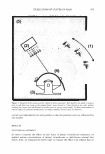
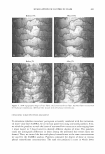
]. Cosmet. Sci.J 57, 495-498 (November/December 2006) Abstracts Journal of the Society of Cosmetic Chemists Japan Vol. 40, No. 2, 2006* Optical Properties of Skin Gloss and Development of Mizumizushii-Looking Makeup Foundation Hirochika Nishimura, Yutaka Takasuka, Megumi Yamamoto Makeup Products R&D Department, POLA Chemical Industries, Inc. 27-1, Takashimadai, Kanagawa-ku, Yokohama 221-0833, Japan In Japan, the term mizumizushii is used to express beauty. This term mizumizushii is an adjective involving factors for a variety of "beauties full of the feeling of vitality" such as youthful, fresh, watery, dewy and the like. The exact choice of words depends on the circumstances. Mizumizushii-looking skin represents the skin that looks wet with the moisture contained in it and that has a good gloss. However, according to our research carried out using a Corneometer, almost no relationship was found between skin actually including a large amount of moisture in the stratum comeum and mizumizushii looking skin. We elucidated the "apparently mizumizushii-looking skin," and tried to develop makeup products having the function of making the skin look mizumizushii, which is to be one of the factors of beauty. For this purpose, what makes skin mizumizushii-looking or not had to be defined. Hence, sensory evaluations on 100 women were performed. As a result, these panelists could be classified into two groups of those having mizumizushii-looking skin (25 women) and those having the skin without a mizumizushii look (75 women). Further, it was revealed that the skin without a mizumizushii look could be classified into two groups of dry-looking skin and excessively oily-looking skin. We succeeded in qualitatively classifying the appearance of the skin of these three groups through using a value for optical properties analyzed under specified conditions. Moreover, as a result of investigation of the grounds for possible qualitative classification of these groups with the value for optical properties of the skin, an evident relationship was clarified with the surface morphology (homogeneity on a µm scale) . From the findings of the optical properties of the mizumizushii-looking skin, we designed a makeup film incorporating a function for the mizumizushii look, leading to the development of a foundation. Resolving the Conflict of a Simultaneously Highly Moisturizing and Occlusive Emulsion Film Yuji Sakai, Masashi Suzuki, Yasuhiro Ohara Skin Care Products R&D Department, POLA Chemical Industries, Inc. 27-1, Takashimadai, Kanagawa-ku, Yokohama 221-0833, Japan Two basic functions of emulsion-based cosmetic products are moisturization and occlusion, which are markedly affected by the ratio of hydrophilic to lipophilic parts in the emulsions. However, due to their conflicting requirements, it is difficult to simultaneously improve both functions. Therefore, we developed new emulsion that has simultaneously higher moisturizing and occlusive functions than those of po lyoxyethelene-type emulsions, by using po lyglycerin-type surfactants, cetyl alcohol, po lyglycerin-13-polyoxybutylene-14-stearyl ether and the D-phase emulsification method, because of dispersing a large quantity of water into the lipophilic part of the applied emulsion film and of strengthening the hydrophilic part of the emulsion film We confirmed through microscopic study with a laser microscope that in po lyoxyethelene-type emulsions, droplets disappear quickly after the film is fonned and dried, whereas in our experimental emulsions, the droplets' shape is evenly retained. Furthermore, after one month of continuous use, stratum comeum removal and comeocyte arrangement also improved significantly. * These abstracts appear as they were originally published. They have not been edited by the Journal of Cosmetic Science. 495

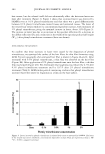
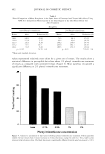
JOURNAL OF COSMETIC SCIENCE The Application of Thermosensitive Polymers to Liquid Plaster Shiro Nakai, Yasuko Mori, Satoru Yoshino Products Development Division, Rohto Pharmaceutical Co., Ltd. 1-8-1, Tatsumi-Nishi, Ikuno-ku, Osaka 544- 8666, Japan Liquid plasters, dissolved pyroxylin (nitrate ester of cellulose) in organic solvents, are classified as new quasi drugs or OTC drugs, which are used for the purpose of dressing damage and disinfection. The defects are the odor of the organic solvents, strong irritation against damaged skin, difficulty at the removal of formed film, and poor release of active ingredients from plasters. A thermosensitive polymer was prepared by co-polymerization of N-isopropyl acrylamide and n-butyl methacrylate. The application of the thermosensitive polymer to liquid plaster improved the above defects, and showed formation of appropriate firm and effective antimicrobial activities. The Application of Sodium Dextran Sulfate to the Field of Cosmetics Ichiro Kato Nagoya Research Laboratory, MEITO SANGYO Co., Ltd. 25-5, Kaechi, Nishibiwajima, Kiyosu 452-0067, Japan In this study, it was shown that sodium dextran sulfate (OS), which is used as an antihyperlipoproteinemic and is clinically known for the improvement of the blood flow, accelerated nitric oxide (NO) synthesis in the normal human epidermal keratinocytes. Currently, the free radical NO is known to be an important mediator in various physiological and pathophysiological processes of the skin, such as regulation of blood flow. The result suggests that OS might exert improvement on the blood flow by the acceleration of NO synthesis. The evaluation in the human body test showed that OS effectively reduced and prevented the swelling of the lower leg. Consequently, it is reasonable to suggest that OS could penetrate into the epidermis and enhance NO synthesis, and NO released from the epidermal keratinocytes could promote the blood flow in the microvasculature and reduce the swelling of the lower leg. Molding Technology and Quality Estimation on the Lipstick Production Scene Hiroshi Fukasawa Production Technology Section Kumagaya Plant ALBION Co., Ltd. 4-1-1, Funakidai, Kumagaya 369- 0108, Japan In this paper, the optimization of a generic function of a lipstick manufacturing process is discussed. Traditionally, the quality of lipsticks has been measured by objective quality characteristics such as appearance. Sensory tests, which are not recommended in quality engineering, had been used to evaluate such quality characteristics. That is because these quality characteristics are not stable due to the changes of environmental conditions such as between-lot variability and seasonal variation. When such quality problems occurred, manufacturing conditions were adjusted from time to time, which is known as fire fighting or "mole beating" in Japanese. Among those objective quality characteristics, the ones such as scratches, color uniformity or breaking during usage are manufacturing related. As a generic function, the stress/strain relationship was investigated and the results showed that the relationship has satisfied Hook's Law with a good improvement. Vol. 40, No. 3, 2006 Flow-Ifljection Analysis with Photometric Detection for the 5.0 X 10 -2 mol/L phosphate buffer solution were pumped Screening ofTyrosinase Inhibitors into the analytical line at a constant flow rate. An aliquot of the tyrosinase solution containing an inhibitor was injected Kazuki Kageshima, Kenji Okada, Yoshiya Ishihara, Toshiyuki Shimizu Haohiohji Laboratory, Utena Co., Ltd., 575-3, Kitano machi, Hachiohji 192-0906, Japan A rapid and simple method for the screening of tyrosinase inhibitors based on a flow-ifljection analysis (FIA) method using a spectrophotometric detector is described. An aqueous solution of L-DOPA (5.0xlO -3 mol/L) and a into the phosphate buffer stream by a loop-valve injector, and then it was fed to the spectrophotometric detector through the reaction coil. The absorbance of reaction products was monitored at 475nm As a result, the peak height of the flow signal was proportional to the enzyme activity unit, ranging from I unit/ml, to 10 units/ml� (r= 0.992). The FIA system could measure a sample within 5 min. B -Arbutin, L-ascorbic acid, and caffeic acid showed strong inhibition for tyrosinase activity in the method described here.
Purchased for the exclusive use of nofirst nolast (unknown)
From: SCC Media Library & Resource Center (library.scconline.org)