2006 ANNUAL SCIENTIFIC MEETING 75
Polyacrylate-1 Crosspolymer presents a novel thickening mechanism for lower pH formulations or in
formulations containing cationic ingredients. This cationic-compatible polymer builds viscosity through
the mechanisms of hydrodynamic volume expansion. plus controlled hydrophobic association which occurs
when pH is reduced to 6. The thickening, suspension and stabilization properties of this polymer can be
further optimized in neutralized surfactant-based cleansing systems through the addition of a base, such as
sodium hydroxide. using a process known as "back-alkaline thickening''. Tilis polymer also offers
synergistic thickening with surfactants and salt when formulatod with suitable surfactant systems.
Formulating Conditions &Proces ing Paramden
Dispersion
One way of improving the manufacturing throughput of cleansing products is to reduce cycle time. This
is possible by reducing polymer dispersion time or making pre-dispersions. Traditional carbomer powders
typically require careful addition to the water portion of the formulation, have a longer hydration time and
require vigorous agitation. Acrylates/Cl0-30 Alkyl Acrylate Crosspolymer is a rapid self-wetting polymer
that requires no dispersion agitation. In a lab comparison at 25°C, the wetting time using 0.5 wt.% polymer
for traditional carbomer was 50 minutes. while Acrylates/CI0-30 Alkyl Acrylate Crosspolymer wet in just
3 minutes. Wetting time can be further reduced by increasing water temperature, with best results between
25 -50°C. Further. this polymer can be dispersed at concentrations up to 6.0 wt.% and still remain
pumpable. Liquid rheology modifiers, such as Acrylates Copolymer and Polyacrylate-1 Crosspolymer, are
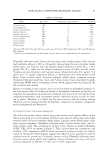
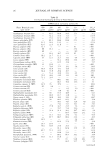
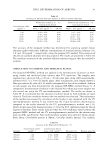
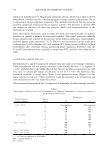
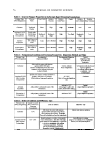
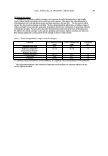
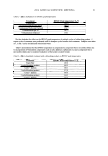
even simpler. Specifics on dispersion method and dispersion times are presented in Table 2.
Order of Addition
Particularly with liquid rheology modifiers, such as Acrylates
Copolymer, order of addition is critical in getting both the best
performance and the greatest efficiency. Order of addition and
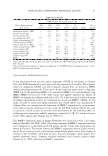
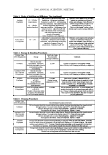
other efficiency tips are shown in Table 3.
Yield value is the initial resistance to flow under applied stress.
Yield value -not viscosity -is the dominant factor in detennining
suspending ability. This is critical in product formulation. Model
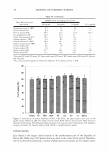
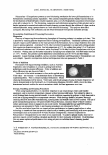
cleansing fonnulations will be shoMI. Yield value, and the advantages of using Acrylates Copolymer are
clearly demonstrated in the Pearlized 2-in-1 Conditioning Shampoo (SH-0024 A&B), where the three
dimensional network enables the mica to maintain a stable. brilliant appearance over time.
Storage, Handling and Cleaning Procedures
When using liquid polymers, it is ex1remely important to use clean storage vessels and transfer
equipment, and to maintain temperature exposure within recommended limits. Care should be taken to
avoid forming foam during material transfer, to avoid conditions exposing the polymer to high shear and to
avoid use of piping susceptible to temperature extremes. With rheology modifier polymers, thorough
cleaning should be done after manufacturing, assuring tanks and transfer lines are well cleaned. The use of
good manufacturing practices will assure trouble-free performance, minimize batch-to-batch variation,
reduce unnecessary strain on equipment and avoid rework. Recommended storage and brief handling
procedures are presented in Table 4, and cleaning procedures are referenced in Table S.
An often overlooked issue that can impact polymer performance in cleansing applications is when
technology is transferred from an operation experienced in handling and formulating with newer polymer
technologies (such as Acrylates/Cl0-30 Alkyl Acrylate Crosspolymer, Acrylates Copolymer or
Polyacrylate-1 Crosspolymer) to one which is less experienced. To achieve optimal results, these novel
polymers require correct handling, designed specifically for their molecular architecture. Understanding
this can assure optimized performance when using polymers in surfactant-based cleansing product
fonnulations.
'E. D. Goddard and KP. Ananthapadmanabhan, Ed., lntemctions of Surfactants with Polymers and Proteins, Ch. 5,
(1993). 'us patents 6767878 and 6897253.
'Patent-pending.
Polyacrylate-1 Crosspolymer presents a novel thickening mechanism for lower pH formulations or in
formulations containing cationic ingredients. This cationic-compatible polymer builds viscosity through
the mechanisms of hydrodynamic volume expansion. plus controlled hydrophobic association which occurs
when pH is reduced to 6. The thickening, suspension and stabilization properties of this polymer can be
further optimized in neutralized surfactant-based cleansing systems through the addition of a base, such as
sodium hydroxide. using a process known as "back-alkaline thickening''. Tilis polymer also offers
synergistic thickening with surfactants and salt when formulatod with suitable surfactant systems.
Formulating Conditions &Proces ing Paramden
Dispersion
One way of improving the manufacturing throughput of cleansing products is to reduce cycle time. This
is possible by reducing polymer dispersion time or making pre-dispersions. Traditional carbomer powders
typically require careful addition to the water portion of the formulation, have a longer hydration time and
require vigorous agitation. Acrylates/Cl0-30 Alkyl Acrylate Crosspolymer is a rapid self-wetting polymer
that requires no dispersion agitation. In a lab comparison at 25°C, the wetting time using 0.5 wt.% polymer
for traditional carbomer was 50 minutes. while Acrylates/CI0-30 Alkyl Acrylate Crosspolymer wet in just
3 minutes. Wetting time can be further reduced by increasing water temperature, with best results between
25 -50°C. Further. this polymer can be dispersed at concentrations up to 6.0 wt.% and still remain
pumpable. Liquid rheology modifiers, such as Acrylates Copolymer and Polyacrylate-1 Crosspolymer, are
even simpler. Specifics on dispersion method and dispersion times are presented in Table 2.
Order of Addition
Particularly with liquid rheology modifiers, such as Acrylates
Copolymer, order of addition is critical in getting both the best
performance and the greatest efficiency. Order of addition and
other efficiency tips are shown in Table 3.
Yield value is the initial resistance to flow under applied stress.
Yield value -not viscosity -is the dominant factor in detennining
suspending ability. This is critical in product formulation. Model
cleansing fonnulations will be shoMI. Yield value, and the advantages of using Acrylates Copolymer are
clearly demonstrated in the Pearlized 2-in-1 Conditioning Shampoo (SH-0024 A&B), where the three
dimensional network enables the mica to maintain a stable. brilliant appearance over time.
Storage, Handling and Cleaning Procedures
When using liquid polymers, it is ex1remely important to use clean storage vessels and transfer
equipment, and to maintain temperature exposure within recommended limits. Care should be taken to
avoid forming foam during material transfer, to avoid conditions exposing the polymer to high shear and to
avoid use of piping susceptible to temperature extremes. With rheology modifier polymers, thorough
cleaning should be done after manufacturing, assuring tanks and transfer lines are well cleaned. The use of
good manufacturing practices will assure trouble-free performance, minimize batch-to-batch variation,
reduce unnecessary strain on equipment and avoid rework. Recommended storage and brief handling
procedures are presented in Table 4, and cleaning procedures are referenced in Table S.
An often overlooked issue that can impact polymer performance in cleansing applications is when
technology is transferred from an operation experienced in handling and formulating with newer polymer
technologies (such as Acrylates/Cl0-30 Alkyl Acrylate Crosspolymer, Acrylates Copolymer or
Polyacrylate-1 Crosspolymer) to one which is less experienced. To achieve optimal results, these novel
polymers require correct handling, designed specifically for their molecular architecture. Understanding
this can assure optimized performance when using polymers in surfactant-based cleansing product
fonnulations.
'E. D. Goddard and KP. Ananthapadmanabhan, Ed., lntemctions of Surfactants with Polymers and Proteins, Ch. 5,
(1993). 'us patents 6767878 and 6897253.
'Patent-pending.