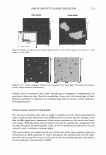
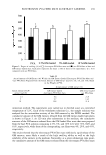
SOYBEAN PHYTOSTEROLS AND SKIN BARRIER RECOVERY 223 80 "' 70 60 50 Et:. 40 ai a.: 30 20 10 0 DCONTROL DWHITE SPS After 1 day After3 days Aftar7 days Figure 2. Percentage of barrier recovery (P.B.R.), obtained one day, three days, and seven days after tape stripping, for stripped skin sites treated with white and SPS formulations or not treated (control). their role in the stabilization of the phospholipid bilayers in the cell membrane. Both phytosterols and cholesterol present in the skin surface lipids were transferred from the plasma to the skin after their absorption from the diet in small quantities from the intestine (19). It is well known, furthermore, that cholesterol plays an important role in skin homeostasis, accelerating barrier recovery by regulating endogenous factors in the epidermis (20). From the results obtained it could be hypothesized that the increased recovery rate of skin barrier function, observed after SPS application in stripped cuta neous sites, could be due to a "cholesterol-like" mechanism involving phytosterol species contained in SPS form. CONCLUSION This study shows clearly that, related to the methodological strategies applied, soybean phytosterols exert positive results on skin repair after damage. Furthermore, the spec trophotometric evaluation used in the present study to determine the percutaneous absorption of an erythematogenous substance, such as MN, seems to be a valid alter native to traditional TEWL measurement to obtain, indirectly, evidence on the recovery rate of disrupted skin. REFERENCES (1) K. R. Feingold and P. M. Elias, "The Environmental Interface: Regulation of Permeability Barrier Homeostasis," in Dry Skin and Moisturizers, Chemistry and Function, M. Loden and H. I. Maibach. Eds. (CRC Press, Boca Raton, FL, 2000), pp. 45-58.

224 JOURNAL OF COSMETIC SCIENCE (2) P. Elias, Epidermal barrier function: lntercellular lamellar lipid structures, origin, composition and metabolism,]. Control. Release, 15, 199-208 (1991). (3) G. lmokawa, S. Akasaki, Y. Minematsu, and M. Kaway, Importance of intercellular lipids in water retention properties of the stratum corneum, Arch. Dermatol. Res, 281, 45-51 (1989). (4) S. E. Friberg, I. Kayali, L. D. Rhein, F. A. Simion, and R. H. Cagan, The importance oflipids for water uptake in stratum corneum, Int.]. Cosmet. Sci., 12, 5-12, (1990). (5) M. Denda, New strategies to improve skin barrier homeostasis, Adv. Drug Del. Rev., 54, S123-S130 (2002). (6) K. De Paepe, D. Roseeuw, and V. Rogiers, Repair of acetone and sodium lauryl sulphate-damaged human skin barrier function using topically applied emulsion containing barrier lipids, JEADV, 16, 587-594, (2002). (7) M. Q. Man, K. R. Feingold, C.R. Thornfeld, and P. M. Elias, Optimization of physiologic lipid mixtures for barrier repair,]. Invest. Dermatol., 106, 1096-1101 (1996). (8) S. Hatziantoniou, M. Rallis, C. Demetzos, and G. T. Papaioannou, Pharmacological activity of natural lipids on a skin barrier disruption model, Pharmacol. Res., 42, 55-59 (2000). (9) L. Yang, M. Mao-Qiang, M. Taljebini, P. M. Elias, and K. R. Feingold, Topical stratum corneum lipids accelerate barrier repair after tape stripping, solvent treatment and some but not all types of detergent treatment, Br.]. Dermatol., 133, 679-685 (1995). (10) F. Bonina, C. Puglia, M. Avogadro, E. Baranelli, and G. Cravotto, The topical protective effect of soybean-germ oil against DVB-induced cutaneous erythema: An in vivo evaluation, Arch. Pharm. Chem. Life. Sci., 338, 598-601 (2005). (11) S. R. Georgetti, R. Casagrande, F. T. Moura-de-Carvalho Vicentini, W. A. Verri, and M. J. Fonseca, Evaluation of the antioxidant activity of soybean extract by different in vitro methods and investigation of this activity after its incorporation in topical formulations, Eur.]. Pharm. Biopharm., 64, 99-106 (2006). (12) K. M. Si.idel, K. Venzke, H. Mielke, U. Breitenbach, C. Mundt, S. Jaspers, U. Koop, K. Sauermann, E. Knussman-Harcig, I. Moll, G. Gercken, A. R. Young, F. Stab, H. Wenck, and S. Gallinat, Novel aspects of intrinsic and extrinsic aging of human skin: Beneficial effects of soy extract, Photochem. Photobiol., 81, 581-587 (2005). (13) B. I. Bettzuege-Pfaff and A. Melzer, Treating dry skin and pruritus with a bath oil containing soya oil and lauromacrogols, Curr. Med. Res. Opin., 21, 1735-1739 (2005). (14) F. P. Bonina, L. Montenegro, N. Scorfani, E. Esposito, R. Cortesi, E. Menegatti, and C. Nastruzzi, Effects of phospholipid based formulations on in vitro and in vivo percutaneous absorption of methyl nicotinate,J. Control. Release, 34, 53-63 (1995). (15) M. Ricci, C. Puglia, F. Bonina, C. Di Giovanni, S. Giovagnoli, and C. Rossi, Evaluation of indo methacin percutaneous absorption from nanostructured lipid carriers (NLC): In vitro and in vivo studies, ]. Pharm. Sci., 94, 1149-1159 (2005). (16) E. Boelsma, C. Anderson, A. M. J. Karlsson, and M. Ponec, Microdialysis technique as a method to study the percutaneous penetration of methyl nicotinate through excised human skin, reconstructed epidermis, and human skin in-vivo, Pharm. Res., 17, 141-147, (2000). (17) K. V. Roskos, A. J. Bircher, H. I. Maibach, and R.H. Guy. Pharmacodynamic measurements of methyl nicotinate percutaneous absorption: The effect of aging on microcirculation, Br. J. Dermatol., 122, 165-171 (1990). (18) P. Fernandes and J. M. S. Cabral, Phytosterols: Application and recovery methods, Bioresource Technol., 98, 2335-2350 (2007). (19) A. K. Bhattacharyya, W. E. Connor, and D. S. Lin, The origin of plant sterols in the skin surface lipids in humans: From diet to plasma to skin,]. Invest. Dermatol., 80, 294-296 (1983). (20) J. A. Bouwstra and M. Ponec. The skin barrier in healthy and diseased state, EBA Biomemebranes, 1758, 2080-2095 (2006).
Purchased for the exclusive use of nofirst nolast (unknown)
From: SCC Media Library & Resource Center (library.scconline.org)