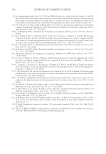
JOURNAL OF COSMETIC SCIENCE 500 (8) In a memorandum dated June 13, 2005 from Wilbur Johnson, Jr., Senior Scientifi c Analyst, to the CIR Expert Panel, Mr. Johnson notes that current-use concentration data from the cosmetics industry indicate that retinol and retinyl palmitate are being used at concentrations up to 2%. Information found on the CIR’s website now indicates that retinol and retinyl palmitate are safe as used in cosmetics up to 5%. (9) J. J. Yourick, C. T. Jung, and R. L. Bronaugh, In vitro and in vivo percutaneous absorption of retinol from cosmetic formulations: Signifi cance of the skin reservoir and prediction of systemic absorption, Toxicol. Appl. Pharmacol., 231, 117–121 (2008). (10) L. S. Baumann, Safety considerations for retinol use in cosmetic products, Cosmet. Dermatol., 18, 9–13 (2005). (11) G. J. Nohynek, W. J. A. Meuling, W. H. J. Vaes, R. S. Lawrence, S. Shapiro, S. Schulte, W. Steilung, J. Bausch, E. Gerber, H. Sasa, and H. Nau, Repeated topical treatment, in contrast to single oral doses, with vitamin A-containing preparations does not affect plasma concentrations of retinol, retinyl esters or retinoic acid in female subjects of child-bearing age, Toxicol. Lett., 163, 65–76 (2005). (12) K. L. Penniston and S. A. Tanumihardjo, The acute and chronic toxic effects of vitamin A, Am. J. Clin. Nutr., 84, 191–201 (2006). (13) R. E. Davies and P. D. Forbes, Retinoids and photocarcinogenesis: A review, J. Toxicol. Cut. Ocular Toxi- col., 7, 241–253 (1988). (14) Anonymous, Request for Comments on Substances Nominated to NTP, Federal Register, 65, 75727– 75730 (2000). (15) S. Scalia, A. Renda, G. Ruberto, F. Bonina, and E. Menegatti, Assay of vitamin A palmitate and vitamin E acetate in cosmetic creams and lotions by supercritical fl uid extraction and HPLC, J. Pharmaceut. Biomed. Anal., 13, 273–277 (1995). (16) C. Ceugniet, L. Loetitia, N. L. De Viguerie, H. Jammes, N. Peyrot, and M. Riviere, Single-run analysis of retinal isomers, retinol and photoxidation products by high-performance liquid chromatography, J. Chromatogr. A, 810, 237–240 (1998). (17) L.-H. Wang and S.-H. Huang, Determination of vitamins A, D, E, and K in human and bovine serum, and β-carotene and vitamin A palmitate in cosmetic and pharmaceutical products, by isocratic HPLC, Chromatographia, 55, 289–296 (2002). (18) L.-H. Wang, simultaneous determination of retinal, retinol and retinoic acid (all-trans and 13-cis) in cosmetics and pharmaceuticals at electrodeposited metal electrodes, Anal. Chim. Acta, 415, 193–200 (2000). (19) N. Failloux, I. Bonnet, M.-H. Baron, and E. Perrier, Quantitative analysis of vitamin A degradation by Raman spectroscopy, Appl. Spectroscopy, 57, 1117–1122 (2003). (20) R. Flores-Perez, A. K. Gupta, R. Bashir, and A. Ivanisevic, Cantilever-based sensor for the detection of different chromophore isomers, Anal. Chem., 79, 4702–4708 (2007). (21) L. R. Snyder, J. J. Kirkland, and J. L. Glajch, Practical HPLC Method Development, 2nd Ed. (John Wiley & Sons, New York, 1977), pp. 689–695. (22) A. B. Barua and J. A. Olson, “Vitaman A and Carotenoids,” in Modern Chromatographic Analysis of Vita- mins, 3rd Ed., A. P. De Leenheer, W. E. Lambert, and J. F. Van Bocxlaer, Eds. (Marcel Dekker, New York, 2000), pp. 1–74. (23) B. Idson, Vitamins in cosmetics, an update: I. Overview and vitamin A, Drug Cosmet. Ind., 146, 26–28, 91 (1990). (24) The use of BHT and EDTA as antioxidants in cosmetics is well known. See for example the respective entries for BHT and EDTA in Wikipedia at www.wikipedia.org.

J. Cosmet. Sci., 60, 501–508 (September/October 2009) 501 A novel method to study the skin-lightening effect of topical materials NEELAM MUIZZUDDIN, KENNETH D. MARENUS, THOMAS MAMMONE, and DANIEL H. MAES, Estee Lauder Companies, Melville, NY 11747. Accepted for publication April 1, 2009. Synopsis Skin without signifi cant dyschromia is an aesthetic requirement for people worldwide. There are several in vitro methods to determine the whitening potential of actives however, the in vivo testing of skin whiteners is a long and expensive process. We have designed a rapid clinical method to screen potential skin whiteners using a UV-induced skin tan as a model. Small areas of identical suntan are repeatably induced on the skin, and treatment of these sites allows rapid screening of several skin whiteners within the course of a month. The method provides reproducible results and valuable information about the potential skin-lightening activity of topical preparations. INTRODUCTION In Asia, Africa, and South America, the popularity of fair-skinned beauties in the media, as well as the cultural preference towards lighter skin, has fuelled public demand for skin- lightening products (1). The tendency of pigmented skin to be more prone to develop hyperpigmentation has also contributed to this demand (2). In most instances, sun exposure is the main stimulator of skin hyperpigmentation. A direct effect of UV photons results in activation of tyrosinase, the rate-limiting enzyme in melanin synthesis, as well as an increase in cell surface expression of receptors for at least one of the several known keratinocyte-derived melanogenic factors, MSH (3). The inherent defense mechanism of skin against UV-B allows the transformation of tyrosine to 3,4-dihydroxyphenylalanine in the presence of UV-activated tyrosinase. This is further oxidized to DOPA quinone and then to dopachrome (4). Reduction of dopachrome yields 5,6-dihydroxyindole-2-carboxylic acid, which is ultimately converted via dihydroxyin- dole to the yellow-colored indole 5,6-quinone. Further, oxidative coupling of this results in the formation of eumelanin. Under normal circumstances eumelanins and pheomela- nins are formed simultaneously to lead to the so-called mixed-type melanins. This process requires three to six days before the tan is established (4). There is a myriad of skin whiteners with variable effi cacy (5) readily available for consum- ers. Modulation of melanogenesis in the melanocytes can be achieved using chemicals that share structural homologies with the substrate tyrosine and as thus competitively
Purchased for the exclusive use of nofirst nolast (unknown)
From: SCC Media Library & Resource Center (library.scconline.org)