JOURNAL OF COSMETIC SCIENCE 518 (4) A. P. Negri, H. J. Cornell, and D. E. Rivett, The nature of covalently bound fatty acids in wool fi bers, Aust. J. Agric. Res., 42, 1285–1292 (1991). (5) A. P. Negri, H. J. Cornell, and D. E. Rivett, Effects of proceeding on the bound and free fatty acid levels in wool, Text. Res. J., 62, 381–387 (1992). (6) S. Naito, M. Ooshika, N. Yorimoto, and Y. Kuroda, The structure of bound lipids of human hair fi bers and its physical properties, Proc. 9th Int. Wool Text. Res. Conf., Biella, Italy, I, 367–374 (1996). (7) D. J. Evans and M. Lanczki, Cleavage of integral surface lipids of wool by aminolysis, Textile Res. J., 67, 435–444 (1997). (8) U. Kalkbrenner, H. Koener, H. Hoecker, and D. E. Rivett, Studies on the composition of the wool cu- ticle, Proc. 8th Int. Wool Text. Res. Conf., Christchurch, New Zealand, I, 398 (1990). (9) C. M. Carr, I. H. Leaver, and A. E. Hughes, X-ray photoelectron spectroscopic study of the wool fi ber surface, Textile Res. J., 56, 457 (1986). (10) S. Breakspear, J. R. Smith, and G. Luengo, Effect of the covalently linked fatty acid 18-MEA on the nanotribology of hair’s outermost surface, J. Struct. Biol., 149, 235–242 (2005). (11) C. A. Torre, B. Bhusham, J.-Z. Yang, and P. M. Torgerson, Nanotribological effects of silicone type, silicone deposition level, and surfactant type on human hair using atomic force microscopy, J. Cosmet. Sci., 57, 37–56 (2006). (12) M. Yasuda, J. Hair Sci., 95, 7–12 (2004). (13) M. L. Tate, Y. K. Kamath, S. B. Ruetsch, and H.-D. Weigmann, Quantifi cation and prevention of hair damage, J. Soc. Cosmet. Chem., 44, 347–371 (1993). (14) H. Tanamachi, S. Inoue, N. Tanji, H. Tsujimura, M. Oguri, M. Ishita, S. Tokunaga, and F. Sazanami, Deposition of 18-MEA onto alkaline-color-treated weathered hair to form a persistent hydrophobicity, J. Cosmet. Sci., 60, 31–44 (2009). (15) S. Inoue, N. Tanji, T. Habe, M. Okamoto, M. Oguri, H. Tsujimura, H. Tanamachi, and S. Tokunaga, Mechanism for generation of a persistent hydrophobic hair surface by 18-MEA/SPDA, Proceedings of 25th IFSCC Congress, 2008. (16) Kao Corporation patents, JP1925274, EP0483689, US5476649. (17) Kao Corporation patent, US6576794 B2. (18) C. Ton-That, A. G. Shard, and R. H. Bradley, Thickness of spin-cast polymer thin fi lms determined by angle-resolved XPS and AFM tip-scratch methods, Langmuir, 16, 2281–2284 (2000). (19) D. Devecchio, P. Schmutz, and G. Frankel, A new approach for the study of chemical mechanical polish- ing, Electrochem. Solid State Lett., 3, 90–92 (2000). (20) P. Schmutz and G. S. Frankel, Infl uence of dichromate ions on corrosion of pure aluminum and AA2024-T3 in NaCl solution studied by AFM scratching, J. Electronchem. Soc., 146, 4461–4472 (1999). (21) P. Leblanc and G. S. Frankel, A study of corrosion and pitting initiation of AA2024-T3 using atomic force microscopy, J. Electronchem. Soc., 149, B239–247 (2002). (22) L. N. Jones and D. E. Rivett, The role of 18-methyleicosanic acid in the structure and formation of mammalian hair fi bre, Micron, 28, 469–485 (1997). (23) J. A. Swift, Human hair cuticle: Biologically conspired to the owner’s advantage, J. Cosmet. Sci., 50, 23–47 (1999). (24) S. Naito, “Structure of Keratin Fibers and Its Relation to Chemical and Physical Properties,” Doctoral Thesis of Tokyo Institute of Technology, p. 31 (1995).

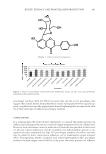
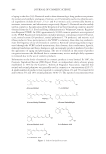
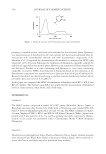
J. Cosmet. Sci., 60, 519–525 (September/October 2009) 519 High-performance liquid chromatography with dual- wavelength ultraviolet detection for measurement of hinokitiol in personal care products YASUHIKO HIGASHI, MASATOSHI SAKATA, and YOUICHI FUJII, Department of Analytical Chemistry, Faculty of Pharmaceutical Sciences, Hokuriku University, Ho-3, Kanagawa-machi, Kanazawa 920-1181, Japan. Accepted for publication March 26, 2009. Synopsis Hinokitiol is found in the heartwood of several cupressaceous plants and is frequently added to cosmetic products such as hair restorers, skin lotions, and body soaps because of its potent and broad-spectrum anti- bacterial activity. In this study, we established a simple method of hinokitiol determination by high-performance liquid chromatography (HPLC) with dual-wavelength ultraviolet detection at 240 and 345 nm, using a reversed-phase C4 column (RP-4). The retention time of hinokitiol was 7.1 min at both wavelengths. The value of the symmetry coeffi cient of the hinokitiol peak was close to 1 when the RP-4 column, not an RP-8 or RP-18 column, was used. With the RP-4 column, the regression equation for hinokitiol showed good linearity in the range of 0.05–5 μg/ml, with a detection limit (signal-to-noise ratio of 3) of 0.005 μg/ml at 240 nm and 0.01 μg/ml at 345 nm. The coeffi cients of variation at 240 and 345 nm were less than 8.2% and 8.7%, respectively, and the recovery was good. The proposed method was used for the determination of hinokitiol in commercial hair restorers, skin lotions, and body soaps. INTRODUCTION Hinokitol (Figure 1, β-thujaplicin, 4-isopropyl-2-hydroxycyclohepta-2,4,6-trien-1-one) is a naturally occurring toxic compound belonging to the class of tropolones that contain an unsaturated seven-membered carbon ring. The compound is found in the heartwood of several cupressaceous plants, such as western red cedar (Thuja plicata), eastern white cedar (Thuja occidentalis), hinoki cypress (Chamaecyparis obtusa), and hiba (Thujopsis dola- brata) (1,2). Since hinokitiol has potent antibacterial and antifungal activities (minimum inhibitory concentration of 0.2 μg/ml for Staphylococcus epidermidis and Daedalea dickinsii) (2,3), it is added to products such as hair lotions, skin lotions, and body soaps, among other cosmetics. Little work has been reported on the gas chromatography (GC) or high-performance liquid chromatography (HPLC) of hinokitiol because the tropolone ring has a chelating Address all correspondence to Yasuhiko Higashi.
Purchased for the exclusive use of nofirst nolast (unknown)
From: SCC Media Library & Resource Center (library.scconline.org)